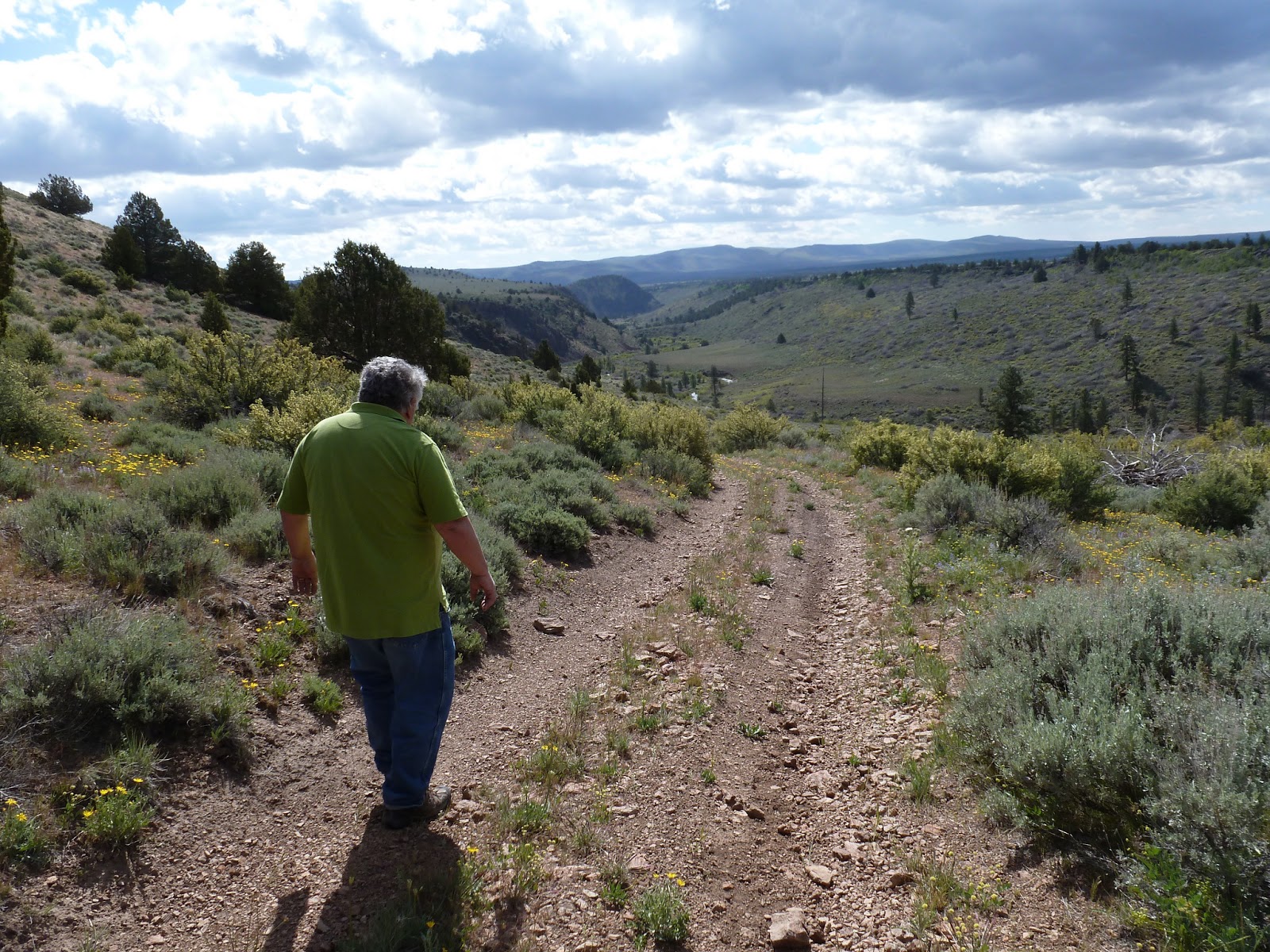
THE FAR NORTH OF CALIFORNIA, out east of the Cascades, is a far different place than around these parts. Up in the country of the Modoc, there’s little rain and real cold winters. The soil is thin and barren – just broken down lava rock aged to grit and pebbles by centuries of ice and wind. The ground isn’t much good for growing, and if it were, the growing season is so short that about the time a good seed sprouts, its green shoot just wilts and freezes off.
This was the land of the Modoc Indians and the land of Captain Jack.
BECAUSE OF THEIR SUPERIOR TOOLS and weapons – because of their technology – the white man easily took the whole of North America from the Indians who had lived on the land for countless thousands of years. These white men came from Europe. First there was Columbus, down toward Florida and in the islands of the Caribbean. Then came the folks from England, to Plymouth Rock over in Massachusetts Colony. Then just about everybody: folks seeking freedom from their King; folks seeking riches that they’d heard about; folks looking for a new start; and folks simply running away.
They loaded up on ships, crossed the Atlantic, and plopped themselves down just about anywhere they pleased. And over the course of only a couple of hundred years, the white man infested the whole of the new continent. Sometimes these newcomers traded for the land they took from the Indians. Beads. Trinkets. Shiny stuff that captivated the native population but stuff that was of no value. Sometimes the newcomers simply set down a tilt up tent, then built a house out of sod or logs. Then defended it. Sometimes, the newcomers wandered through, harvested the deer, the elk and the buffalo and then wandered off.
All too often, however, the coming of the white man lead to conflicts and the conflicts lead to the Indians losing not only their sacred lands, but their lives as well. Thus, our history is full of bloody Indian wars: the Little Big Horn, Bitter Creek, Wounded Knee; and in California, a massacre at Kingsley Cove on Mill Creek and, up in that forbidding, dry, cold north plateau country, the Modoc War.
CAPTAIN JACK was a Modoc Indian. As a child he learned the ways of his people by listening to the stories of his grandfather by the glow of a fire whose light was never to die. He learned to hunt using tools made of flint and obsidian and deer gut and willow. He learned to snare fish using tools of similar construction and practicing timing and thrust and patience. He also learned the ways of the creatures of the Modoc Plateau, the earth, his home; and in so doing he learned of himself and his place in the world.
As he became older, gold was discovered in the mountains. And with this discovery came a new and strange people with pale skin. People who made strange camps and built solid villages wherever they pleased. People who used wood and wire to cordon off vast sections of range land. People who built towns and cities.
Captain Jack, or Kientepoos, as he was known by his brethren, was attracted to the strange sights and sounds of the white people. He, along with other Modocs and Klamaths and Pitts, moved to towns like Yreka and began to find work in the white man’s mines and stores. The Indians soon began to desire the white man’s clothes, the white man’s food – and his liquor.
As the frontier settlements became more and more civilized, white men began bringing women to town. These new white folks – the women – had heard false tales of the godless and drunken ways of the Indians and came to town terrified of these people they didn’t understand. To the settlers, the women, however, meant comfort and civilization. While an Indian, well, meant nothing. So the councils of the white men decided the women should stay and the Indians should go. And they drove the Modocs off.
But not back to their homelands. No, the white men had a better idea. They sent the Modocs to a reservation in southern Oregon. And since any Indian was just an Indian, the Modocs were placed on a reservation already occupied by the Modocs’ ancestral rivals for land and food: the Klamaths.
Bickering between the two groups started almost immediately. Many of Kientepoos’ people felt unwelcome and unhappy on the reservation. So, in spite of the white man’s demands that they stay there – and threats to kill if they didn’t – Captain Jack led a few of his people back to the homeland of the ancients along the shore of Tule Lake in Northern California. There, the ground would be hard. The winter’s cold. But the heart could rest. For this was home.
BUT TO THE MODOCS' SURPRISE, their homeland was now occupied by many families of white farmers. Farmers trying to scratch out a living in an inhospitable place. But scratching none-the-less. And the farmers felt that the Indians posed a threat to the safety of the white families and demanded that the authorities return the Indians to the reservation. The U.S. Cavalry rolled to the scene. And the little band of Modocs retreated to a geologic formation now known as Captain Jack’s stronghold.
The Stronghold is a fantastic area of tubes that were formed by bubbles of gas that coursed through molten lava thousands upon thousands of years ago forming miles of underground tunnels. When the lava cooled, it hardened and became brittle. When small amounts of rainwater settled into cracks and froze, the powerful yet minute expansion of the water into ice broke the thin tops of these tunnels and they collapsed. What remained was long, aboveground ditches stretching for miles across a treeless landscape.
Once inside these topless tubes, a man could travel for great distances without being seen from the outside. A warrior could fire a carbine rifle at approaching soldiers who could find no cover. In various places, where the lava tops were thicker and the freeze-thaw weathering did not cause collapse, were natural, volcanic caves that provided shelter for sleeping and cooking and protection of women and children.
For nearly a year, a handful of Modocs held off hundreds of cavalrymen. Hidden Indian riflemen picked off many patrolling soldiers. But few of the Modoc warriors were lost.
SEEING THAT THE INDIANS could hold out indefinitely, the Army, under the leadership of General E R S Canby, set out to cut off the Indians from their food and water by throwing up a ring around the Stronghold. Within days, the Indians were forced to make other plans. Captain Jack was wise enough to see that the cause was lost and tried to convince his people to surrender. But the others hurled insults back at him, called him spineless like a snake and even called him a woman. They suggested that, in order to prove his manhood and re-establish his leadership, he should kill the white chief.
So, taking the white flag of truce, Captain Jack set forth to surrender to the cavalry.
Once inside the Peace Tent at the table of council, the Indian pulled a revolver and shot General Canby dead. In the confusion that followed, Captain Jack fled back to the Stronghold.
But the dye was cast. The cavalry tightened its grip on the Indians in the lava beds. Soon, again starving, the Modocs straggled out of the barren rocks and returned to the Klamath Reservation.
ALL EXCEPT KIENTEPOOS. Captain Jack. He was arrested by the cavalry and, for his crime, taken to Fort Bidwell where he was hung by the neck until he was dead.
And with him, the glow of a grandfather’s long-ago campfire flickered and also died.
####
SELECTED BIBLIOGRAPHY:
Riddle, Jeff C.,
The Indian History of the Modoc War; Urion Press, Eugene Oregon, 1974. As a young boy and member of the small band of Modocs, Jeff Riddle witnessed U.S. General Canby being shot by the angered Modoc chief.
Thompson, Edwin N.,
Modoc War: Its Military History and Topography; Argus Books, Sacramento, 1971. Edwin Thompson is purported to be a nephew or, perhaps, grandson of one of the soldiers who was engaged in the campaign against the Modocs.
© 1985 revision © 2008
Church of the Open Road Press