Showing posts with label Travels. Show all posts

Sunday, October 27, 2024

ABOARD THE CALIFORNIA ZEPHYR (FINALLY!)

 A life-long dream come true ~ maybe

The California Zephyr has always been mythic to me. Winding like a silver ribbon up the Feather River Canyon, occasionally, we’d be lucky enough to see it as we drove California’s Route 70 in our ’54 Ford toward Quincy and Bucks Lake. Crisscrossing the canyon, if we were really lucky, we’d be crossing the river on a bridge as the train crossed above us, switching sides of the canyon. The silver beauty was always on the other side ~ always just a bit out of reach.  


The Zephyr ran from San Francisco to Chicago under the combined efforts of the Western Pacific, the Denver, Rio Grande Western and the Burlington Route. It had always been my dream thunder across our vast western expanse on this train. Alas, come the early 70s, service ended. As did my dream.  Or so I thought.


But along came Amtrak, the Federal government’s attempt to keep rail traffic alive. More successful along the eastern corridor of the United States, cross-country routes would enjoy less ridership. Yet, the Zephyr was revived. Now, however, using the historic Donner Pass Route initially carved by the Central Pacific, silver streamliners no longer grace the Feather.


 We board the Zephyr in Sacramento.


From the Sacramento Valley Station, the route winds and twists up the western slope of the Sierra with pauses in Roseville, Colfax, and, following the river courses of the American and the Yuba, cresting the Sierra on the highest trackage anywhere in the States. We enjoy a view of Donner Lake…


…before descending into Truckee for a twenty minute fresh air and, ironically, smoke break.


The route traces the Truckee River through the rain shadowed environs of the east slope of the Sierra. Conifer forests begin to give way to brittle sage and autumn’s golden grasses.  


East of Reno, we begin to get a feel for the vast and vacant high desert. Miles of that sage and mineral wealth (I suppose.)


Our rail journey will take 50 hours, several of those spent lightly sleeping in our rocking accommodation. But, as night falls, I snap this haunting image of a western sunset and wonder about the Shoshone and Paiute peoples who, for centuries, came to an understanding of that whole living in harmony with nature thing that we successors to this space don’t quite get.


Sunrise finds us coursing along the Gunnison River.


Rolling into Grand Junction, CO on the historic Denver and Rio Grande Route, we see one of many grand old stations left to decay.


A few miles of browning hills relentlessly shaped by river and wind…


…and we rumble into our first glimpse of the Great Plains.  I write ‘rumble’ because, to my untrained train butt, the Burlington Northern / Santa Fe right-of-way east of Denver seems a bit less well maintained than the UP to the west.


Lots of flat. Lots of grain ~ amber waves of it ~ mainly, it seems, corn. And lots of endless vistas. One can fly over this country, which we did on our return to California, and not grasp the distances, the vastness and the towns that look like nameless grids or checkerboards from 36,000 feet. We slept through all of Nebraska. 


Here’s Burlington, Iowa …


… and an aging Burlington Northern Pullman, Railway Express car and vintage loco. Glad these rolling stock examples are being preserved.


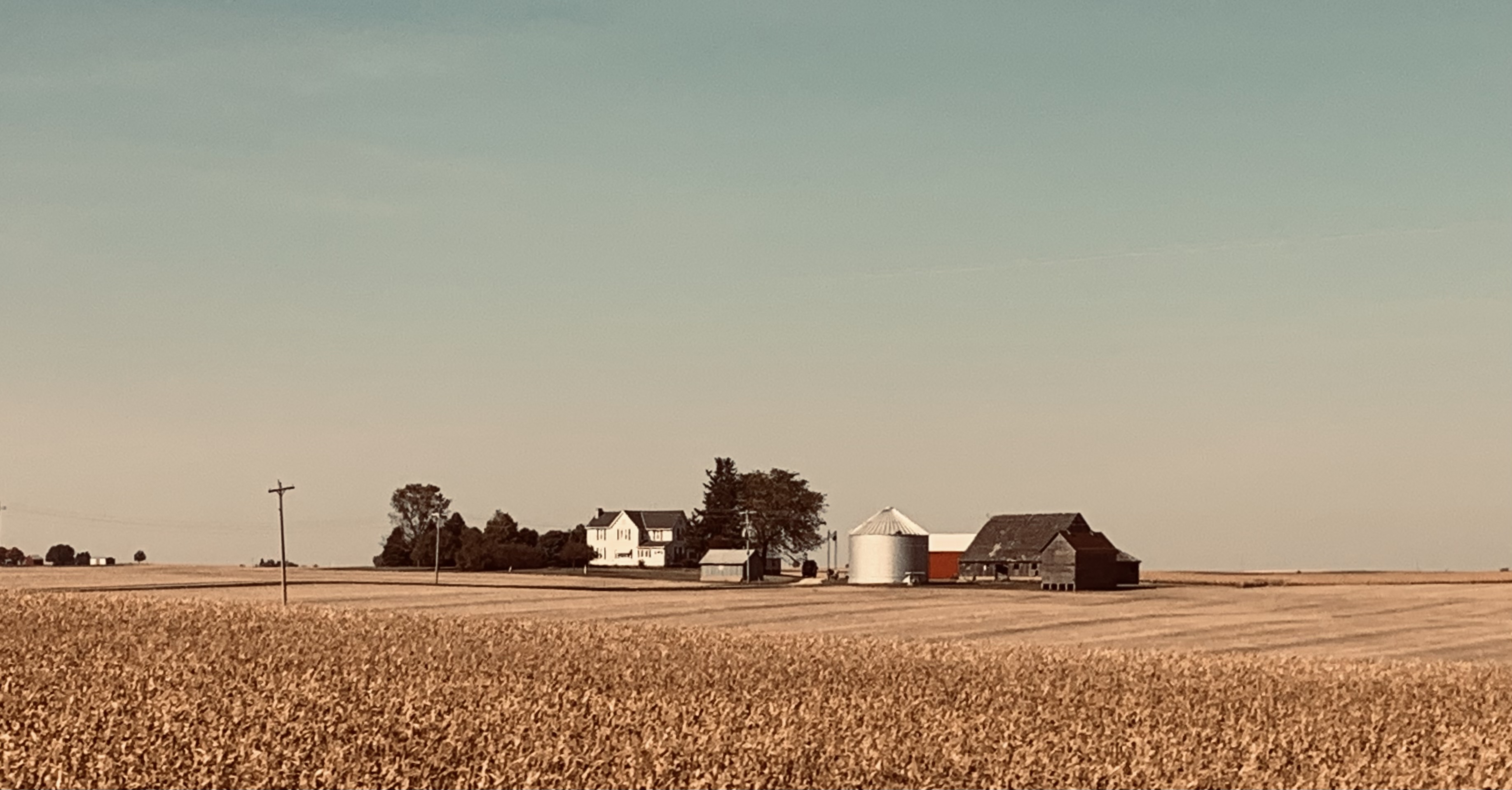
An hour or so further and an hour or so short of Chicago, this solitary farmstead captures a contemporary way of life we don’t experience on our western seaboard. And, while not wishing to wax political in this post, I believe I can understand why folks in these parts may see things differently than I do.


Chicago would be our literal end of the line. It’s where the Zephyr has always terminated. Chicago: with the ‘El’; the commuter lines to the suburbs; lines to the stock yards, steel and other industries; and the historic Union Pacific; Burlington Route; Chicago and Northwestern; and several other routes. We are informed that within the Windy City’s confines exist more miles of rail line than in the rest of the continental US combined. Rolling the final twenty minutes into Union Station, it’s a claim that’s hard to dispute.


After fifty hours on the train, I ask myself, “Did my long held dream of riding on the California Zephyr come true?”  


I recall myself in Dad’s ’54 Ford waving at passengers on the Zephyr as it wound through the Feather River Canyon. I question whether some little kid traveling up Highway 70 in the back seat of his dad’s current day SUV might be missing the opportunity to form his own romantic dreams about boarding this silver wonder and seeing where it takes him.


Resource: The Story of the California Zephyr, by Karl Zimmerman. Quadrant Press. © 1972.  Nice historic photo and narrative about the early days of the original Zephyr. (Good luck finding a copy. You might want to check out your neighborhood model railroad shop as they often have these kinds of books.  Plus, model trains are kinda cool.  They bring back the little kid in many of us.)

© 2024

Church of the Open Road Press

Sunday, February 10, 2019

THEY SAY THE NEON LIGHTS ARE BRIGHT

The Church of the Open Road gets some culture

It could be reasonably suggested that more culture exists in the average Petri dish or unattended vegetable drawer than exists within me.  That said, on rare occasion, I’ve made it to New York just to get a dose.


They say the neon lights are bright on Broadway.  And whoever they are, they’re right.


Our plan was to see Jeff Daniels in Aaron Sorkin’s new stage version of “To Kill a Mockingbird.”  And we did.  


Sorkin and Daniels teamed up to provide a 21st Century take on a 1930s circumstance that, sadly, is still all too prominent.  Had seeing “Mockingbird” been all we'd do in the city; the trip would have been a huge success.

But “Chicago” was continuing its decades-long run and Cuba Gooding Jr. would be featured for just a few more performances.  


The songs, the story, the choreography all made it unsurprising that – even on a cold Thursday evening in February – the show would again be a sellout.

The wild card Broadway show was “The Band’s Visit,” a lesser-known musical about an Egyptian “Police Band” visiting Israel to perform for some official opening but finds themselves stranded in a small Israeli village for the night after having boarded the wrong bus.  


A soulful cafĂ© owner, a heart-broken kid waiting by the phone, a timid, self-conscious teen are matched with the uniformed Egyptians (all of whom play their instruments during the show) as both comic stories and painful relationships develop. 

 Of the three shows, it’s the one I’d want to see again.  (For Candi, it’d be “Mockingbird,” and I’ll gladly go with her.)

As a child of the west, I enjoy a good canyon.  A narrow one with limited, winding access.  One where history took place that most people fly over.


But canyons in New York City are quite a bit different.


They are straight-edge straight paved routes where the winter sun might make it to the bottom for twenty minutes on a clear day.


Were it not for the sirens wafting up from below, the traffic’s roar from atop the Empire State Building sounds surprisingly like the rushing current of a spring time, snow-melt filled Feather River back in northern California.  Almost soothing.


The City does a good job of setting aside some very pricy real estate for open space.  Central Park is grand as long as you don’t try to compare it to the Tetons.  And city blocks, here and there as set aside for sitting and chatting and having a cigar.  Very pleasant.


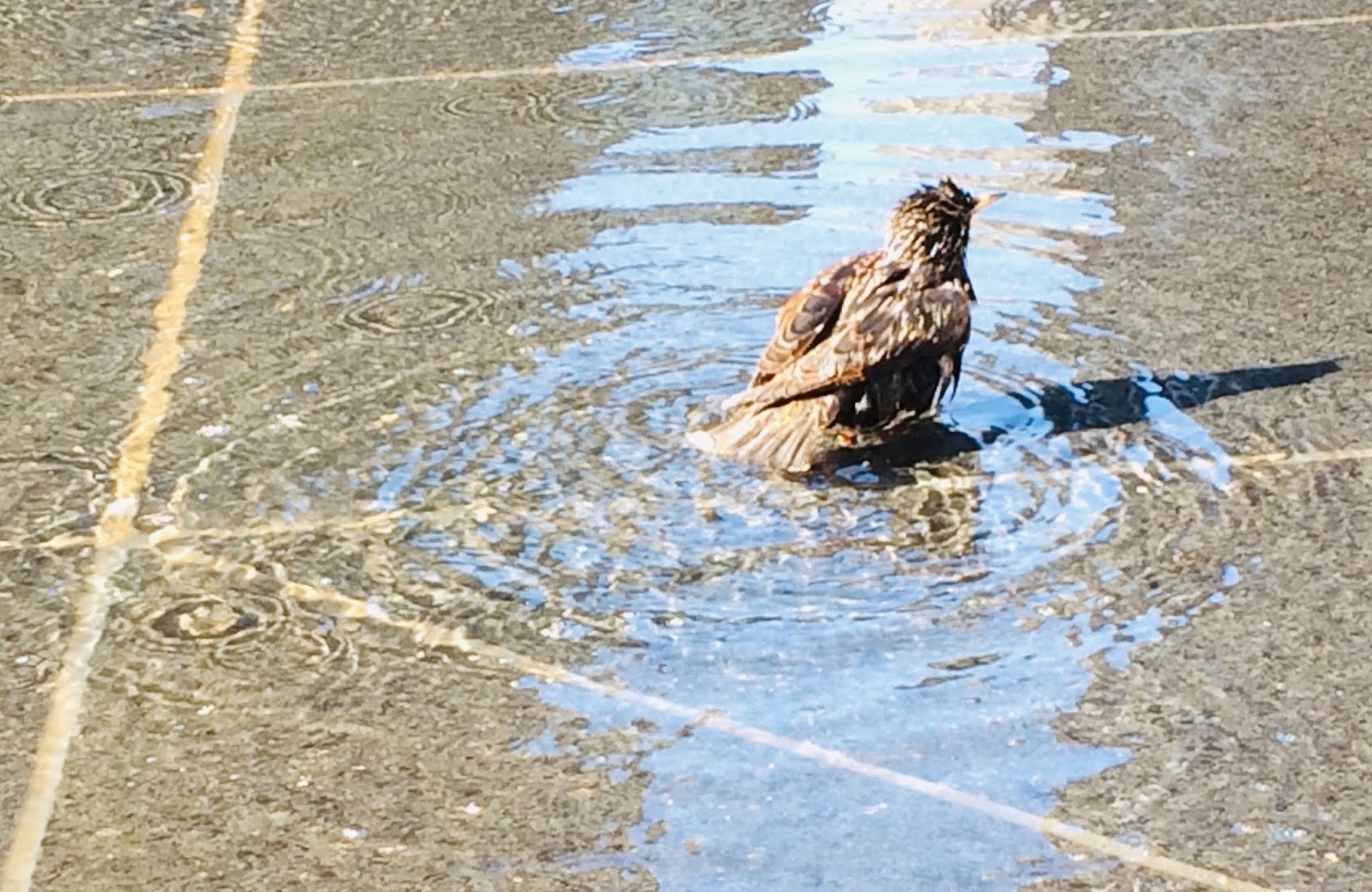
In this urban environment, I was delighted to catch glimpse of something natural going on in a rather unnatural place.


A few shout outs:  The Park Terrace Hotel on 40th Street is a four-years new construct walking distance to Times Square and the theater district.  https://parkterracehotel.com The staff is more than accommodating and delight in hearing about our day.  Across 40th is Bryant Park and the New York City public library – an architectural masterpiece that deserved our visit.

Astro Restaurant at 6th Avenue and 55th Street is a place I’ve stumbled into twice now. http://www.astrorestaurant.com/index.html   I’ll go back next time for another pastrami on rye and some fries.

Fine & Rare https://www.fineandrare.nyc offers enough choices in Bourbon and whiskey to make me more pro-choice than I already am.  Menu, presentation, preparation and service are outstanding – more than the average country boy might expect.  And the every-night live jazz featured this night a melodious songstress offering her take on the Great American Songbook – sometimes in French [pause for heart palpitations] – and a bass player who made me wish I’d practiced more as a kid.


The first time I’d visited the World Trade Center, several years ago, I must admit I shed tears at the two pools built on the footprints of the once-mighty twin towers.


This time, we took the additional step of visiting the profoundly moving museum assembled beneath where those towers stood.

Remnants of the foundation’s structure tell us something about the fallacy of foreverness…


… and the hulk of Ladder 3 reminds me not everyone who wears a badge or dons a uniform is a hero. Circumstance will determine who’s who.  New York City’s Fire Department(s) lost 343 souls in one day. Each a hero.  


More tears.

New York is a fabulous collection of contrasts: rich people and the down and out; soaring high rises and tiny historic chapels in their shadows; rushing traffic sounding like a wild river... 


...and from a distance, a still life of humanity’s greatest triumphs and greatest failures.

As we fly west, I wonder if I’ll ever be called back…


…and I revel at the open space beneath me.  From 36,000 feet, it feels more like home.

© 2019
Church of the Open Road Press

Thursday, April 14, 2016

A FEW QUICK LESSONS FROM A SMALL TOWN BOY IN THE BIG CITY

Last week, I visited New York City for only the second time and I could never rid myself of the perception that I was somehow a latter-day Dennis Weaver playing a bumpkin-esque Deputy McCloud navigating a land that might as well be foreign.

The buildings seem taller than some of our western mountains.

The favored hue for automobiles seems to be yellow.

Park trails look somewhat like sidewalks and the songs we hear are not from meadowlarks.

And the trains look far different than the freights that rumbled through my boyhood town.

Food is plentiful – but very expensive, unless you know where to look.

It is crowded and noisy and busy and, at first, confusing.  But the music and the rhythm and the change of pace is somehow good and refreshing. 

There may be more culture in any four-square-block area of Manhattan than in any other so-sized spot anywhere else on the globe.

Art is on display for all to behold.  Sometimes, just like riding along the road with a writer, you find yourself standing elbow-to-elbow with a master in his studio.

Bridges invite you to cross.

Corner cafes invite you in for a bite.  Memory if the pastrami here at 52nd and 6th still causes me to salivate.

Central Park in spring rivals the almond orchards in Butte County (CA) of my youth and I can’t imagine Paris being much more beautiful.  Ask me again once I’ve been there.

Coney Island was nearly empty of people – the rides don’t fire up for a few more weeks. 

And I was surprised when I snapped a picture Under the Boardwalk, that this is all I got…

The subways are not the cleanest places on earth, but they are efficient and run on time.   

Note: the best way to get from point A to point Q is to toss away the cell phone with its NYC Transit App and simply stand on the platform with a quizzical look on your face.  In under a minute one or more gracious citizens will ask “Where ya goin’?” and offer spot on advice as to how to get there: “Ya take the C line to 54th, get off and catch the L across town two stops.  Your restaurant’ll be a five minute walk…”


New York City presents big lessons to folks from small towns like me.  The biggest is at “Ground Zero,” the monument for those who perished on September 11th in 2001.  Two huge reflecting ponds no lay in the footprints of the original towers.  Into each of the 176-foot long sides is engraved the names of the nearly 3,000 people who perished that day.  

Most impressive was that fully one and a half sides eight sides of the pools was used to honor the first responders who rushed in while everyone else was rushing out.

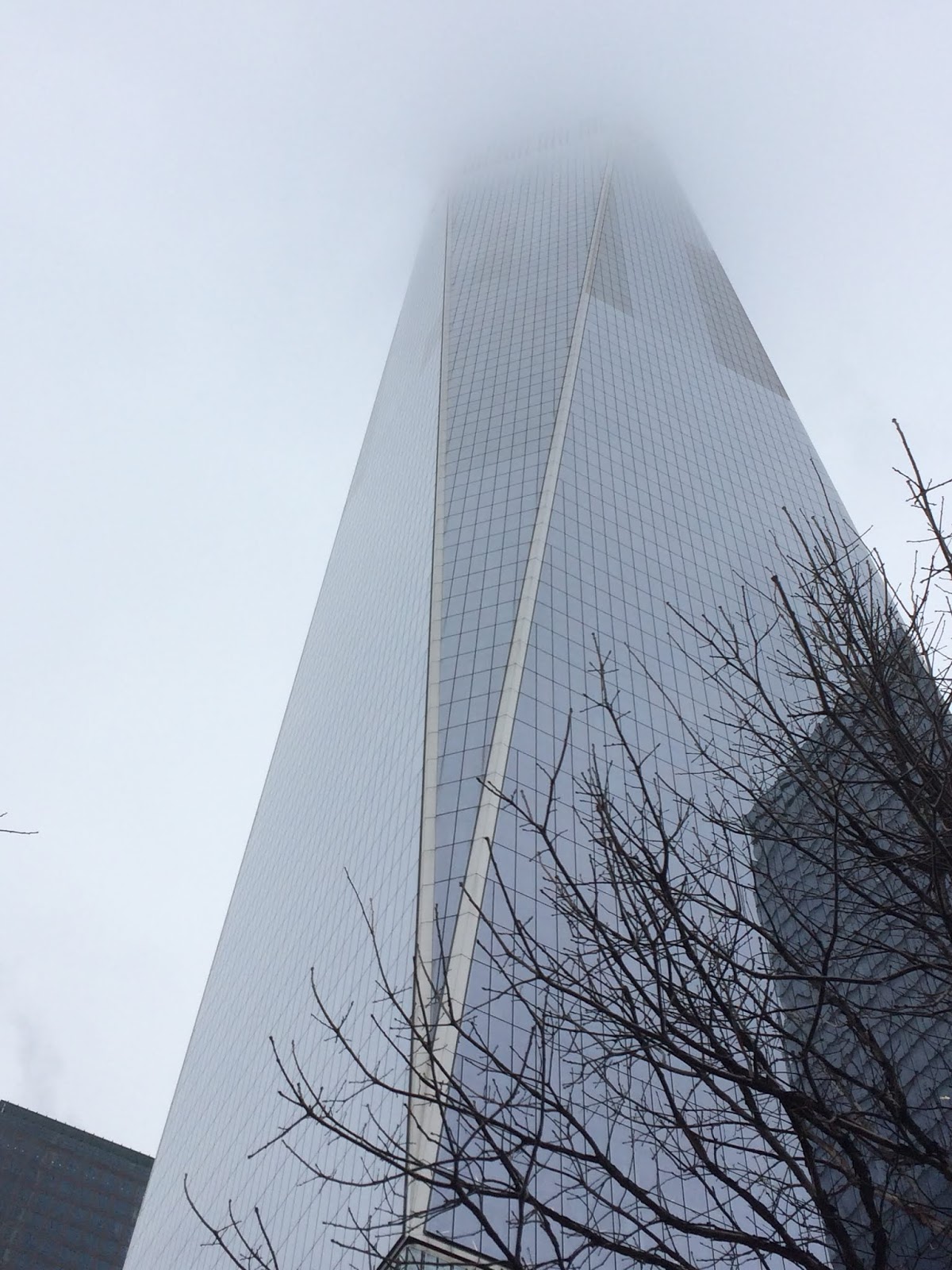
In place of the Twin Towers is a new structure that, dominating lower Manhattan, inspires the visitor to look heavenward.

My thoughts upon visiting this place were two.  One:  I had many, many difficult days over my career as a teacher and school principal – one was explaining to parents on 9/11 that no, we weren’t going to close schools in light of the attack.  “If we did,” I improvised, “we’d be letting the bad guys win.”  But that difficult day for me didn’t hold a candle to the day the men from the ladder company directly across the street experienced.  Few survived.

And two: When looking at the memorial grounds we are filled with a range of silent emotions.  If dominant in those is anger coupled with a need to “get even” with those who flew the planes into the towers – even though it is a very palpable and realistic thing to feel – if we allow that emotion to command our behavior, we will have missed the bigger lessons: the ones about might and restraint; about power and diplomacy; and about peace and its necessary coupling with understanding in order to be realized.

I harbor no regrets if the reader does not share this final conclusion.

© 2106
Church of the Open Road Press

Thursday, December 18, 2014

2014 – TURNING PAGES – 2015


What inspires us to turn the page, round the bend or seek the next rise in the road?

Perhaps it’s our individual histories – our experience from previous pages, twists and bends and summits.  Something rewarded us, so we look forward to the next something.

o0o

Humankind has been celebrating mid-winter holidays, I surmise, since the time we feared the mid-day sun was shrinking into the southern horizon.  The nights grew long, the days cold.  Would it ever return north?  We hoped we’d packed in enough provision to see us through whatever was to happen.

Our revelry buoyed us against the cold and darkness.  We prayed that the sun would return and it did. 

Over the course of history, somewhere early on, we realized that spring followed the darkness and with the spring would come the warmth of sunnier days and some sort of rebirth.  Plenty would follow.

Fast forward a million and a half years or so: We no longer scrabble for food – well, most of us don’t – but we do battle the winter blues.  Combating those, we throw up a tree, spangle it with lights, roast a turkey or a ham, and share gifts and kisses.  Soon, we find ourselves reflecting about the year gone by and anticipating the one upcoming. 

o0o

Collectively and individually, our innate desire is to explore some next chapter.  We seek to unravel the mystery around some next bend.  We want to conquer some next summit that we’re sure will steal our breath.  And we know we’ll be welcomed back to the hearth when we return.

So one year closes and another opens with inspiration – perhaps a humans- only emotion.  Moving forward, we trust that our travels will be rewarded with wonder, bounty and love.  Maybe that’s why we keep turning pages.

© 2014
Church of the Open Road Pres