Thursday, July 14, 2016

HIDDEN HISTORY ALONG THE SONOMA – MENDOCINO COAST ON CA 1


Interesting stuff – natural and human –
too easily passed by…

With the marriage of motorcycle and really good pavement, I commonly am lulled into a rhythmic pattern of enjoying the ride while, at the same time, missing the journey.  Falling into this trap is easy on California’s Route 1 in Marin, Sonoma and Mendocino counties.  Sure, there are turnouts, wide spots and vista points where millions have taken the same snapshot I’m about to take, but pausing for a more in depth experience – even for only an hour or two – is something for which I do not budget enough time.  Recently I planned a trip where I decided not to let that happen.

Here are some highlights I’m glad I didn’t miss on that recent coastal tour.

Point Arena Lighthouse:  I used to be an elementary school principal.  On those few bad days working, I’d go home thinking how nice it would be to be anything other than a school guy: ditch tender for some mountain water district; fire lookout on some remote peak; or light house keeper on the rugged Pacific shore.  This foggy, windswept morning, I stopped I at Point Arena to check out one of those theories. 

The Point Arena Lighthouse is an historic facility, once run by the Coast Guard. Now it is maintained by a foundation dedicated to preserving the light facility and its storied history. 

A fine little museum rests in the old light keeper’s residence where the history of the lighthouse is chronicled and the Fresnel lens in preserved.  Five dollars gets you in.  

For additional two-and-a-half bucks, you can climb the nearly 150 steps to the tower’s top where the lens refracted light to be seen for twenty or more miles from the point’s rocky shoals. 

Stepping out onto the tower’s circular balcony, an icy, seemingly unrelenting on-shore breeze took my brimmed hat away.  I watched it whip and sail and finally land several hundred yards east of the tower’s base.  It rolled to a stop in some ice plant.  I drew a mental line through one of my better job options leaving ditch tender and fire lookout to be further explored.

Seriously: Great views from the top and well worth both the fare and the time out of the saddle.


The Hot Spot: Located on the eastern edge of the Sea Ranch development, the Hot Spot’s enchantment is not a factor of roiling seas and crashing waves.  Rather it is a stroll through sublime redwoods tucked into a canyon carved by a little creek accessed on an old paved road that, at one time, lead to somewhere.

The woods are cool, dark and deep. Flora, not adapted to the rugged coastal environs, take root and stay for an extended spring.

The road in is private (as are all roads in the Sea Ranch development) but relatively unused.  It is accessed off the public Annapolis Road, which winds inward from the coast.  Turn north about a half-mile in at about the fire station.  Note that in the immediate area of the CalFire station is a small shopping area with a bang-up bakery http://www.twofishbaking.com/ offering great breads cooked daily and sandwiches well placed there-upon.  And since you’ve stopped at that bakery, splurge!  Try the chocolate-dipped macaroons.  They do not disappoint.

Down at the Hot Spot – not sure why this place is so named – there are a few picnic tables set along the banks of a creek near parking where one may enjoy that sandwich purchased just up the hill.


Annapolis Winery:  Our reason for heading out to Annapolis was to check out the winery that’s been established there since the late 70s. http://www.annapoliswinery.com/

Operated by a second generation, a visit feels much like a step back to the time when winemaking (and everything else) was simpler and more straightforward. 

The fruit is local, hand picked and pesticide free.  The Zin is particularly big.  A bottle waits in my rack for the next rack of lamb I’m going to roast; the Barbera I’d been meaning to save didn’t make it past the chicken we grilled the evening of its purchase.  Quite nice!

A visit with the proprietress opens one up to the varied and diverse dynamics of the area populace and that conversation, alone, is well worth the twenty-minute sojourn from the coast.  Nice picnic area next to the enchanting, rustic facility.


Fort Ross:  Little known to many is that the Russians maintained a foothold in California long before western Europeans claimed the territory.  The Spaniards were happy to let trappers from Mother Russia hold a presence if it would deter the Hudson’s Bay Company from becoming too familiar.  The Californios knew well the consequences of that. 

Fort Ross was the eastern most and southern most outpost in Russia’s eastward expansion across the Pacific. 

While their main economic interest involved fur trapping further north, the climate and soils of the Sonoma Coast provided a market basket for their efforts.

Alas, the outpost was a bridge or more too far and after only a few decades, the Russians abandoned it to John Sutter who salvaged the milled lumber from its stockade, transporting to Coloma to build part of his sawmill there.  My old buddy John Bidwell (I grew up in Chico, the town he later founded) was placed in charge of the deconstruction. 

The State of California has seen that this unique historic feature will not be lost to history.  The walls have been rebuilt and many of the buildings replaced.  Only one of the originals still stands.  

A wonderful interpretive center has been established and the day-use fee is a bargain.  Camping is available.  More info? http://www.fortross.org/  and ,http://www.parks.ca.gov/?page_id=449


One could easily spend two or three days exploring a very few miles of the Sonoma Mendocino Coast and not feel as if not a minute went to waste.  The challenge is to not be lulled by the marriage of motorcycle and Highway 1’s glorious pavement.

o0o
Accessing the area:  Located on California’s legendary State Route 1 about midway between Tamalpais Valley where it leaves US 101 in Marin County and Leggett, north in Mendocino County, where it rejoins it, there are several engaging routes linking the coastal highway with 101.  Get a good map or atlas and explore.

© 2106
Church of the Open Road Press

Wednesday, July 13, 2016

SUMMER’S SPRING BOUQUET


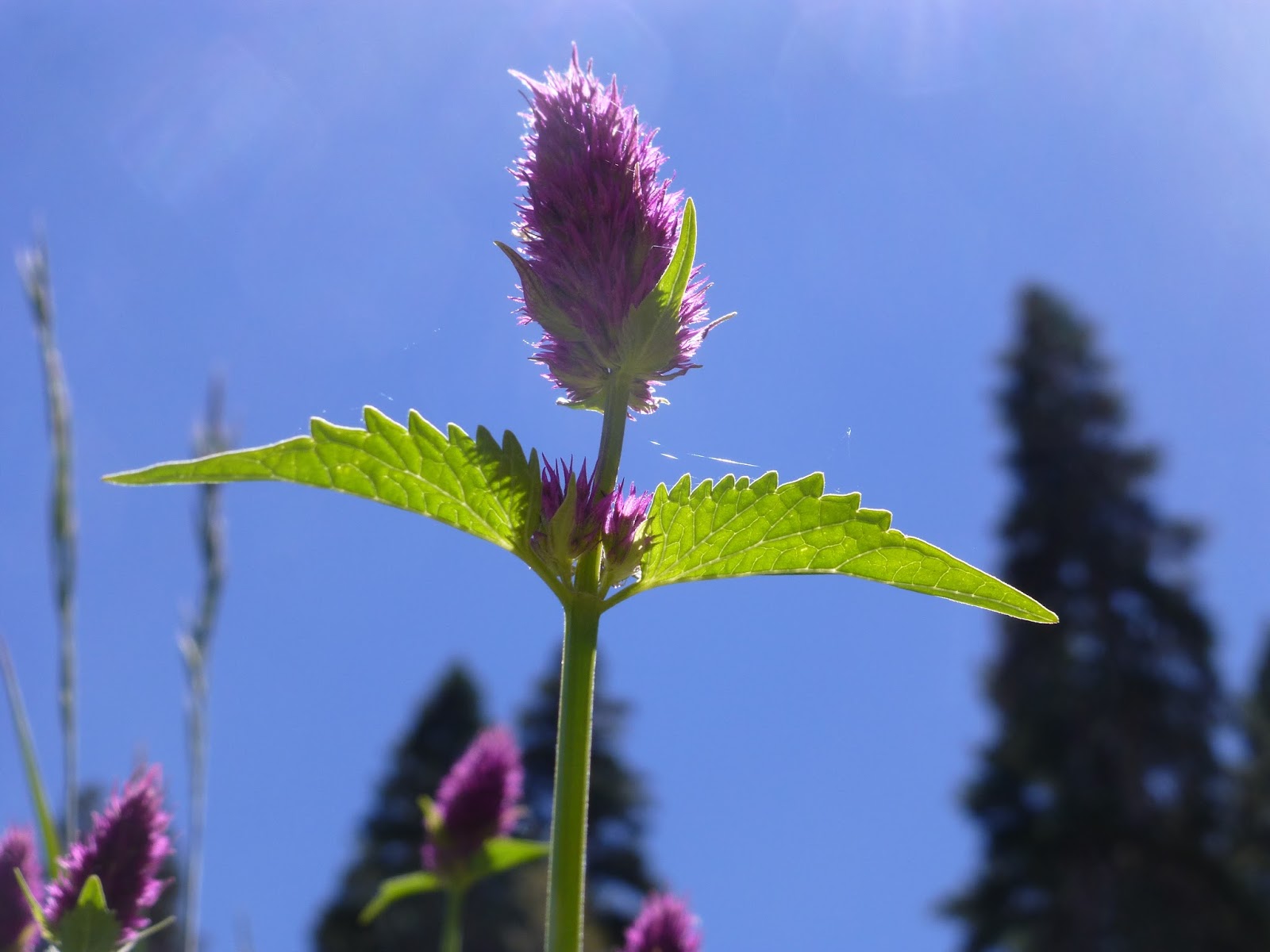
Glorious springtimes are too quickly a fading reflection in a rearview mirror.  About mid-April, in my home parts, the rains taper off, the grass browns and the blooms of spring dry and crisp and are soon blown away on a summer’s breeze.  We look backward and wish it could’ve lasted a bit longer.

So, a visit to the high country is in order.  Just a few thousand feet in elevation above our summer-choked valleys rest meadows and glades resplendent with spring flowers, for in that high country, spring lasts from early July until just a couple of weeks before the snow flies.

 On a recent July Monday, we found ourselves wading knee deep through flowers in the Emigrant Wilderness’ Eagle Meadow.   


A long time cow camp, the Eagle Meadows gateway to the wilderness is but one of many portals into a high country that invites one to forget the present – for the present – and relish that which may have gone unnoticed only weeks before.

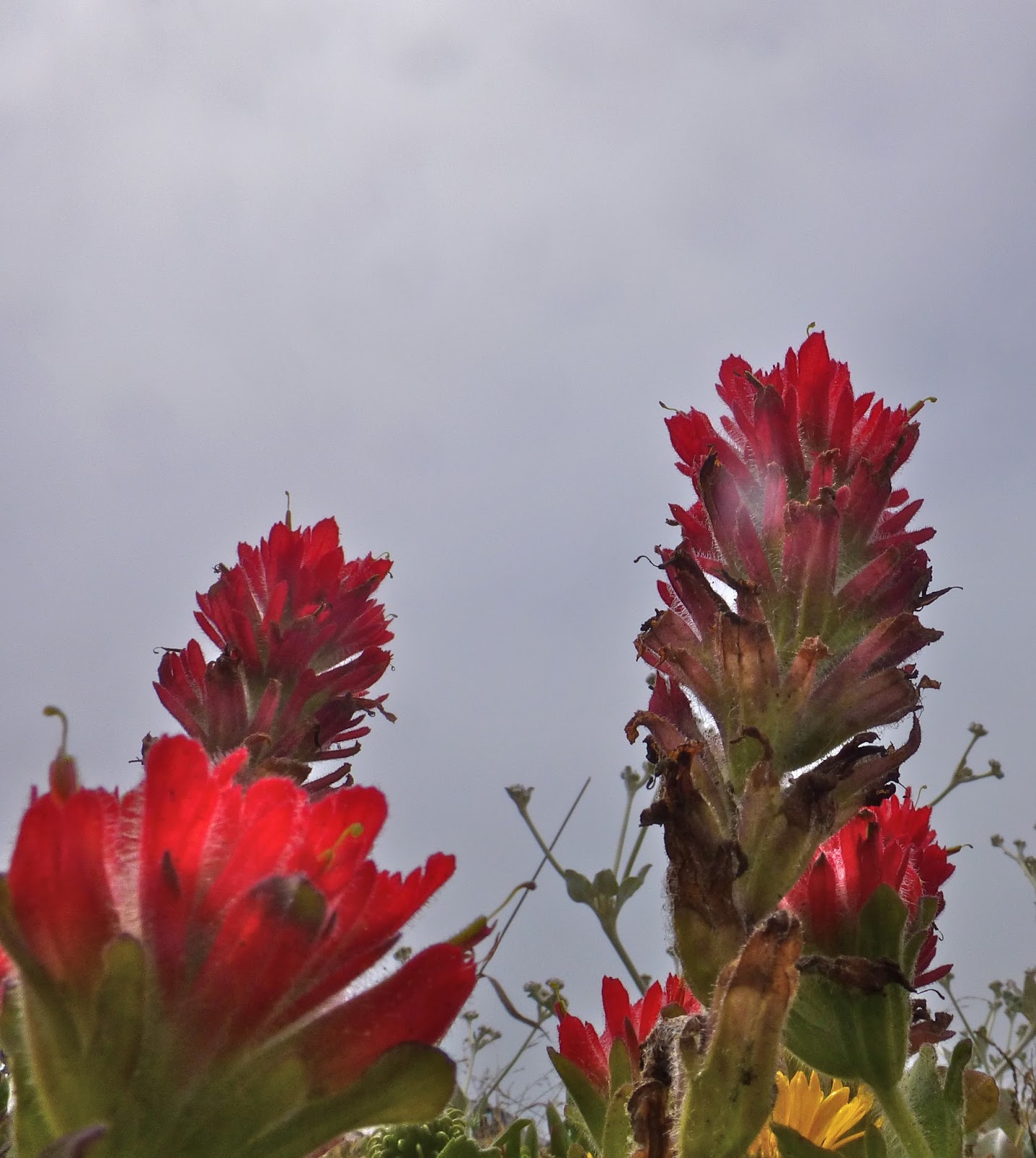
In composing this piece, I pulled my flower book off the shelf and began the process of identifying those specimens I’d caught with electrons. 


Then I asked myself, “Why?” 


After all, Emerson told us: “Beauty is its own excuse for being…” 


…and who am I to argue with Emerson?


Ultimately, we enjoyed our visit to the high country, spending an hour or two wading through springtime in a place where springtime seemingly never fades.


o0o

Today’s Route:  From Sonora CA, travel east on state route 108 through Twain Harte, Mi Wuk Village and Strawberry.  About thirty miles on, look for signage for the Niagara Creek ORV.  Bear right onto paved forest road 5N01.  Cross Niagara Creek continuing to watch for 5N01 signage.  Expect a dusty dirt section followed by more pavement and finally a two mile dirt run to the trailhead near the old cow camp.


The trail skirts Eagle Peak, climbs over Eagle Pass and drops into Cooper’s Pocket: our goal for a better-planned trip next time.

This post is dedicated to the memory of Jamestown teacher-buddy Trudie Loomis.
We wish it could’ve lasted longer.

© 2016
Church of the Open Road Press

Tuesday, July 5, 2016

PAYING THE STUPID TAX – Lesson 456


or
“Why I may not be smart enough for my Smart Phone.” 

About four months ago, I bit the bullet and bought my first “Smart Phone.”  I’d mainly used a phone for something called “making phone calls” up until then, but my pocket phone had crapped out, and, what-the-heck, why not try something new?  So, though my cell carrier, Consumer Cellular (great rates, actual humans performing customer service) I purchased what was, a year-and-a-half ago, a state of the art iPhone.  The thing is great.  It has more computing power than whatever they put on Apollo 13.  It does much more than I want it to do, which is simply make and take calls and serve as an answering machine upon which I might place a clever “leave a message” message. 

I don’t always carry it with me, but the other day, while I was building a garden shed a few miles from home, I decided to keep it in a spare pocket on my Carhart dungarees.

Carhart dungarees are the best. If you wear a pair of Carhart dungarees to the Home Depot, at check out, they automatically ask you if you are in their Pro Rewards Club.  Carharts are roomy and the canvas fabric never seems to wear out.  They have loops for not one, but two hammers.  (On this job, I did find out that if I put my 28 oz. framing hammer in one loop and my 16 oz Estwing in the other, the breeches had a tendency to slip off my rear and try to bunch up around my ankles – but that’s different story.)  Carharts have tons of pockets for nails and levels and squares and a bunch of stuff I don’t carry, so it was into one of these long, narrow receptacles on the thigh that I slipped my iPhone.

On the garden shed project, my extremely able work partner (Brother Tim) and I found ourselves shoveling gravel, horsing pier blocks into place, grappling freshly pressure treated dimension lumber, ferrying two-by-fours, bending squatting, reaching and hammering.  Somewhere along the way, when pulling an errant 16d sinker, my pry bar slipped off the nail head and whacked me smartly on what was already my bum knee.  Tough guy that I am, I paid it no mind.  (Pause here for eye rolls.)  About fifteen minutes later, I felt something moist on the calf associated with that bum knee.  Looking down, I discovered that the inside of my work pants were streaking a sticky, red substance. 

“I think I may be bleeding out,” I called to brother Tim.

“Can you grab that two-by and hold it right here while I hammer it into place?” he replied.

When we broke for lunch I headed in to drop my pants and survey the damage.  A small puncture was covered by a Band-aide® and all would be well for the remainder of our five hour and forty-five minute workday.

At home, I took my wallet and bandana out of the pants pockets, shook off some of the detritus that gathered in cuffs and crevasses, doffed the grossly filthy – but somehow satisfyingly so – work pants, sprayed them with some Zout® and tossed them into the washer. 

“If the blood stain doesn’t come out, I’ll have to come up with a good story to explain it – something better than not being competent with a pry bar.”


Samsung, iPhone’s most potent competitor, has recently run an add depicting a young man holding their product while he empties bottle after bottle of sparkling wine over the device.  Samsung’s entry in the smart phone market is waterproof.  My once-state-of-the-art iPhone 5S is not.  That, or it doesn’t like low sudsing detergents. 

Removing my Apple from the washer, which ironically is a Samsung, I switched the thing on and waited.

And waited.

And waited.

I pictured the electrons and circuit boards somehow vigorously shaking themselves off like Edward, our lab-mix does when he climbs out of a swimming hole.  Eventually, the screen lit up.  Cool!  The blue-lit background now looked like very impressive photo of a cloudscape.  I kinda like it.  I called my wife.  She answered.  Some of the other functions revived, but it wouldn’t take messages and apparently I drowned Siri.  This would never do.  I’d become accustomed to a phone doing non-phone stuff, stuff that I actually probably couldn’t live without.


Today, I drove down to the Apple Store. 

“Houston,” I said, “We have a problem.”

“Do you need to see a technician?” the greeter asked.

“I think so.”

“Let me enter your name and you can have a seat at the Smart Bar.”

“I don’t think I can sit at the Smart Bar,” I replied.

“Why’s that?”

“Blood loss.”

The greeter crimped an eye and slowly, but courteously began to back away. 

“Seriously,” I said, “I left my iPhone in my pants pocket and ran it through the wash cycle.  Heavy soils.  You see, it’s because I’d…”

“Feel free to look about the store and I’ll send someone over to you.”


Epilogue:  The phone was indeed shot.  But because I’d purchased the Apple Care support plan, something I rarely do when I buy a product, full replacement was only $79 – well short of the $349 cost of purchasing a new one outright.  Maybe I should take a seat at the Smart Bar.

© 2016
Church of the Open Road Press

Saturday, June 25, 2016

THE SEA RANCH CONUNDRUM


The Sea Ranch is a several thousand-acre development of gracefully designed homes set above ocean cliffs or nested deep in the coastal woods.   


It used to be a center for logging activities supporting San Francisco’s growth, then sheep property.  Some evidence of that ranching heritage still remains.  California’s Highway 1 – one of the world’s greatest motorcycling roads – ask anyone – bisects the development.  For a ten-mile stretch, small, well-maintained private roads reach into the prairie grasses that top the coastal rim, and amongst those grasslands are ribbons of houses most people I know could not afford to own. 

The Sea Ranch was going to be a modern coastal community located between Marin County’s wealthy enclaves to the south and Fort Bragg’s gritty, working-class outpost to the north.  There’d be grocery stores, hotels, galleries and recreation – all placed on this windswept tableland west of the San Andreas Fault and east of the Pacific.  It would be a play land for the affluent who could, in essence, have it all with them as they left it all behind. At least that’s my rudimentary understanding of it. 

At the time of The Sea Ranch’s origins, private coastal properties could change hands – change from ranching to subdivisions – change from open range and to privatized beaches and bluffs – without much oversight, coordination or discussion of opportunities gained or lost beyond those monetary.  Enter the California Coastal Commission whose existence owes itself to the threat of a widespread locking up of our coastline.  Visionary one time Sonoma County Supervisor, the late Bill Kortum lead a charge suggesting that the coastal expanses belonged to the citizens.  Excess, as it was proposed, needed to be curtailed in the interest of access. 


Many times I have traveled this section of highway thinking how great it would be to stroll along the tops of the bluff with that on-shore breeze whipping at my face.  Signs warned me off in all but a handful of designated access routes to specific postage stamp sized beaches.   

Now, however, because I dropped about a grand on three nights in a beautiful house only steps from the shoreline, I can access over fifty miles of trail with views stretching nearly to the Golden Gate, nearly to Cape Mendocino – the lower 48’s westernmost point – and, one imagines, nearly to Hawaii.  Not bad.

The conundrum is this:  When the land was privately held, cattle or sheep ranchers fenced and gated miles of the coast between highway 1 and the bluffs.   

Riding along on the BMW or Guzzi, I never considered parking at a wide spot, squeezing through the rail fence and traipsing across private property in order to glimpse a section of rocky coastline or roiling sea.  Why, then, should I be upset that a development of privately held homes restricts my access?

I know the answer to this, of course.  The Coastal Commission had it right.  Their argument that the coastline belongs to all and that access is for everyone is just in a socialistic sense.  Perhaps not so in a corner of the world where private holdings bring esteem and demand respect. 

Nevertheless, the kibosh was placed upon such urbane development and a more modest, but certainly quite upscale plan evolved: 

A clubhouse, some preservation of historic buildings, tended and groomed trails and CC&Rs.


From the porch of my mine-for-three-days home I determine that not much could be better than sipping a piping cup of Point Arena’s locally roasted coffee while the morning unfolds before me. 

Buzzards roost nearby. 

Swallows flit here and there. 

A grazing doe slips past. 

I can always hear the sea’s murmur punctuated by the distant bark of harbor seals and the occasional screech of a hungry raptor. 

This is a place where you can take that book you’ve been meaning to read with depth, the one that takes all your best and most focused concentration to fully appreciate, and although interrupted only momentarily by a kit fox carrying off a hapless vole or field mouse as he scampers between your house and the next, finish the book in a deep and satisfying manner.  (Mine happened to be Ian McEwan’s 2005 morality play: Saturday.) 

Later, I watch the afternoon breeze pick up, worrying and bending the coastal prairie grasses to its will. 

Members of the non-migrating herd of deer will soon be out for their evening forage.  Edward, the lab mix, will see them and downshift into his predator mode from behind the picture windows. “Can’t I just have one of them?”  “Sorry, Ed, No.”  The Sea Ranch is a pleasant, controlled place, “and you must be on a leash at all times.” 

The sun sets and the winds calm and the sea air floods the house through the home’s open windows, inviting us out for a moonlight stroll. 

Perhaps there’ll be harbor seals again tonight.

Yeah.  I like this.  But I’m not sure about the fairness of it all.  I think I’ll need to secure this rental for a few days in October, and again in February – perhaps yet again this time next year – to further research my feelings on the matter.

o0o

Accessing “The Sea Ranch”:  Located on California’s legendary State Route 1 about midway between Tamalpais Valley where it leaves US 101 in Marin County and Leggett, north in Mendocino County, where it rejoins it, there are several engaging routes linking the coastal highway with 101.  Get a good map or atlas and explore.

Rental information is readily available.  We secure ours through http://searanchrentals.com/

© 2016
Church of the Open Road Press

Saturday, June 18, 2016

THE INCLEMENT EUREKA, YREKA, BURNEY ADVENTURE


“Unseasonable weather is typical this time of year.”
- Dad

This would be the first “tour” on the Thunderbird LT.  LT reportedly stands for “light touring.”  We’d find out.  Our goal was to drive north to Eureka, east to Yreka, where brother Randy would split north on his Guzzi Stelvio, and I would head further east to Burney and Lassen Volcanic National Park.  Summer being but a week away, the weather should be perfect.  But, as things turned out, unseasonable weather is typical this time of year.

Upon my return home, I realized I did not stop frequently enough for pictures, as is so frequently the case.  But oh, well…


Every good ride starts with a good breakfast and we are never disappointed with the fare at the Bluebird Café in Hopland, California.


We pose the bikes at a lovely rest stop north of Willits on US 101.  A nice place to pause even if you don’t have to “rest.”


Having stayed at the historic Benbow Inn http://www.benbowinn.com/, just south of Garberville, I insisted we stop there for coffee just to show the place off to my riding partner from Washington State.  The historic bridge and the inn are sublime.


North of Garberville on the old 101 at Redway, a route heads west toward the Kings Range National Conservation Area (great, remote Lost Coast hiking) and Shelter Cove.  Bearing right on Ettersburg Road toward Honeydew the pavement tunnels through oak woodlands and across dry pastures.  I’d taken this route on the more capable BMW GSA a year ago and, about forty-five minutes into this leg of the trip, I realized why I swore I’d never take it again.  Just two-and-a-half miles from Honeydew the road begins a very steep descent, corkscrewing down perhaps 600 feet in elevation in what seems like about a four hundred yard section the way the crow flies.  The problem is that, with no turn around and with a stupid desire not to revisit the previous forty-five minutes of travel, this is where the pavement ends.  Hidden beneath a four inch layer of dust and grime is a jumble of brick-sized rocks each intent on throwing the unsuspecting motorcyclist off his or her mount.  And I was on my pristine, new, 800-plus pound Triumph Thunderbird with, as yet, no scratches.  Second note to self: Don’t do this again!

Mattole Road is paved, sort of.  We follow it west of Honeydew and past Petrolia, the little wayside where oil was first discovered in the state.  We find reward for our gritty recent travel after several chunkily paved miles: a six-mile run just north of the Lost Coast.


Brother Randy opines that the Mattole Road could provide someone engaged as a pothole filler employment for life.   


From this remote section of coast, we climb over Bear River Ridge and drop in to Ferndale for a slice of pie and a little time out of the saddle.

Day 1 ends at the historic Eureka Inn http://www.eurekainn.com/Pages/default.aspx a short stroll to that city’s picturesque fishing port and some pretty good dining at the Café Waterfront http://www.cafewaterfronteureka.com/.  


The route from Eureka to Yreka would be less challenging to either bike’s suspension.  US 101 north along Humboldt Bay is a delight in the early morning mist.  East on CA 299, we pause at a vista point to glimpse the coastal-most hills, but the big blue Triumph somehow gets in the way of the photo.


CA 96 junctions 299 at Willow Creek where we’d stopped advisably to top off and inadvisably for coffee.  96 passes through Hoopa, crosses Mill Creek Ridge and then drops into the Klamath River Canyon.  With sweeping curves through rocky canyons and into and out of remote burgs, state route 96 may be one of the great motorcycling roads in all of northern California – which is saying something.


An oft-forgotten historic fact is that California’s gold rush reached this far north and west.  Mining claims are still active.


A fine suspension bridge crosses the river at Orleans, worthy of a photograph, but, once again…


To further animate our ride, an early wildfire was active west of Happy Camp; helicopters swoop into the depths of the canyon to capturing Klamath River water to be dumped on the blaze.  Seeing the various stages of fire-scarred hillsides on this drive, one wonders: Is there ever a time when some portion of the Klamath National Forest isn’t on fire?


All in all, it is 156 miles from Willow Creek to Yreka.  The highway traces the Klamath in a most engaging fashion, but toward the end of the run, the limited fuel capacity of the ’09 Stelvio becomes a concern.  Topping off in Willow Creek was the right call, indeed.


After a late lunch in Yreka, brother Randy headed north while I sojourned east into the Cascades.  A leadened sky portended showers, but it wasn’t until twenty minutes down I-5 that I stopped to wriggle into my rain gear, placing my camera a layer or two out of easy reach.

California’s route 89 is also a keeper.  Coursing from Mount Shasta City south to Topaz Lake on US 395, it crosses the Cascades and the Sierra past lovely lakes (including Tahoe) warranting several days simply to appreciate its diverse beauty.  I’d get only as far as Burney, enjoying high pine forests illuminated by dappled sunlight as the series of thunderstorms bumped overhead.


Arriving at my lodging early evening, I shuddered to think of my newly beloved Thunderbird getting soaked as the night’s rain set in, but there are some things you can help and some things you can’t.


My plan for day three involved touring Lassen Park on CA 89.  Reports indicated that its winter closure ended two days ago, but by morning, the snow level had dropped to 5,000 feet.  With the park road’s summit at over 8,000, I chose a westerly escape route down a curvaceous, but wet, CA 299 to Redding and then home.

Disappointed?  Nope.  As a six or seven-year-old on my first backpack trip – mid-June in Lassen Park – sleeping bag in a plastic tube tent as rain and hail pounded Dad and me to sleep, I’d learned early on that, in these parts, unseasonable weather is typical this time of year.  Dad said so.

o0o

Tour Route – Day 1:  US 101 north; at Garberville/Redway, west on Briceland Road bearing right onto Ettersburg Road (I’m tellin’ ya: don’t ever do this!), at Honeydew west on Mattole Road to Ferndale; north on 101 to Eureka.  Day 2: US 101 north to Arcata; east on 299 to Willow Creek (get fuel!); north on 96 toward Happy Camp and Yreka.  South on I-5 to Mt. Shasta City, east on CA 89, west on 299 to Burney.  Day 3: Live right and it won’t have snowed in Lassen Park, otherwise, continue west on 299 to the North Valley around Redding.

© 2016
Church of the Open Road Press

Friday, June 17, 2016

WHACKIN’ WEEDS


Escaping LA, my folks moved us to a five-and-a-half acre spread on a creek near Chico.  The back four acres were planted in almonds; the front was a fruit orchard that would soon succumb to too much water when Dad decided to put in a lawn.  The lawn Dad envisioned turned out to be an acre-and-a-half predominately made up of weeds. 

As the task of tending of the grass-weed parcel grew to an enormous reality, Dad purchased a heavy-duty lawn mower from a power tool shop around the corner on Nord Avenue.  A Jacobsen by brand name, it was unlike any mower any kid in the neighborhood had ever seen before.  The thing looked like a weird mechanical grasshopper with big, big bicycle wheels on the back, a smoke belching two-stroke engine set between the wheels and a nasty, spinning blade propelled by a V-belt under a cowling that stretched about three feet in front of the motor.  A long, black, custom-bent steel pipe shaped like a squared off U formed a handle.  It was about eye level for me.

By the time the peach and plum trees finally gave up, brother Bill was about ten and I was eight.  Both of us needed spending cash so Dad arranged that if Bill would mow the acre-plus to the left of the gravel driveway, he could earn about a two bucks a week.  I was in charge of the smaller parcel on the right for seventy-five cents. 

Wow! I thought. Almost a whole dollar for an hour’s worth of pushing the grasshopper-mower around the yard?  

In my mind’s eye I could see all the neighborhood boys perched on our rail fence watching me with envy as I operated the thing.  On top of that, there was this: A little mom and pop called Neal’s Market was located about a block off my route home from Rosedale Elementary.  The Neals sold homemade tacos for a quarter from a counter toward the back of the store.  I figured with that kind of money, I could get me a taco almost every day of the week on my walk home from school.

“It’s a deal, Dad!”


For I don’t know how many years, brother Bill and I dutifully tended the grass and weeds in front of the house until Bill found other interests and my mathematical prowess informed me that two-and-a-quarter for three hours mowing an acre-and-a-half of grass didn’t pencil out no matter how many tacos it would buy me down at Neal’s Market. 

Dad would be on his own. 

Soon, a bright red Toro riding mower arrived, and while we were once again eager to contribute to the lawn’s upkeep, Dad was loath to let us mount up and race around the yard and pull wheelies on it.  At some point after the appearance of the Toro, the Jacobsen disappeared.  I thought it might have been sold back to the mower shop around the corner, but brother Bill insists Dad just gave it away to someone who had weeds to knock down somewhere else in town.


Chico is a small northern California city that, once many folks move to it, they don’t move away.  It is a beautiful example of small-town America.  In the mid-50s, there was a state college and a nice main street with train tracks down the middle. The creek we grew up on coursed through town splitting the streets to the south from the avenues to the north.  The watercourse offered a pleasant, musical burble while its pools proved to be a cooling place to swim on sweltering summer afternoons.  With the passage of time, those who moved in but not out of Chico have brought growth, but not much has really changed.  The college is now a university and the tracks down Main Street are gone.  Some shopping has moved from downtown, but the creek still provides a soothing soundtrack on quiet evenings.

Our five-and-a-half acres was sold and subdivided decades ago and career moved me away.  But brother Bill stayed near town, purchasing a parcel not dissimilar from the one we grew up on.  Lots of ground.  Lots of weeds.


I visited the other day and something caught my eye.

Seems brother Bill was right.  Dad did pass the Jacobsen to someone who, like Dad, ultimately gave up on having acreage with weeds to conquer.  When the person decided to downsize, by one of those small town quirks of fate, Bill found himself helping with the process.  His compensation?

“I’ll take that old mower, if you don’t have a use for it.”  


© 2106
Church of the Open Road Press
 

Friday, June 3, 2016

DINNER OUT IN A SMALL TOWN


A Church of the Open Road Report
about family, food and bigger things…

The restaurant is called Scopa (http://www.scopahealdsburg.com/).  Tucked into a narrow space across from Healdsburg’s town square, the venue seats about thirty inside and, through the window that opens onto the street, another eight at a common table on the sidewalk patio.  Intimate. Italian. Perfect for the evening.  Our dinner was in celebration of the 24th anniversary of Candi’s 39th birthday.  Attending would be our wine-making daughter, Jessica, a young professional who knows her way around this wine-centric town and its wine-centric wine lists.

After some small talk with the waitperson whom she’d known through various encounters in the industry, she settled upon a Piedmont Gio Dominico Negro Arneis for the salad course to be followed by a “big” 2012 Aglianico from friends Ryan and Megan’s Ryme Cellars (https://rymecellars.com/).  Both bottles would arrive at the same time with the red decanted in order to breathe, volatilize and do other stuff a country boy like me lacks sufficient sophistication to fully understand.  The red would accompany a rib eye which was ordered not rare or medium, but “perfect.”  And it would be enough for three.

About halfway into salad, a group of thirty-something gents hailing from Dallas, we were to discover, sidled into that outdoor table just though our open window.  As Californians, we’re supposedly not ‘spozed to think much o’ Texans, now are we?  Cultural differences?  Conservatives versus liberals?  They’d brung a couple of magnums of something red purchased on the square.  Overheard were questions about which white wine from the list that might precede their repast.

“Try this,” Jessica said as she handed the half-full remains of the Gio Dominico through the opening.  “Really.”

After a bit of Dallas Cowboys / San Francisco 49er ribbing, the Texans learned, thanks to the waitperson, our daughter’s roots in viticulture and our celebration with three became, for a time, a celebration with ten.  They were visiting the area intent upon checking out some of the area’s 400 wineries and, as a result of our cordial chitchat, at noon the next day, they’d be visiting Jessica’s Passalacqua by-appointment-only winery. (https://passalacquawinery.com)

Dinner came.  Salted, peppered, seared, barely transitioning from red to pink on the inside, and accompanied by crisply roasted Yukon Golds, the rib eye was, indeed, perfect.  (“Bet they can’t find steak this good where they come from,” I said just loud enough to elicit chuckles from the guys out the window.)  Ryan and Megan’s Aglianico paired perfectly, and to top it off, a mysterious man-about-town, sitting deep in the recesses of the restaurant’s narrow footprint divined that this was somebody’s birthday and provided a molten chocolate soufflé which proved to be dessert.  Again, perfect.

Dinner out in small town America – where everybody knows everybody else, or soon will.


Concurrently, a couple of hours south, in San Jose, protesters engaged in a violent confrontation at a rally for a rather polarizing political figure.  Made the front page. A yuge unflattering image, to say the least. 

Sad.  Counterproductive.  Unnecessary.  Behavior that makes ‘Murica look doltish.

Better, might I opine, had those factions sat down and shared a delicate Arneis or a big Aglianico with something chocolate and, I don’t know, chitchatted…

© 2016
Church of the Open Road Press