Monday, September 5, 2016

FORT BRAGG’S ONCE-HIDDEN COASTLINE


The Noyo Headlands Park:
A triumph of community

Family friends owned a little place north of Fort Bragg on Pudding Creek.  Twice or more times a year, we’d escape Chico’s summer heat by driving to the coast and hanging out with them.  We’d enjoy the sandy beach just steps from the redwood and cinderblock house.  It had a great view of the ocean and, as the sun set, a cracking fire was set in the red, funnel shaped fireplace next to which we’d drift off to sleep.  Daytime activities included that beach, and hiking north toward MacKerricher State Park, picnic loaded in a daypack or crossing the Haul Road trestle as a short cut to town, sharing that narrow bridge with frighteningly huge Georgia Pacific log trucks.  (There was a great five ‘n’ dime on Franklin Street – always a destination for a kid.)


A few hundred yards south of the bridge, an imposing gate and even more imposing signs warned our pre-teen curiosity against trespassing through the mill, a staple of the economy since the late 1800s.  We’d divert from the bluffs above Glass Beach and follow West Elm Street toward the busy main drag through town, California’s route 1.  Occasionally, before turning inland, we’d hook our fingers through the people-proof chain-link fence and wonder what the coastline looked like behind the mill.

Georgia Pacific – or whoever owned it at the time – shut down the plant about thirty years ago.  Many of the buildings fell into disrepair or were razed, and much of the equipment hauled off to be used elsewhere.  
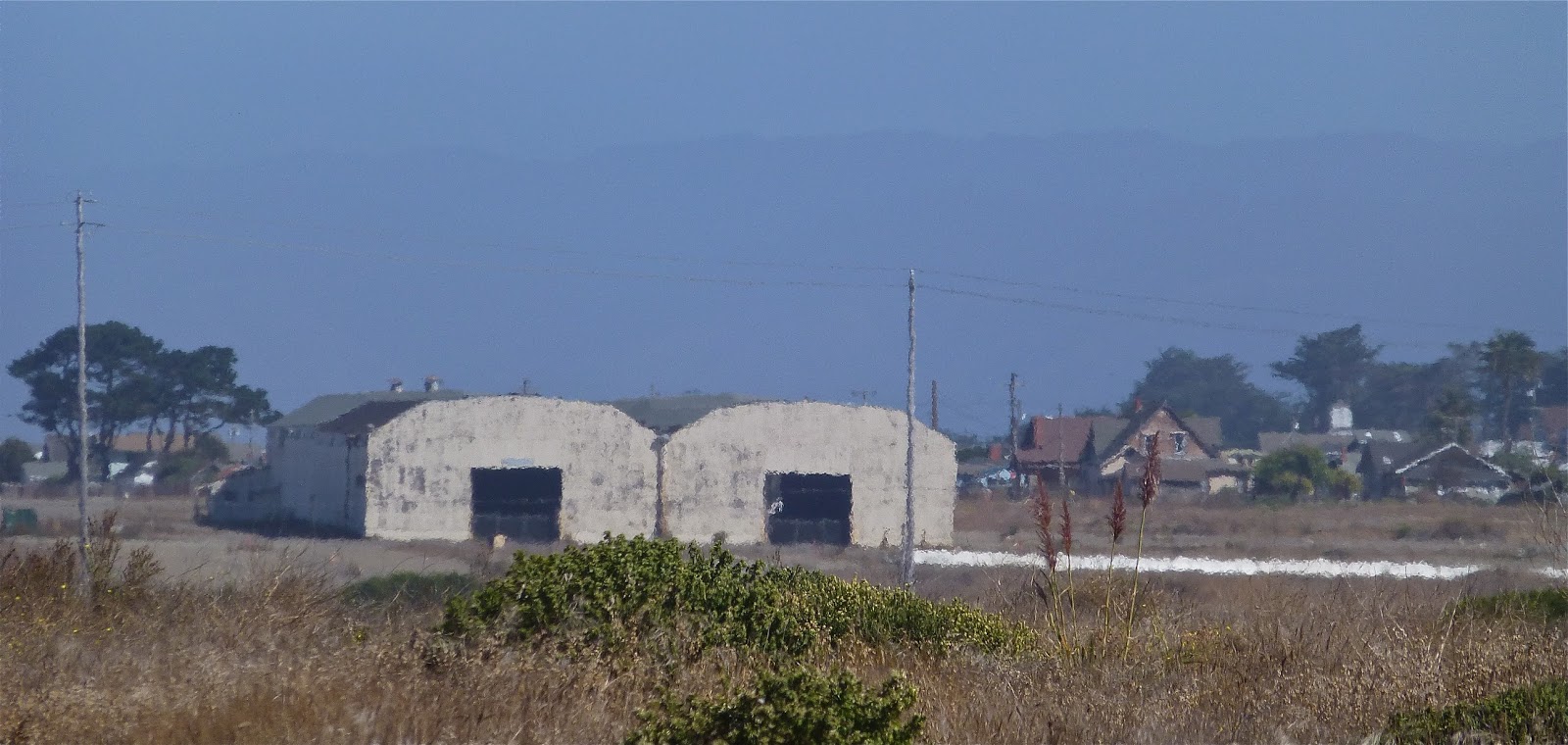

But that fence remained, essentially cordoning off most of the coastline west of Fort Bragg’s downtown proper. 

Each of the many times I’ve cruised through Fort Bragg in those thirty-plus years, I’ve recalled my nine-year-old fingers gripping the galvanized fence wire and longing to see what was on the other side.


Now, through the collaborative efforts of the community, the Pomo Indians, the Coastal Conservancy and a host of volunteers, the hidden coastline has been lovingly opened for public exploration. 

The park has two main access points.  A wide, mostly-paved trail heads north from a parking area of Cypress Street, and south from Glass Beach at the other end of town.


That nasty, old fence, a remnant from my youth, has largely been removed. A small section of trail - perhaps only a few hundred yards - remains incomplete as volunteers work to remove some hazards left in the wake of the milling operations.


Numerous benches provide resting spots – each bench uniquely designed by an area artist and each providing a dramatic view of the coast and the nearby activity on the ocean: bobbing fishing boats momentarily lost behind swells; gulls gliding and screeching, rising and falling; migrating whales breaching…

Side trails allow one to venture out to once cloistered bluffs and down onto beaches formerly only accessed by boat. 

A redwood sheathed cabin, once located in front of the Safeway and formerly used to display the application of different cuts of wood milled by the company was purchased for a mere buck and moved to a site mid-way along the trail to serve as a modest interpretive center.  Plan on leaving a donation, because the park charges no fee.

Informational signs offer a bit of history along the way: of the landing strip that allowed the then Union Lumber Company execs to fly in from wherever; of the few buried in the cemetery over Noyo harbor…


…including, perhaps, the grave of the nefarious chap who squatted the mill on the sovereign lands – well, at least reservation lands – of the Pomo.  


Other signs tell of the symbiotic relationship that exists between the earthbound and the sea.


Strolling the cliffside trails on a warm and breezy September forenoon, I kept saying, “This is great.  This is great.”  


At the next bluff: “This is great.”  In response to a wave crashing and filling a tide pool amongst the sandstone and rocks:  “This is great!” 

My hiking colleagues that day probably thought I was addled, repeating myself so. 

But then, their childhood memories did not include nine-year-old fingers laced through a Cyclone fence wondering about what was on the other side – and wishing some day to see it.

o0o


Notes: 


And on the challenges in building this resource: http://www.noyoheadlands.org/


© 2016
Church of the Open Road Press

Wednesday, August 31, 2016

OUT OF TOWN VISITORS - a follow-up


a follow-up

For those of us who may enjoy the adventures of others as well as their own, there’s this…

Kerry and Paul Dickson, residents of the Australian state of Tazmania, recently enjoyed a North American adventure wherein they acquired a 41-year-old Moto Guzzi El Dorado (think about that) in Nova Scotia and piloted her (her name was “Ellie”) across southern Canada the northern reaches of the United States. 

Their tour took the better part of two months and is chronicled in a blog they kept called “Sure Why Not?”

Along the way, they encountered beautiful scenery, wonderful people and a few issues keeping the old girl together for the duration.  But what a story!

A former member of the Guzzi community, Candi and I had the pleasure of hosting Paul and Kerry for an evening of wine, dining, road tales and (for them) rest before their final day’s run into San Francisco.  What a delight!

Courtesy: Paul and Kerry Dickson
Here is the link to the travel blog they maintained.   http://sure-why-not--2016.blogspot.com/

Sit down with your favorite spirit, spend an hour or so on their website and enjoy the ride with them.  (Understand that the series of posts will appear with the last day of their travels, first.)

© 2016
Church of the Open Road Press

Wednesday, August 17, 2016

CROSS COUNTRY ON ELLIE: A 40-YEAR-OLD MOTO GUZZI


Vicarious Life through Others’ Travels

In 1971, I purchased my first new car: a Clementine orange VW Super Beetle.  I loved that car. While it still resides in my heart, I wish it still had a place in my garage.  It was truly the one that got away.  If I still owned the Bug, it likely would travel no further from home than the coffee shop on Sunday morning, because, well, what if it and its forty-plus-year-old technology broke down?

I was reminded of this the other night when visitors from Tasmania, whom we were yet to meet, tooled into our neighborhood on a 1975 Moto Guzzi El Dorado.  Paul and Kerry Dickson (again, from waaayyyyy down under) purchased this classic a couple of months back from a seller in Nova Scotia, Canada, basically sight unseen.  Her name, they were told, was “Ellie.”

The story goes that the Dicksons flew into New York, caught a hop across the border, took Ellie for a short spin, laid down their money and headed west.

That takes some measure of guts, I’d opine.  I suppose if I found a seventies-era VeeDub, I could attempt a similar journey because those old Volkswagens were not all that uncommon.  We still see a few of them belching about and parts still pretty available.

But on a vintage Guzzi?  Trying to find parts for a forty-year old Moto Guzzi must be a bit like finding the third tablet upon which the rest of the Fifteen Commandments are chiseled.  But Mr. and Mrs. Dickson were undeterred.

They rode and camped and rode and moteled and rode through some of the most scenic territory in all of North America seeking small museums, enjoying mom ‘n’ pop cafĂ© meals in tiny towns and sticking, whenever possible, to America’s less travelled by-ways.

The story of their introduction to Ellie, the El Dorado, has a love-at-first-sight poignancy to it.  Photos of the motoring to the top of New Hampshire’s Mount Washington and Wyoming’s Devil’s Tower added more bullets to my burgeoning bucket list, while shots of Montana-Wyoming’s Beartooth Pass reignited the excitement I felt on my trip a few years back on my then four-year-old BMW.  Except they did it on Ellie, a contemporary of my beloved, long-gone ’71 VW.

Along the way, these travelers stopped in at our house for some ribs, some rest and this reminder to self: As long as we continue to expand our view of the world and our appreciation for the diverse gifts it offers, we can keep our thus-engaged selves young.  Perhaps there is no better way to do this than through travel on a motorcycle.

Better still if her name is Ellie.


o0o

Notes: 

More exact details of the Dickson’s transaction and amazing trip can be found on their blog “Sure – Why Not?”  Plan on being captivated by the pictures and the narrative.  And keep checking back as Paul and Kerry are still composing thoughts and selecting pictures that represent the completion of their journey. Here’s the link: http://sure-why-not--2016.blogspot.com/.  

Special thanks to Patrick Hayes (left) for arranging the connections necessary to allow for visitors from the other side of the globe to come to our little place for a meal and a night’s rest.  Patrick is a moto-aficionado (and Church of the Open Road reader) who somehow hooked up with me through the blog during my Guzzi ownership days.

And kudos to the Guzzi community – as Kerry refers to them – both in the states and in Canada who helped ensure that Paul and Kerry’s adventure would be the utmost success.  I'm thinking I need to make an effort to "rejoin" that community...

And this...

“You meet the nicest people on a Honda.”
- Corporate slogan ca 1964

I spoke with my 94-year-old mother the other day and shared that visitors from Tanzania would be stopping over.  “Where’s Tanzania?” she asked.  I explained and she said, “My, you do lead an interesting life.”

No, I thought to myself, but I certainly have met some inspiring people who do.


© 2016
Church of the Open Road Press

Tuesday, August 9, 2016

FOX CREEK VENTED RACING JACKET


A product review

Over the nine-plus years that I’d owned my trusty Tour Master Coaster II leather jacket, somehow the thing had shrunk – just hanging there in the closet.  The process was gradual having occurred hand-in-hand with an increased consumption of bacon-cheeseburgers on my part.  Regardless of the cause of the “shrinkage,” it was time for me to find a replacement, so I did a little shopping around and recently dropped five bills on a Fox Creek Vented Racing Jacket. 

Shortly, I hopped astride the T-Bird and, with the chest and back vents open, headed out toward Napa, then across the Sacramento Valley with temps rising to mid-80s.  When the mercury started to embrace 90, I transitioned to the summer weight Dianese I was carrying along. 

The following day found me at the 5,000-plus foot level in the Sierra, where the jacket was again employed, vents closed for a while, against the chill.

My impressions of this jacket are quite positive.  The thing is heavy like that lead apron they put on you when they’re doing dental x-rays.   

But with the vents open, it is cool and makes me feel secure – if that's the right word – no matter what the traffic conditions. The quality of this jacket is superior to anything I've ever owned and I thought I'd been buying good stuff in the past. The zippers are substantial and appear not prone to failure.  Their antique bronze finish is a nice touch.   
The leather itself is supple and thick – doubled in impact areas – very nicely finished and smells terrific coming out of the box.  Seams and stitching appear flawless. 

Having heard about this while doing my research, I did find that because of the thickness and structure of the front pockets – there are inside and outside pockets to contend with – I get a little "Dolly Parton" effect as the bottom of the jacket tends to migrate northward from my waist when in the saddle.  This is just an observation, by no means an annoyance.  Besides, those pockets are quite commodious capable of stowing extra gloves, the cell phone or the camera easily. 

I am looking forward to how this performs as the temperatures cool in the fall and through the winter as I zip in the liner that seems easily deployed and comes with a neck muffler designed to keep cold air from entering your helmet from beneath your chin.

I appreciate Fox Creek's corporate story – a Vietnam era entrepreneur who dabbled at one thing and another until he struck upon making really good stuff out of leather.  Stateside.  Equally impressive is Fox Creek’s customer service.  They took the time to contact me prior to shipping the jacket to ensure the size I ordered was correct for my build.

Not only do I think this may be the last leather jacket I'll need to purchase, I am now hoping for a grandson who rides to whom I can pass this on in about twenty-five years.  Earlier, if I don’t cut down on those bacon-cheeseburgers.

o0o

Note:  Fox Creek Leather’s web presence: https://www.foxcreekleather.com/

© 2016
Church of the Open Road Press

Friday, August 5, 2016

IF OLD TRUCKS COULD TALK


I have a soft spot for silvering barns, rusted wire fences, weathered, hand-hewn livestock chutes, and old trucks.  The west is full of ‘em and each of these relics of our west has a story to tell, I’m sure. I’ll stop smack-dab in the middle of the road if I think I can get away with a decent shot at one.

Particularly the old trucks.

Some of the best “retired” trucks are found near the middle of nowhere, parked in a wheat field or subsumed by a thicket of brambles. 

Some you see a great distance away as you travel a rifle-shot straight section of road across the plain. 

Some spring upon you as you round a bend or crest a rise. 

Some rest in junkyards, but good photos are hard to shoot, given all the other good junk so near by. 

Some are displayed in front of farm stands or outside wineries, but these, posed as they are, seem a little less like an artifact and more like an ornament.  I don’t think they really count. 

Some are behind fences although I’m not certain the fence is keeping ‘em from escaping to somewhere.

Through decades of pausing for a photograph of an old GMC or International

– or worse, not pausing and wishing that I had –

I have begun to spin my own yarns about a flat bed delivering fodder to cattle in a parched August pasture, the stakeside fording an angry creek down from the bridge washout, or a workhorse ranch pickup getting spiffed up for a Saturday night on the town.

But all of those tales were made up, products of my romantic fantasies about ranch life with its early mornings, hard work and dreamless sleep beneath peaceful, starry midnight sky.  Yep, all of these stories were little fictions – little personifications – because derelict trucks can rust by the side of the road or out behind a collapsing barn, but they can’t tell stories.

That is, until one spoke yesterday.


Yesterday’s truck, a 50s era Studebaker was locked inside a cyclone enclosure designed more to keep passers-by such as myself from getting too close rather than having the thing roll off somewhere under its own power on its rusted wheels and arthritic ball joints.   

In faded paint on the driver’s side door were the words “Hopson Dairy.  Anderson California.”

I was nowhere near Anderson, California so I visited the Internet in search of the old truck’s story.

In bygone days, milk came from dairies and was delivered directly to the consumer’s door.  Milk came in glass bottles, the likes of which you may find at an antique shop nowadays.  In the northern end of the Sacramento Valley near Anderson, California, the Hopsons owned one such dairy.   For decades, the family maintained a small herd of cows, the facility to milk them and the means to distribute product throughout a small region of Shasta County. 

Up that way in the 50s, Redding Motors on Market Street (the old US 99 though town) held the Studebaker franchise.  I can’t help but wonder how many of these workhorses passed through that dealership’s doors.  One of them may have been the old crate I spotted so many miles from Anderson.

According to the Redding Record Searchlight, the Hopson Dairy was established in 1943 and ended production in 1987.  Twenty years later, on a Saturday in March, heir Ben Hopson auctioned the place lock, stock and milk bottle.  And the old Studebaker. 

Courtesy and (c) Redding Record Searchlight
It was included in the picture of the about-to-be-disposed-of dairy, published in the March 14, 2008 edition of the Record-Searchlight next to a stock trailer and some aging agri-implements.


We do things differently now. Mom and Pop groceries have withered as Safeways and their ilk have grown.  Many local hardware stores have succumbed to the presence of the Home Depot and Lowes.  Countless downtown haberdasheries and five ‘n’ dimes have faded away as Target stores and Wal-Marts have appeared.

On the plus side, these big stores offer value – or, at least, a perception of value – to the buyer.  The downsides – perhaps more romantic than economic – include the demise of some family farms, the loss of some independent businesses, and death of some of those chores for trucks like the old Studebaker.  

And their stories.

© 2016
Church of the Open Road Press

Saturday, July 30, 2016

SWEETWATER SPRINGS ROAD IN GRAY SCALE

Sweetwater Springs Road leaves Sonoma County's Westside Road (out of Healdsburg, California) taking you on a trip back into the hills about 75 years.


Structures that were likely community projects dot the landscape.


The substantial ones may still be in use.


A rustic brick oven lends credence to my off-the-grid imaginings.


Is it square? Is it plumb? Is it flush? Was it ever?


Bridges - several of them - are substantial, but narrow; as is the road up a piece.


Having owned one of these at one time, I wish for my copy that it enjoys a better fate.


Thinking this was a quarry of some sort, now being reclaimed by the woodlands.


This old Studebaker once hailed from Anderson, California, where a now-defunct dairy once employed it…


…or so sayeth the fading paint on the door. Wondering how it ended up here.


Viewing these pictures, someone commented that she thinks she may have gotten lost on this road at one time.  My thought was that she must have been lost just to find this decrepit ribbon of busted blacktop.  And aren’t such routes among our best discoveries?

o0o

Note:  I did a little internet look-up on the dairy from which that old pickup hailed and guess what I found a picture of?   http://www.redding.com/news/auction-planned-for-former-dairy-ep-378149272-356231341.html


Today’s Route:  US 101 to Healdsburg.  West on Westside Road (past the Safeway shopping center); bear right onto Sweetwater Springs.  [Note: if you get to the historic Hop Kiln Winery, you’ve gone a couple of hundred yards too far.  But don’t despair!  Hop Kiln is lovely; pause for a taste.]  Sweetwater Springs Road goes in and out, over and through for about sixteen miles, ending at Armstrong Redwood Road.  Right to the park; left to Guerneville. [Note: if you wind up in Guerneville, know that your time machine may have only returned you as close to the present as the 1960s.  Enjoy that!]

© 2016
Church of the Open Road Press

Friday, July 22, 2016

PACIFIC COAST HIGHWAY FIRST-TIMER


Living closer to the northern California coast than ever before in my 60-plus years, I now frequently enjoy a run out there with a leg of it incorporating at least some of California’s legendary highway 1.  Whether on my departed GSA or Guzzi, or now on the T-bird, the ride is always a rewarding departure from the news, the job or any other part of reality I wish to escape.  Yesterday, I rode a 200-mile loop which included US 101, Mendocino County’s Branscomb Road to CA 1, then south through Fort Bragg.  The sky was overcast, the sea gray, the cypress somber but the ride still incredible.

At a construction delay, a fellow on a lithe BMW F-800 sidled next to me.  Chatting, I found he was an engineer from the Puget Sound area relocating to San Diego.  His possessions were packed and being shipped.  He’d owned his F-series less than ten days and figured his transfer was as good a time as any to experience, for his first time, our country’s Pacific rim.


Several years ago, when I worked in an impoverished school district, as a reward for good behavior and perfect summer school attendance, the superintendent and I arranged for a bout three dozen youngsters to attend their first professional baseball game at Candlestick Park in San Francisco.  As we entered the stadium, I sprinted ahead of the kids so I could get a look at the expression on their faces – the delight in their eyes – as the kids got their first view of the glorious, sun-drenched playing field.  Awe struck; clearly this would be an experience they’d long remember.

That same indelible, delighted little-kid expression lit up the face of the fellow on his Beemer as he gushed about his journey thus far.

This is why I love the road.

© 2016
Church of the Open Road Press

Tuesday, July 19, 2016

ELEGY


The driver must have been going really fast.  The passing lane on US 101 north of Hopland was about to end – it was a mile-and-a-half to the next one – and it wouldn’t be well to have to sidle in behind someone traveling slower, now would it? 

So this fellow just couldn’t be second; his now somehow more important than anything.  Anything!  Or, perhaps, as he raced along in his tiny red Civic or Corolla – by the time I happened along it was hard to tell – and because he’d gotten away with it before, he simply felt he was invincible.  He would live forever.  This thought would be proven irreversibly misguided in just moments.  And instantaneously.

Traffic had backed up only about a half mile from the scene, stopped first in one direction, then the other, choked down to one lane at the scene.  Damn!  Would I miss my appointment in Ukiah?  Approaching from the south, the rescue crew moved about their business in an incredibly slow and apparently deliberate manner.  They knew this: Why rush?

The battered car rested upright, doors shut tight but windshield violently punched out, beads of glass scattered into the open travel lane.  Almost blocked from view by a fire truck, the unfortunate lay, and except for his still-shoe-clad feet, fully covered by a yellow plastic tarp.  No ambulance was yet present, nor would there be any need for a Code 3.  Somberly, Highway Patrol, county sheriff, and first responder folks milled about above the covered carnage, writing notes and chatting.  Hushed voices, I assume.

Ninety minutes later, heading back down the highway, I find that the scene is clear except for a pair of wild, curving tire ruts and an arcing course of bowled over, dried weeds up and then down the embankment, and four spray-painted rectangles indicating where the sedan came to rest on its feet.

Antiseptic.

Passing by at speed, no one would know of the death of the invincible motorist.  It was all over in less than a heartbeat, and that last heartbeat was nearly two hours ago.

All over except for this: One of those peace officers would soon be knocking on a door or dialing up a telephone number, delivering a message no wife or husband, mother or father ever wants to receive.  For family that remains, time will stop.  A different definition of normal will descend on them waiting, sinisterly, to be embraced.


And after the paperwork, the officer will return to the beat and then home – likely not to sleep well this night.  Again.  Tomorrow?  He’ll be on patrol protecting us hoping that his yesterday does not repeat itself.

And by spring, the green grasses of winter will have covered up those ruts.

© 2016
Church of the Open Road Press