Friday, December 27, 2019

2019: THE CHURCH OF THE OPEN ROAD’S YEAR IN REVIEW

(Clicking on any picture will cause it - and all of the others - expand.)

…An annual album of travel and adventure…

January:  Hood River, Oregon, on the mighty Columbia has me thinking of Lewis and Clark and their penchant for exploration.  I'd like to think I share it...


At Santa Rosa’s second Women’s March, many carried compelling placards; but, to me, this little guy’s face said it all.


There’s a network of trails just outside our house.  Each day, something wonderful appears…


February:  A trip to New York’s Broadway to see three productions; but this display was the most moving.


On the sidewalks of New York.


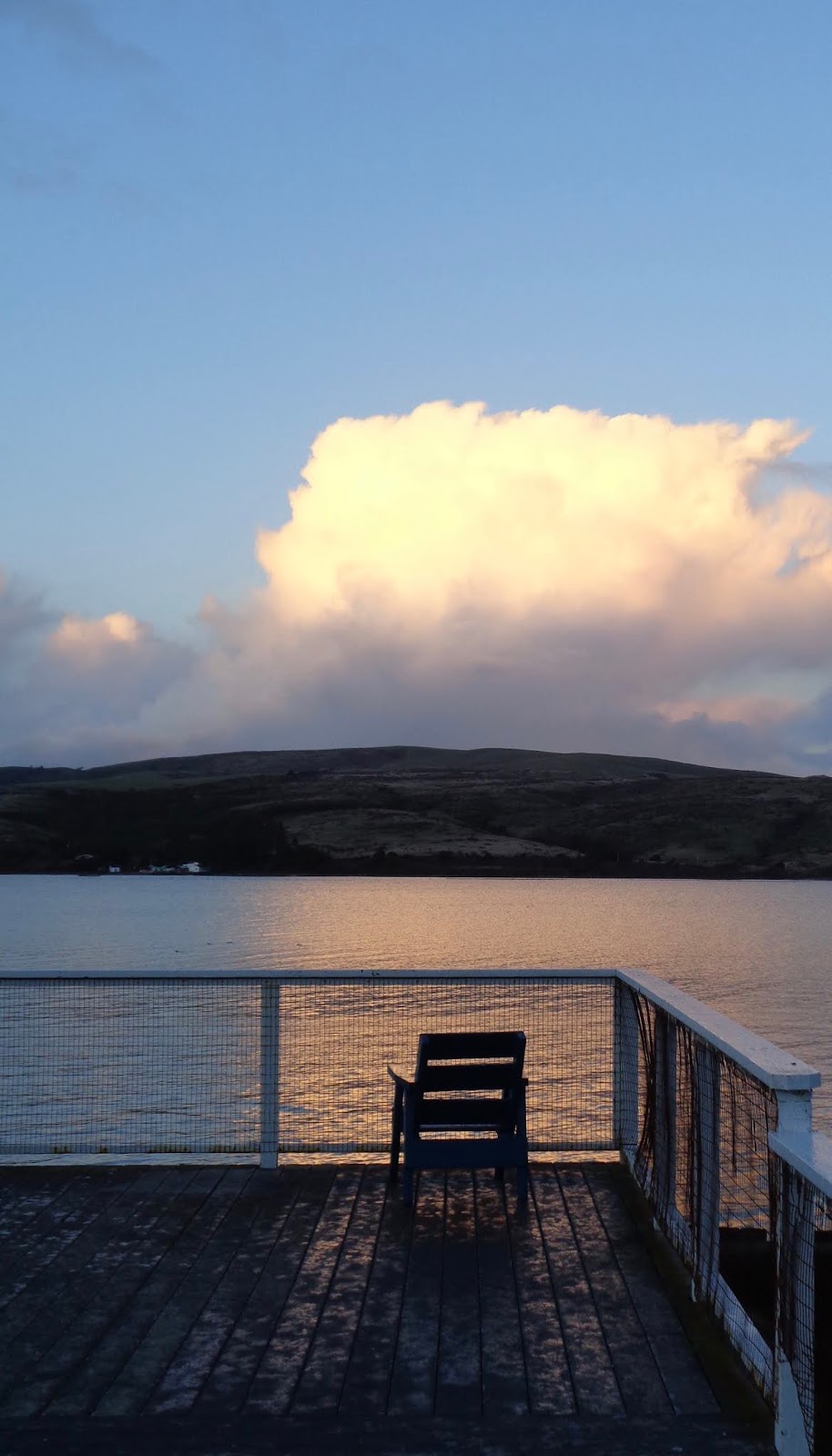
Nearer to home, sunset over Tomales Bay.


March:  Springtime in Chico’s Bidwell Park.


A visit to the momentarily lush Carrizo plain…


… with its hillsides painted in neon.


April:  Ansel Adams had good stuff with which to work.


Archive photo:  My first visit to Yosemite, circa 1954.


A favored trip on the bike often starts with breakfast at a favored cafĂ©…


… and includes stops to check out the details nature provides.


May:  On one of those trails behind the house, Edward stops at “Edward’s Crossing.”  


(He preferred things before this bridge was built across his little rill.)

I’d like folks to think I know what this flower is.


June:  One of many trips to the nearby coast…


… and the Point Arena Lighthouse…


… followed by a glorious run (is there any other kind?) up the fabulous PCH.


July: Wha’chu lookin’ at?


Wyoming/Montana’s Beartooth Pass is one of the top 2 or 3 motorcycle roads on the continent.


I did it on a rented 400cc Royal Enfield with as much enthusiasm and awe as my buddy on his 1200cc Triumph triple.


I loved that bike so much, I snapped a farewell portrait before returning it to the rental place.


August:  Revisiting one of the most beautiful places on earth to celebrate the passing of the last mom of my growing-up neighborhood.


September:  Art you can drive.


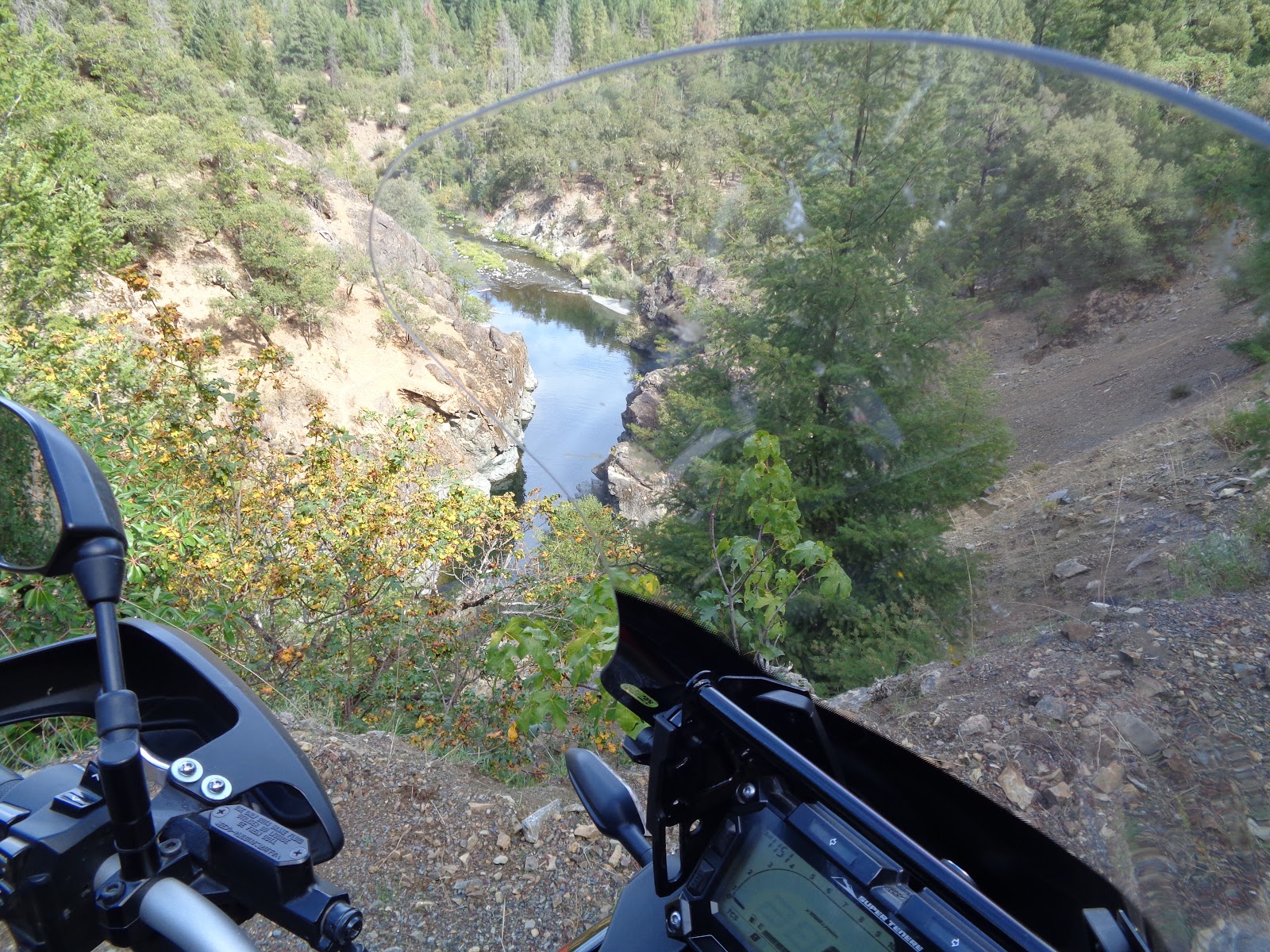
Viewing California’s remote Salmon River from a new-to-me road…

… followed by a stretch along Humboldt County’s equally remote Mattole Road out by the coast.


October:  Exploring the Coast Range’s Yuki Wilderness allows me to check another something off the bucket list.


A visit to the ranch and a view of a century-old bridge that’d seen better days.


November: The ravages of our local California wildfire.


December:  This oak is adjacent to a favored trail on Lake Sonoma.  The mid-morning low December sun ignited the rain-freshened moss on her bark.


A view of the bay from Mount Tam on an unexpectedly beautiful day.  


(If we could encourage about 75% of Marin County residents to relocate to the mid-west, it’d be just about uncrowded enough for me to want to live there.)


Of the Year Shots and Thoughts:  This book may not have been the greatest work of literature I’ve read in the last twelve months, but it’s the one that sticks with me the most.


Shot of the Year Honorable Mention:  Just because he’s such a good pal and this portrait makes me laugh so…


Shot of the Year: Second Runner-up: Something about this twenty-first century toss-away chair positioned in front of this mid-20th century relic seemed incongruous.


Shot of the Year: Runner-up:  The majestic and the miniscule.


Shot of the Year:  Shadow of the Empire State Building.


Moving on:  As we advance into 2020, perhaps the best way to see 20:20 is to escape as often as possible; escape from the screens and the media and the bluster; escape to find one thing – one thing! – daily, or at least weekly; one thing that prompts us to say "Wow!”  

Let’s consider this our assignment.

© 2019
Church of the Open Road Press

Wednesday, December 25, 2019

THE TRUE ORIGINS OF THE WATERMELON QUILT

Not so very long ago, Bumpa and Noma were bidding farewell to Rootsie, Tootsie and little Squeedunk after a day at the lake.

“Goodbye, Rootsie,” Bumpa said.  “Goodbye, Tootsie.  Goodbye, Pumpkin.”

“I’m not a pumpkin!  I’m a watermelon!” Squeedunk hollered back.

And, indeed, she was a watermelon that day for she was wearing a bathing suit designed to look like a slice of watermelon. Her outfit was largely colored watermelon-flesh red and dotted with black watermelon seeds. A green strip trimmed the outfit like a watermelon rind.

Bumpa laughed.  “Goodbye, Pumpkin,” and drove away.

For months and months, every time Bumpa and Noma would part from the children, Bumpa would say: “Goodbye, Rootsie.  Goodbye, Tootsie.  Goodbye, Pumpkin.”

And Squeedunk would always holler back: “I’m not a pumpkin!  I’m a watermelon!” no matter what she was wearing that day.


Noma likes quilt stores just about as much as Bumpa likes a good cigar or… or… bacon.  Noma can unearth a quilt store in most any town through which the two of them are passing.

Sure enough, one day, while driving around Bend, Oregon, Noma spotted a quilt store and the old couple just had to stop.  There being no cigar stores or bacon stores nearby, Bumpa followed Noma in.

Displayed, as in many stores of this genre, were the works of quilters from throughout the area.  Big and small, bright and subdued, geometric, log cabin, spirally, patchwork and abstract: all manner of quilts hung from the walls and rafters including a pumpkin quilt.

Bumpa saw it first.  Then Noma. 


“That would be perfect for Squeedunk!” Bumpa said.  “It just needs one thing.”

Noma nodded.  “And I know just what it needs.”


Thus, the seed was planted – a watermelon seed – 


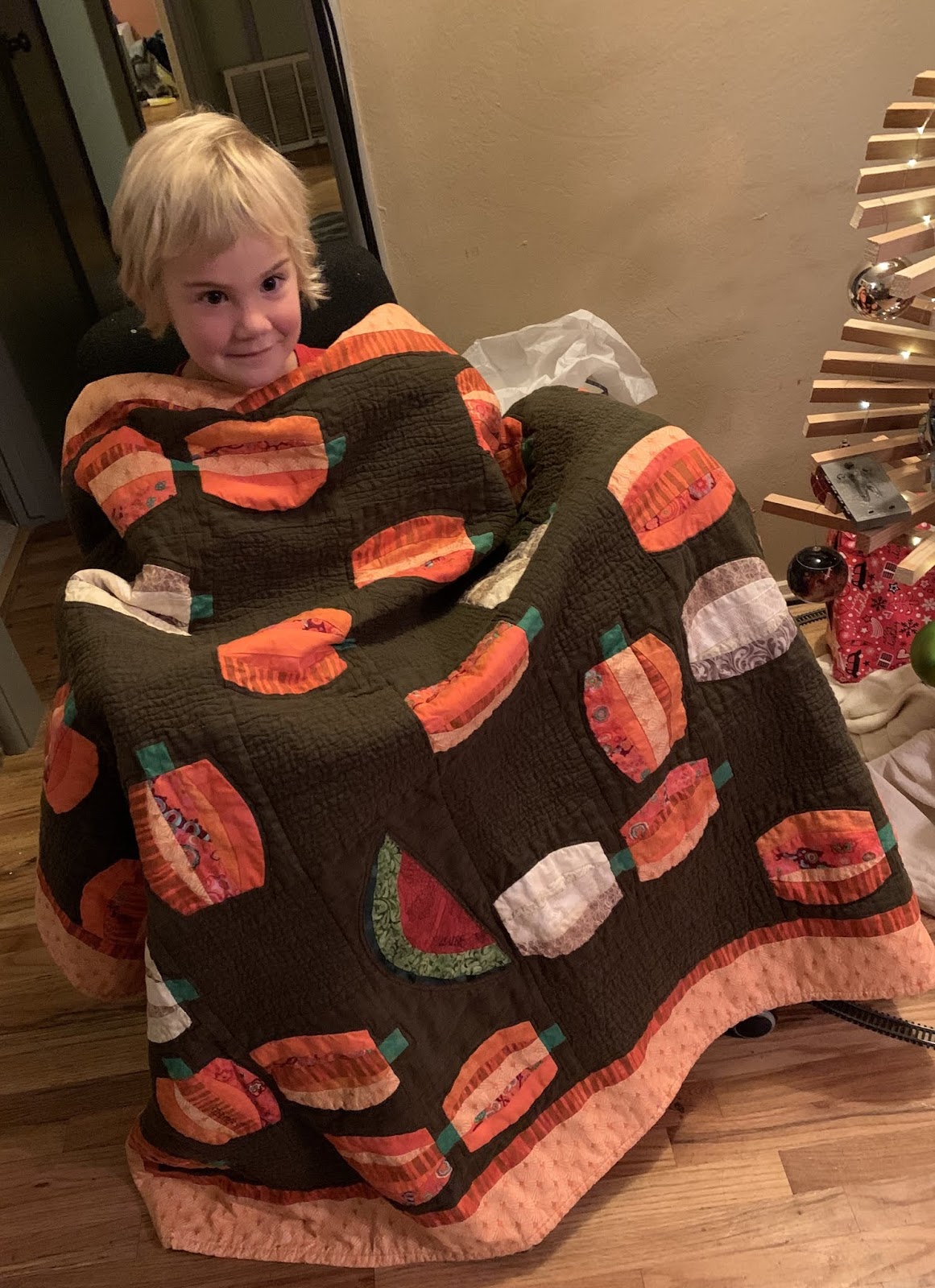
-- for Squeedunk’s Pumpkin… Watermelon! Quilt.

© 2019
Church of the Open Road Press

Saturday, December 14, 2019

SUSAN, THE OIL CHANGE LADY

…Whacha readin’?…

Moving to a new town about five years ago, among the first tasks would be to find an outfit to perform regular maintenance on my Nissan pickup and whatever else happened to be in the garage.  I like to trade with local Mom and Pops so when the Nissan was due for an oil change, I stumbled into a shop that looked the part, walking distance from home.  Good, I’m thinking. I can drop the truck off and hoof it home or head to the local coffee outlet and wait for a call.
         I opened the door to the business only to find a woman, perhaps a few years my junior, sitting behind a computer but with a book, open, in front of her.  After two, maybe three beats, she placed an index finger somewhere in the text and said, “Hi there.  How may I help you?”  
         “Whacha readin’?” was my first comment.  
         I don’t remember her response other than it was not one of those supermarket paperbacks.  It was something about the Jamestown Colony or some cosmic nebula light years from this shop.  I mention those two examples because in the ten or twelve times I visited the shop for service to the truck or the Subaru – “You have a Subaru?  We love our Subaru.  Michael likes working on Subes and we both enjoy driving ours.” – she’d have a book at her workstation and her index finger was regularly employed keeping her spot in the narrative.  Once she told how she was fascinated by what she had just read about the pilgrims and their hardships, another time, space.  
         “What are you reading?” she asked.
         The woman’s name was Susan and Michael, her husband, turned wrenches in the back.  A true Mom and Pop.

On about my third visit, I chose to pack a book rather than hike home.  It was a Longmire mystery.  As I settled in, she asked, “Is it like Nevada Barr or CJ Box?”  I explained by affinity for Craig Johnson’s series because I’d visited with the author a couple of times at conferences but admitted that I don’t really go in for series novels too frequently.  “They often seem to become formulaic,” we agreed.  The chat lasted until Michael appeared, wiping his hands on a shop towel.  Neither she nor I had turned any pages.  She looked at him and then tipped her head in my direction.  “Honey.  We’ve got a reader here.”
         On a subsequent visit, I had just finished Richard Flannagan’s brutal and brooding World War II Mann Booker masterpiece  The Narrow Road to the Deep North.  We talked about it and I mentioned my desire to read two categories of books: the stuff I avoided in high school and books that were considered for international awards like the Mann Booker.  “I need to up my game,” I said, “if I’m ever gonna die literate.”  
         She held up The Great Gatsby, saying, “I’ve read this twice before, once in high school when I had no idea what I was reading about…”  
         “You sound like me,” I said. 
         “Actually, I sound like you and Mike.”
         Over the course of the next three years, I looked forward to my visits with Susan always thinking that an oil change place is just about the last place I could go to talk about books and be challenged to read something more or better or, at least, different.
         
Shortly after Thanksgiving, 2017, the Subaru was due for service.  Susan wasn’t engaged in a book this time.  After she checked in the car and went outside to get the vitals, I asked, “So, what do you have planned for the holidays?  Something good, I hope.”  Susan smiled.  “The holidays are going to be a bit different this year,” she said.  “On Halloween night, Michael came in, said he wasn’t feeling well and left me to handle the trick or treaters.  He passed away before I came to bed that night.  Heart attack, they said. Massive.”  
         How could this not leave me speechless?  
         Knitting her fingers, she added, “I’m working on convincing myself that there was nothing I could have done.”  Then she brightened just a bit.  “What book do you have there?”
         
The business went on the market within months, but it took well over a year for the place to sell.  I had the good fortune of dropping in a few more times to sit and read; and it wasn’t until perhaps my third visit that I found Susan with a book in front of her again: Flannigan’s Narrow Road.  “Damn,” I said, “That’s really dark.”  
         Susan chuckled.  “No, I know dark. This,” she said waving the book my way, “is simply perspective.”

Susan, the Oil Change Lady, has moved to Texas to be closer to family.  A nice young couple took over the operation a few months back with a late-teen daughter ably running the front counter.  And although the new crew changes the oil or swaps out a battery or inspects the brakes just as well as the former owners, I no longer pack a book with me to read while I wait.  Rather, I head back home on foot often thinking of books and talking about books and how the woman who cuts my hair, my dental hygienist, the wait person at the local sushi place – each who likes to talk, by the way – never bites when I dangle something about a book as a conversation starter.  I wonder if they read and if they read, how much they read and if they don’t, where do they find their important ideas – the stuff that touches their inner self – provides them with some perspective?  
         Does it really matter?  After all, it’s really none of my business.
         These things cross my mind while I'm walking home from the oil change place along with how much I miss chatting with the Oil Change Lady.

© 2019
Church of the Open Road Press

Friday, November 15, 2019

RIDIN’ THE KINCADE BURN ZONE

…I’m afraid we’re gonna be doin’ more and more of this
‘ridin’ through burn zones,’ folks…


I was due for some whole-bean coffee and my roastery of choice is a scenic 30 miles away on California’s State Route 128.  Coincidentally, most of the distance between home and Calistoga was shut down two weeks ago as the ravenous 77,000-acre Kincade fire swept across the area.  I’m not a lookee-loo and I don’t like to take snapshots of other folks’ tragedies, but I did slip a camera into my jacket before Enrico (the Yamaha) and I headed off to find some java.

Our rainy season has been getting shorter with the good riding season longer.  But along with that extended good weather comes tinder dry foothills and woodlands and massive wind driven fires that didn’t used to occur.  As a result, this year, the Kincade fire ran several miles, dancing across the hilltops of the Mayacamas and sneaking downstream into drainages toward the floor of the Alexander Valley.  The bad news is much.  Homes were lost – but in the case of the Kincade, no lives –  businesses were disrupted, and air quality for a week or so was awful.  The worse news is that this is undoubtedly going to happen again.


Overcast when I departed at noon and around sixty degrees, I should have dressed better.  Not a meteorologist, my thinking was this: It hasn’t rained since about last March.  Why would it rain today?


Halfway to my destination, the overcast gave way to mist; the mist to light rain.  Caution.  Seven months of dust and automotive drippings – and now soot – when mixed with the tiniest bit of moisture forms an invisible slurry, one bent on tossing the unsuspecting or careless rider off his or her bike and on to his or her keister or clavicle.  I’ve done the busted clavicle thing and don’t want to do it again. 


Plus, I’m wearing my favorite Fox Creek leather jacket – not waterproof but smells great when wet – and I  don’t want to scuff it up.  I’m happy to pull over and let hurried folks in more stable four-wheeled vehicles pass.

Contrasting that sweet moist leather-jacket smell, the first rain after any fire produces an acrid aroma recalling the witches-on-broomsticks embers and wicked flames that had blown through the region.  Remnants of what burned is now reduced to carbon that is dissolving and returning to its rightful home: the soil.  Ashes to ashes comes to mind for a mile or two.


I stop for a moment at one of those disrupted businesses.  


The historic buildings of the Soda Rock Winery have been rendered to rubble – rubble framed by the surviving sculpture of a wild boar.  


Also surviving is the time-honored wine country concept of hospitality - or, at least, marketing. A makeshift tasting venue is set up in front of the barn.  

I pass on tasting but purchase a couple of bottles of Cab based upon the recommendation of a fellow wearing a new-looking Triumph t-shirt who, I figured, had done some tasting on my behalf.  

[Our perfunctory motorcycle conversation ends like this: “No, I don’t own a Triumph, but I’d like to move up to a Tiger 800…”  when the woman with him suggested, “But you already have a motorcycle!”]

A brief detour up Geysers Road takes me toward the source of the conflagration.  From a higher vantage point, it is clear that the fire, riding 80 mile per hour winds, raced through the dry woodlands, but that in most instances, when it approached the margin of a vineyard, it was somehow quelled.  


5,500 firefighters – now off to Southern California, or, perhaps, Australia – may have played a hand in that.  

Deciding not to tempt fate on newly slickened roads, I head home.  Satisfied.  An operating tenet of the Church of the Open Road is that any favorite route taken on a different day is a different ride.  CA 128 is a favorite ride I’ve enjoyed many, many times.  But today was different, indeed.

A couple of pounds of dark roast and a couple of nice bottles of Cabernet will serve as both reminders and rewards for an already rewarding ride.

© 2019
Church of the Open Road Press

Sunday, November 10, 2019

REMEMBERING ARMISTICE DAY

…and those who tell us OUR stories…

On November 11, 2002, the following letter, titled “Nov. 11, 1918,” was placed first in the reader comments on the Sacramento Bee’s Opinion page:

Eighty-four years have gone by, but I will never forget that fateful day.  I and my granddad were in the little village of Franklin, Ill.  We were at the blacksmith shop having winter shoes fitted to our faithful old mare, Cricket.  All at once we heard a great commotion down in the town square.
     People were shouting, firing shotguns and the church bells were ringing.  We soon found out the reason.  The war had ended.  The German army lay in total defeat.  Kaiser Bill had fled to Holland and never again would that nation disturb the peace of Europe or the world.  And now the boys would be coming home.
     But sadly, some of them would not come home and those who did were no longer boys.  War is a terrible thing.  Armistice Day, how can I ever forget it?
 - Gil Masters, Grass Valley

His words moved me to want to say thanks, but I didn’t know how to contact him.  So, I penned a note – the content of which I cannot remember, although I must have mentioned something about being a school principal – and sent it to the Bee’s editorial desk asking that it not be published, but rather forwarded to the writer.  In response, I received a phone call from then-Executive Editor Rick Rodriguez telling me he’d honor my request and adding: the letter Mr. Masters sent to us came in really shaking handwriting and “we were all quite touched by it. It took some real deciphering for us to actually put it into print.”

About a week later, I received the following (type-written):

Today I received a most heart-warming message from a lady in the office of the Sacto Bee.
     She enclosed your comments and it is indeed a pleasure to hear from you.  I am told that only five or less we run into even [remember]the end of WWII.
     Yes, my generation or what’s left of it does go back a long way.  I was eight at the time.
     When I was six, I enrolled in the one room country school called Sulphur Springs.  Grades one through eight in one room and only one teacher.  We usually ran about thirty or less students 6 thru 18.  We were required to bring a slate and a lunch bucket.  No computers or cell phones.  We were required to keep our feet on the floor and no caps on backwards.  The rod on the teacher’s desk was not put there as an ornament. I might mention that all my teachers were women.
     By listening to the older students recite before the teacher’s desk, I knew every bone by name and could do square root in my head.
     Hey this has turned into a thesus [sic], please forgive if I do ramble.  I hope to hear from you again.
- Sincerely, Gil

I am sharing this because, as I was thinning out boxes of junk in the garage the other day, I came across the clipping and his letter – again.

I say “again” because I had unburied the clipping and letter perhaps a year after receiving it.  Cursing myself for not being any kind of pen pal, I immediately wrote to Mr. Masters wishing him well and offering that I hoped I could come up and take him to coffee.  Thinking that anytime an elder to slips out the door, a lot of the unwritten slips out the door with ‘em, I wanted to absorb a bit more of his first-person history. (And I always enjoyed the drive up to Grass Valley.)

Within the week, my year-too-late letter was returned to me marked recipient deceased.

© 2019
Church of the Open Road Press

Saturday, November 2, 2019

SONOMA COUNTY IS OPEN FOR BUSINESS…

…time for a visit…

Over the past week, Sonoma County has survived the biggest wildfire in its history.  The county is open for business.  While, tragically, several homes were lost and a winery or two, in essence, with evacuation notices now rescinded, power has been restored, businesses in Geyserville (we ate last night at Catelli’s – try the chicken piccata), Healdsburg (heading down to the local, independent bookstore later today), Windsor (nice BMW/Moto Guzzi/MV Agusta/Royal Enfield shop) and points south are all open.  (As of November 2, CA 128 across the Mayacamas Mountains is still subject to closure.)

All of our favored wineries are up and running, including Dry Creek’s Passalacqua (always by appointment only), Frick (one man – seven acres), Healdsburg’s Idlewild (just off the square) and Gustafson (also out on Stewart’s Point / Skaggs Springs Road – beautiful view!) and Russian River’s Flowers (out past the historic Hop Kiln.) These folks depend on visitors and want to counter media reports that the entire area was reduced to ashes.  Come visit!  

Our fair city of Cloverdale was spared everything but a few days of smoke and no power.  The raging fire started to our east and roared in a southwesterly direction leaving us unscathed.  However, with golden, crisp hills to our north and east and the way our weather patterns are changing, it is only a matter of time before a blaze ignites under just the wrong circumstances and evacuation orders send us streaming out of town with our go-bags.

This will NOT be the exclusive fault of PG&E.  This will be the cumulative effect of living in a society that demands infrastructure and service but winces at having to pay for it.  The electric grid is part of and should be considered part of the “public square.”  Like roads, police protection, park land, fire service and schools, electrical service cannot operate to serve the citizenry if first, the company has to satisfy investors.  (I have a little PG&E stock, so I’m one of ‘em.) The power grid has to transition toward public ownership.  [And as far as executive salaries and bonuses go, they most certainly provide a tone-deaf image, but in total they represent a tiny fraction of the costs associated with solving the problem.]

Nature is sending us a loud and clear message that things have to change.  Under non-profit or state sponsorship, the result will be that utility bills cover not only the production and distribution of electricity, but the true costs of upgrades and maintenance.  And fees will go up.  They have to.  They have to cover the cost of doing business.  And we, as consumers, are gonna have to pay the freight.

Having said all that, if you are not a resident of Sonoma County and would enjoy a respite from the Central Valley’s Tule Fog, the congestion of Bay Area freeways, the incessant rains of the Pacific Northwest – or maybe you’d just like to score a case or two of really good wine, come visit.  

The smoke has cleared.  The harvest is in.  

And Sonoma County is open for business.

© 2019
Church of the Open Road Press