Friday, July 17, 2020

CENTRAL OREGON CASCADES – CENTRAL OREGON COAST

Part 1 of 2 – the Cascades

We always vacation someplace new.  Never return to the same place.  The west is so vast, so enchanting.  So many things to see.  So much history to discover.  So many roads to explore.


Yet, this would be our fifth trip to the Metolius.


The two-day run afforded us an overnight in lovely McCloud where stayed at the newly acquired McCloud River Bed and Breakfast.  https://mccloudriverbnb.com
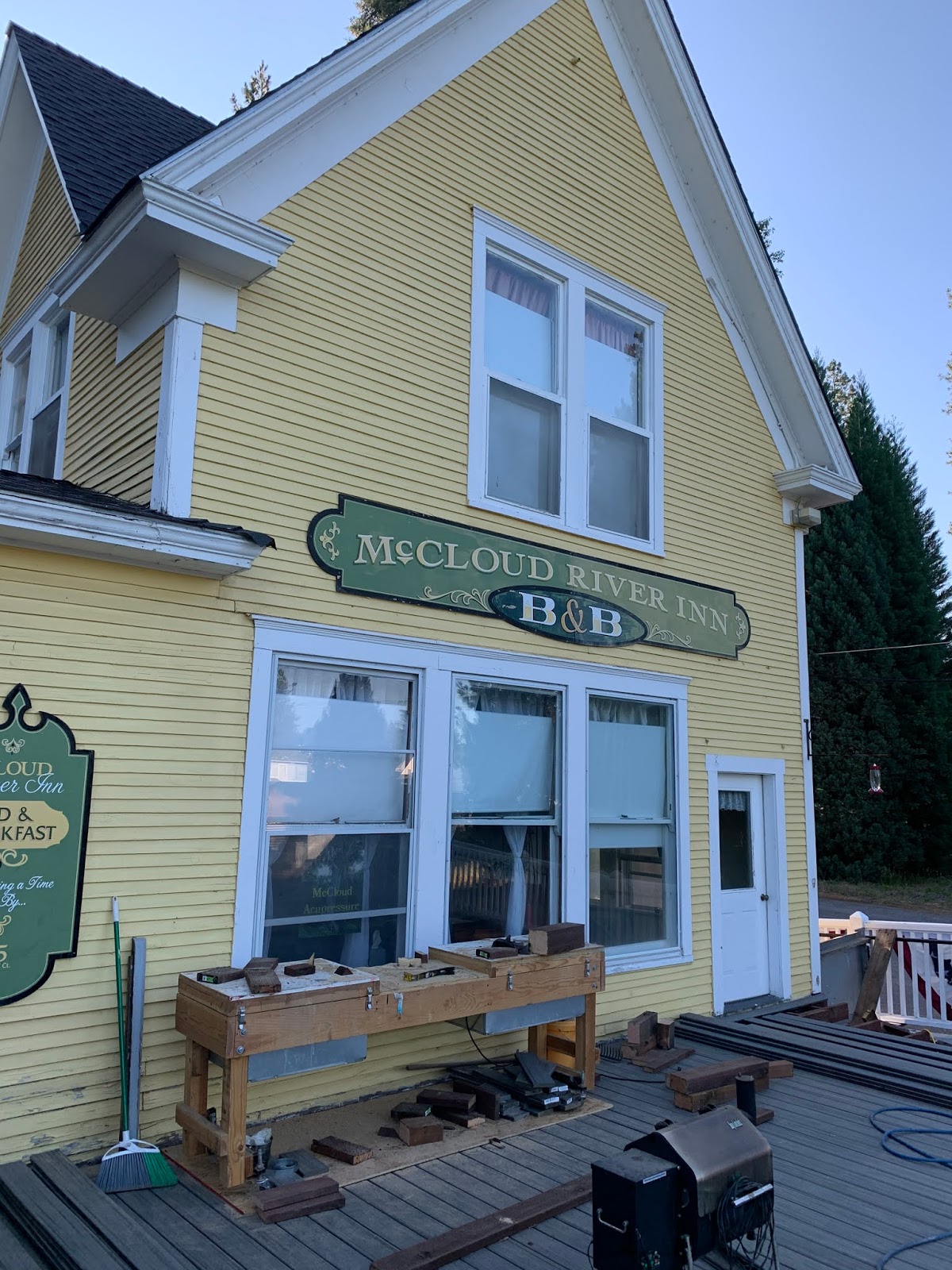
  

Formerly the main office of the McCloud River Lumber Company, the grand old house – just a block or so from “downtown” –  is undergoing restoration.  


We even got a peek in the old company vault where records for every employee were kept.  It was like walking into history...


Up the road, what would have been an annoying traffic delay was mitigated by this view of the queen of Northern California: Mount Shasta.


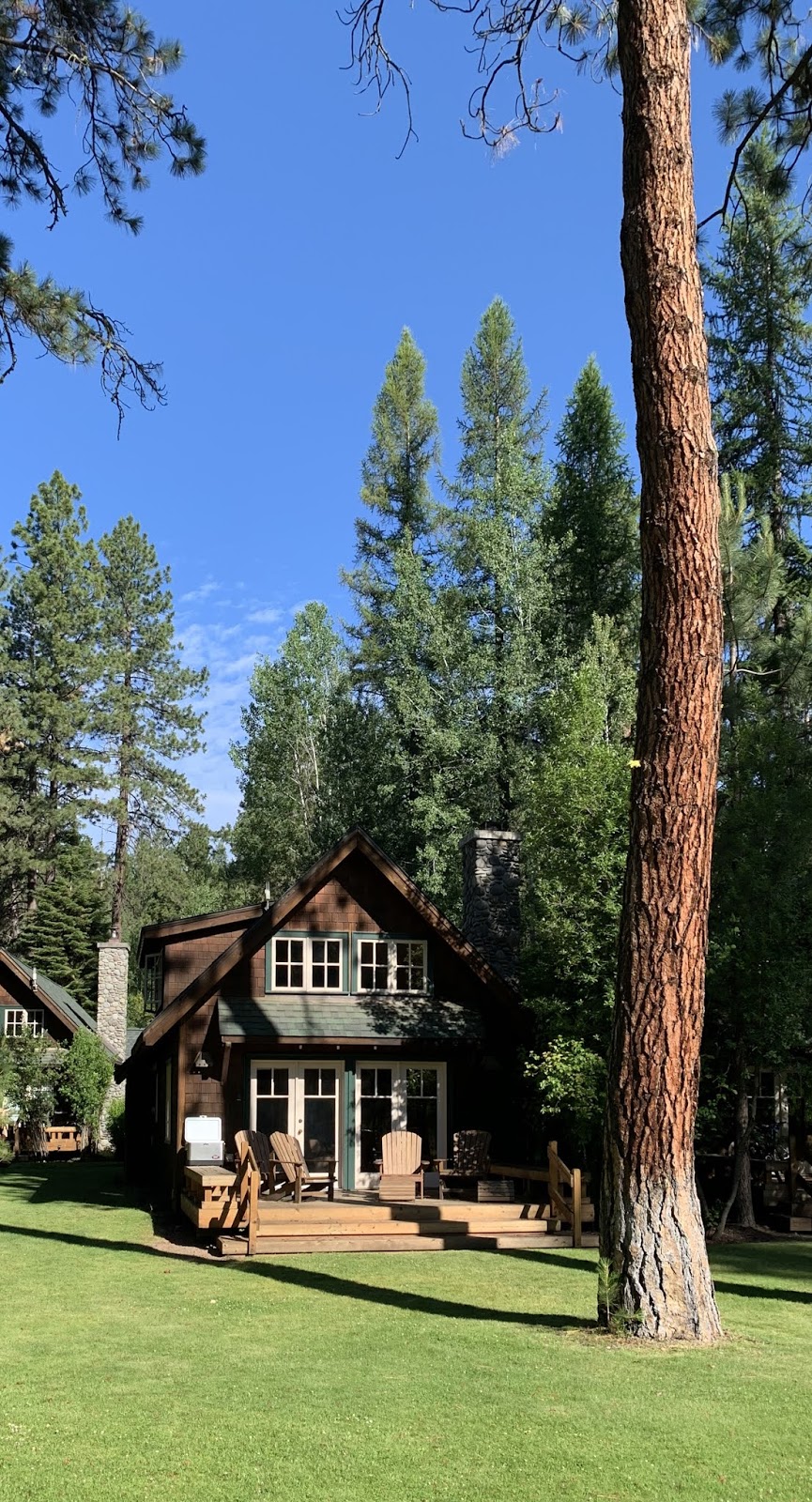
Arriving Camp Sherman, we returned to the delightful accommodations of the Metolius River Resort.  https://metoliusriverresort.com  Twelve privately held cabins stand just a few manicured yards from the pristine river that slips past.

Trails trace each side of the river – one leading to the fascinating spring about two miles upstream from which the entire river emanates.  (The next day, up at McKenzie Pass, we learn why.)


By mid-July, the spring season is almost a memory, but a few wildflowers dot the meadows, stream sides and even the fallen logs in the river.


The evening lullaby includes the symphony from the river and soughing of the sweet ponderosa pines.


The following day finds us traveling Oregon State Route 242, through several of the west’s more signature scenes – wild land burn scars... 


... to McKenzie Summit, and a stunning display of the area’s volcanic heritage.


A paved trail offers views of the Three Sisters, Mounts Jefferson and Washington...


... leading to an observatory hewn from area basalt.


On a clear day, the views are dramatic...


Perhaps only more dramatic when some cloudscape is added.


The interpretive trail is an easy stroll where the nuances of the landscape are detailed.


We learn that Mt. Jefferson is the newest of the area volcanos by tens of thousands of years and that is why it appears far less jagged and weathered.


The ride back down OR 242 to Sisters is a delight on a bike that handles like Enrico, the Yamaha, but equally pleasant, I’m told by my travelling partner, in the accompanying Subaru.  


When in Sisters, check out the Stitching Post Quilt Shop. https://stitchinpost.com We actually planned this trip to correspond with their world-renowned Sisters Quilt Show, an annual July affair which had to be canceled this year due to the pandemic.


Back at the cabin, we enjoy a few more walks and a few more evenings of peaceful rest and, upon departure, figure we’ll break that always-someplace-new rule and return again soon.


In the late 1950s, there was a little old lady that lived down the street from us when I was growing up.  Her name was Mrs. Carah.  Her first name was Rose.  She was the oldest person I think I ever knew when I was seven or eight. She would invite neighborhood kids – mostly boys –  to take a break from our playing in the creek and come to her house for store-bought cookies, Kool-Aid and Bible stories and talk about the old times.  She once told us about coming to California in a covered wagon.  She said they came through Yellowstone before there were automobiles.  Along the way, she met a man named Bill Carah.

Over time, we got to know Mrs. Carah rather well.  It turns out her maiden name was Wild.  She was one of those people you meet when you are growing up that you never forget.  Every time I’m in the woods and I see these, I think of Rose Wild.


(c) 2020
Church of the Open Road Press

Friday, June 5, 2020

SOMEWHERE

In the vast universe of the all-together...
There is a place where all doors are open...
Where floors and furnishings are pillow soft...
Where it is always springtime...
Where birdies fly lowly and slowly...
Where grasshoppers are easy to catch...
...and tasty...
Where black dogs don’t offend us...
...by incessantly nosing our butts...
Where people exist simply to stand silently...
...still...
...on their two legs...
...so we can weave figure eights around ‘em.
And the food bowl is always fresh...
...and full.

No human quite knows...
...or can even imagine...
...where that somewhere is.

But I have faith that somewhere exists.

And as of today...
...I’m off to find it.

Godspeed...
...to me.


Romeo,
The Cat.

2003-2020

Monday, May 25, 2020

A STOP ALONG CALIFORNIA’S “TRAIL OF TEARS”

... remembering (and sharing) forgotten histories ...

California’s own “Trail of Tears” crosses Mendocino Pass where Glenn, Tehema and Mendocino Counties come together.  Stretching from embarkation points (like Camp Far West – now inundated – in Yuba County), native peoples from the valley and Sierran foothills – Maidu, Yana, Konkow, Wintu, Nomlaki, among others – were forcibly marched along this route to a reservation in what is now known as Round Valley.  Their story is devastatingly tragic.

Fifty years ago, with an old sheepherder from our neighborhood, Mom and Dad took the family to camp annually at the base of a high-county glade perhaps three miles distant from the pass. Sleeping under billions of stars, for several Memorial Day weekends, we heard the tales from the old sheep man who, as a kid, summered livestock up that way: tales of hustling sheep up the Grindstone Trail using old Model Ts, of mountain lions taking one or two head a week, of Saturday night “hooplas over ta Smith Camp...”

I only found out about the “Trail of Tears” while working on the Maidu Interpretive Center, a first-peoples museum built next to an elementary school where I once served in Roseville.  That discovery prompted me to try to find our old camp spot, which after several attempts, I did.  It turns out: the road to our old stompin’ ground IS the old “California Trail of Tears.”

I have long wanted to take a couple of next generations to that pristine and sacred spot and share some of the old man’s stories (and, now, a few more) with my children and grandchildren.  


Mom died in October of ’17.  On Memorial Day weekend, those newer generations met at the sheep camp to set Mom free and to hear a story or two.  

Returning home, a mark was checked next to an entry on this old man’s bucket list.  A dream had come true.  I hope they’ll visit again...

(c) 2020
Church of the Open Road Press

Wednesday, May 20, 2020

THE GEYSERS ROAD LOOP

...What has magma done for you lately? ... 

I like riding when the clouds give some texture to the sky.  A day or two after a storm when the white fair-weather cumulus float across a deep azure backdrop.  I like riding all the other times, too, but the clouds were terrific this day.


I hadn’t been out on Enrico, the Yamaha for a while.  Chores.  Priorities.  No destination diners open to eat during the pandemic.  All excuses.  There comes a time, however, when “I gotta keep my skills up” overrides all the other excuses.

That, and those clouds, conspired to get me suited up and in the saddle.


Geysers Road, looping from Cloverdale, tracing Big Sulphur Creek, skirting Geyser Peak and descending into the Alexander Valley near Healdsburg offers a trip through time, history, geology, fire science, crumbling infrastructure and viticulture all in about 35 glorious miles.  Along the way, we glimpse the largest geothermal power facility on the planet.

The route begins northeast of Cloverdale at the Geysers Road exit from US 101.  Winding along a rushing Russian River, we head east at the confluence of Big Sulphur Creek.  


Time and nature have not been kind to this section of off-again, on-again pavement.  Heavy winters, slippery clay soil, rising and falling water flows all wear away at a route that is so little used that maintenance seems always to be relegated to the bottom of the list.


In some stretches the pavement are two-lanes wide and double-lined striped. A hundred yards later, the pavement could be gone, and the route reduced to a narrow strip along an eye-popping canyon wall.

Then back to pastoral hillsides dotted with oaks frequented by crows and scrub jays.

We cross a century-old steel bridge, the likes of which can be found on many lost routes in the west.


Climbing out of a portion of stream valley, we see remnants of mining operations from back when quicksilver was needed in the process of refining gold from its ore.  


Gold, more prevalent in the Sierra; necessary mercury found in and about the Clear Lake region of the Coast Range.


Thirteen miles on, a fork offers the choice of heading to the geothermal facilities.  


Roads spiderweb across the opposite ridge leading to many plants positioned on the opposite ridge.  Pipes and powerlines complete the intricate and curious line drawing.  Access is locked away from us.

CalPine photo

A hundred and forty years back, steam was discovered rising from fractures in the earth. Water, seeping across otherwise impermeable layers of rock, slip into cracks and drizzle onto superheated magma, not far below the surface. A mystic and eerie phenomenon was created, sacred to native Americans and to be exploited by their European followers.

Sonoma County Historical Society Archive photo

A hotel was constructed – which later burned, twice – and water was bottled for its healing properties.

CalPine photo

Now administered by CalPine Corporation, their website (see below) tells the story of what appears to be a model of magma-incited, clean, renewable energy production. 

CalPine graphic


But not perfect energy production.  In October of ’19, during a spate of 100-mile-per-hour gales cresting the ridge, a hot high-tension transmission line arced spawning the devilish Kincaid Fire that, in a matter of hours, raced across the Mayacamas and into stream courses...


...searing all within its path, including Mercuryville (population 2)...

Purloined from somewhere else photo

...and taking with it the sign I remember from a previous ride up this way.

From the eastern flank of Geyser Peak, it is easy to spot the fire, ranch and mineral access roads that web the hillside. One wonders when that first stretch of Geysers Road will be left to crumble to the same state.


The fire blazed hotter and with more ferocity and abandon than a presidential campaign rally, threatening Geyserville – a quaint throw-back farming community in the Alexander Valley, and Healdsburg – the up-scale mecca of shops, tasting rooms and Teslas.  It was only through the heroic actions of legions of firefighters from near and far, that the sleepy bedroom community of Windsor was saved.  More than one fire captain admitted, later, that he didn’t think they could do it.  Living near-by, I’ll never forget the smoke.


Geysers Road on this side of the route provides preferred access to the geothermal plants.  Wider, guard-railed, better paved, it winds through higher pastures which give way to vineyards...


...and superlative views of the verdant Alexander Valley below.  Healdsburg is twenty-five miles from the junction, but it is difficult to not stop and take just one more photo of the developing scene.


Did I mention the clouds?

o0o

Resource:  Information, including facility tour info may be accessed at: https://geysers.com  Worth a look!

(c) 2020
Church of the Open Road Press

Saturday, May 16, 2020

TRUST

Has it slipped away?

Over the past fifteen or twenty – maybe thirty – years, the United States of America has lost something intangible but gravely important.  Symptoms of this loss are apparent in the way we view our federal government, our state government, our police forces, the news media, scientists, banks, businesses (especially the big ones), our schools, our faith-based institutions and even our neighbors.  What has been lost?

I’d suggest TRUST:  Trust that our leadership in DC can shepherd us through a pandemic; Trust that our state leaders have our interests as guiding lights; Trust that the police will treat everyone fairly and with respect; Trust that the news media is honest, that schools actually teach, that banks and businesses exist for something besides abject profiteering; Trust that our churches will serve to unite rather than divide us.

Trust is the bedrock upon which all relations are built.  It is something that is earned through honest effort and easily squandered when motives more narrow than “the greater good” come into play.

The demise of the Fairness Doctrine back in 1987, may have laid the groundwork for the mechanisms of distrust.  There are those who profit by marketing distrust; by presenting the un-factual as truth, by acting upon the fears and insecurities of others; by finger-pointing, name-calling, defaming, insulting and more.  They take to our airwaves stoking fear and encouraging disruption.  Advertisers see the market and pay the freight knowing that, regardless of the political bent or honesty of the broadcast, listeners still will need to buy toilet paper, breakfast cereal, pickup trucks, arthritis pain relievers and beer.

Trust can be reinforced when we spend at least as much time honoring, supporting and showing some appreciation for those institutions of government, enterprise, enlightenment and faith, as we do bitching about ‘em.  And when our leaders spend more time criticizing and tearing down those institutions – cultivating seeds of distrust – then we have the wrong leaders.  It feels that way now, doesn’t it?

As this election season heats up, you can be sure we will all be inundated with misinformation aimed at creating or supporting those weeds of distrust.  The best antidote may be simple to express, yet difficult to employ: 

·      Look for facts based upon data.  You might have to dig a little to find that data.  Understand that “without data, all you’ve got is another opinion.”  
·      Set your sights on the greater good which is not always defined as “Are you better off now than you were four years ago?”  The balance in my savings account may have grown in the past four years, but the chuck hole in the middle of Main Street is still gonna knock my wheels out of alignment.  Everybody else’s, too.
·      Be willing to embrace – well, at least listen to – that point of view which challenges your own.  But consider that the ones shouting the most, might very well be shouting because they lack confidence in that which they profess to believe, and they don’t want to be challenged themselves.
·      Whether leaning left or leaning right, cast your vote for, as Adam Schiff recently said, “Right, truth and decency.”  They matter.
·      Finally: TRUST.  Trust that we’re all in this together – even those with whom we might disagree – and that each of us is trying our very best within the limits granted to us by nature and/or nurture.  

There is much good and still much promise in this land.  We must trust in that, and in one-another.

(c) 2020
Church of the Open Road Press

Tuesday, May 5, 2020

MY SUNDANCE KID MOMENT

I needed cash.  
Fistfuls of it.
"You comin'?"
Nod.
We saddled up and headed to the bank - well - credit union.
Clouds gathered as we sauntered along.

At the great glass door, we paused.
"You comin' in?"
"Nope."
"Good. Keepin' an eye out?"
"Nope.  Social distancing."

A red bandana draped around my neck.
I pulled the cravat over the bridge of my nose and entered.
Thunder clapped as the door cracked open.
A sudden downpour chorused behind me.

Glancing this way, then that, I advanced on the teller.
I slipped my debit card from its holster and slid it across the counter.
"Cash," I snarled. "Twenties."
Her eyes met mine.
She knew I meant business.

In a twinkling, a wad of (5) twenty dollar bills lay in front of me.
The teller thanked me...
...and called me by name.
So much for the mask, I thought.

Exiting, I found my partner drenched.
"What in the heck happened to you?"
"Raindrops," she said, "fallin' on my head."

As we sauntered home, I wondered:
Would that teller have been so cordial to Butch or Sundance?


(c) 2020
Church of the Open Road Press

Saturday, March 14, 2020

BUILDING THE MODERN CRICKET STOOL

…I take a stab at making furniture…

Growing up, I recall that we had a little cricket stool in the house.  It was nothing like this…


It was constructed of maple and finished to look like all of the other wood furnishings Mom and Dad (well, probably Mom) had picked out.  Sixty-five years ago, the little sitter was just my size.  I recall, many, many times, tipping it over and pushing it around the braided rug until Mom caught me.


I found myself thinking of that little stool when I ended up with two scraps of Central American Parota, left over when craftsmen finished a new mantel for our rebuilt fireplace.  “You want me to save the excess?” the craftsman asked.  “Sure,” I said, but I didn’t know for what.


After the mantel was installed, the two scraps of exotic sat taking up space on the workbench.


One piece was about three inches thick and a little more than an odd-shaped foot square.  The other was 3 x 3 x about 10, with a nice array of grain and a pleasant little curve to it.

Perhaps if I sanded them down a bit, I’d get inspired.


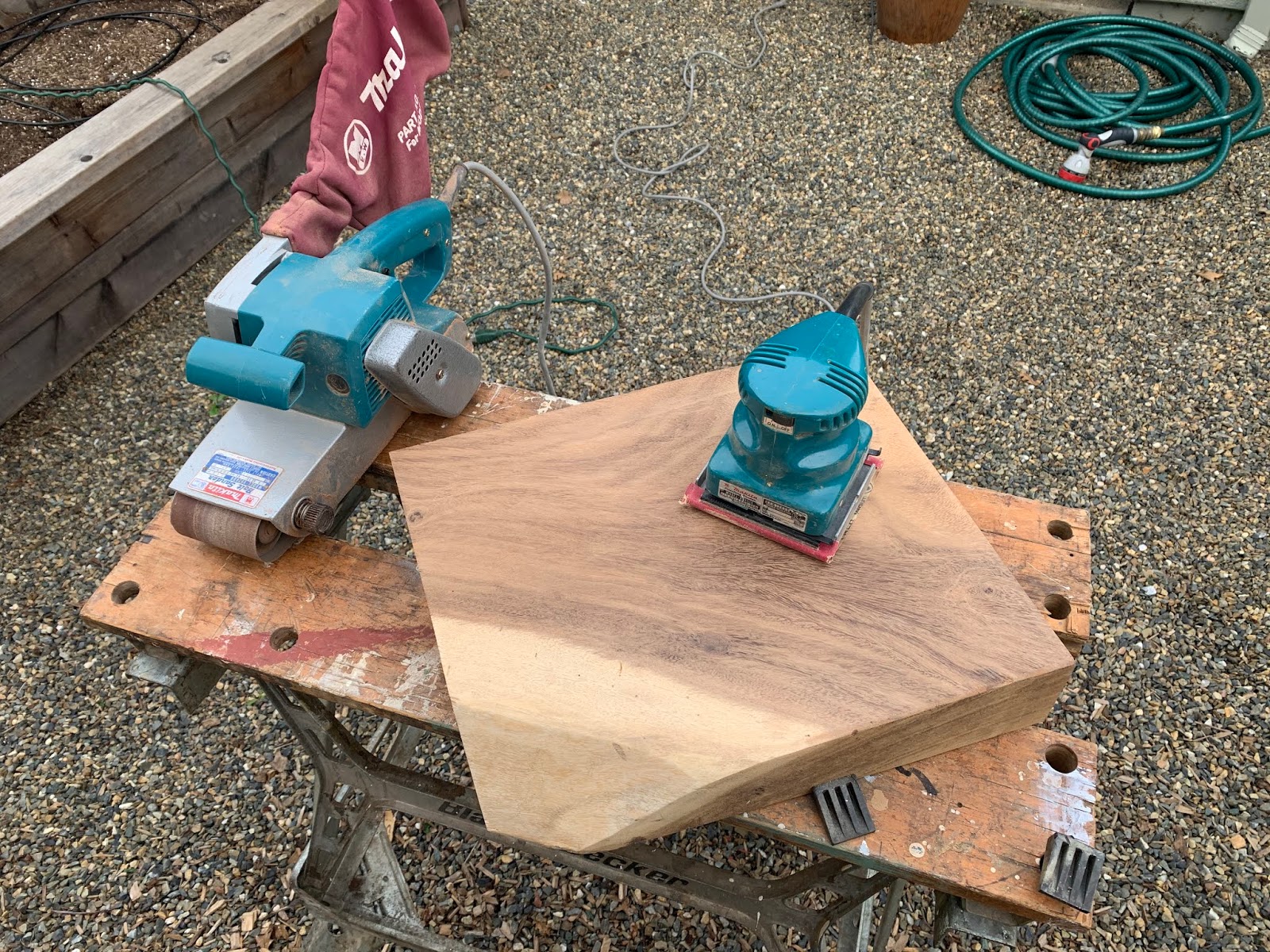
In my forty years of owning a Makita belt sander, I’d never mastered its use. The helpful hardware man down at Ace offered a brain-dead simple tip and I was off to the races.


I learned what a dowel-screw or a screw-dowel was.  I purchased one.  Now I had 65 cents invested in this – for lack of a better descriptor – wood sculpture.  Now it had better work out!


Twisting the post-like piece into place, it became clear that, with two other legs I could have me a milking stool – or better yet – a cricket stool!

I applied a first coat of teak oil – because that’s what I had on the shelf – and watched the grain pop into strata of dizzying earth tones.


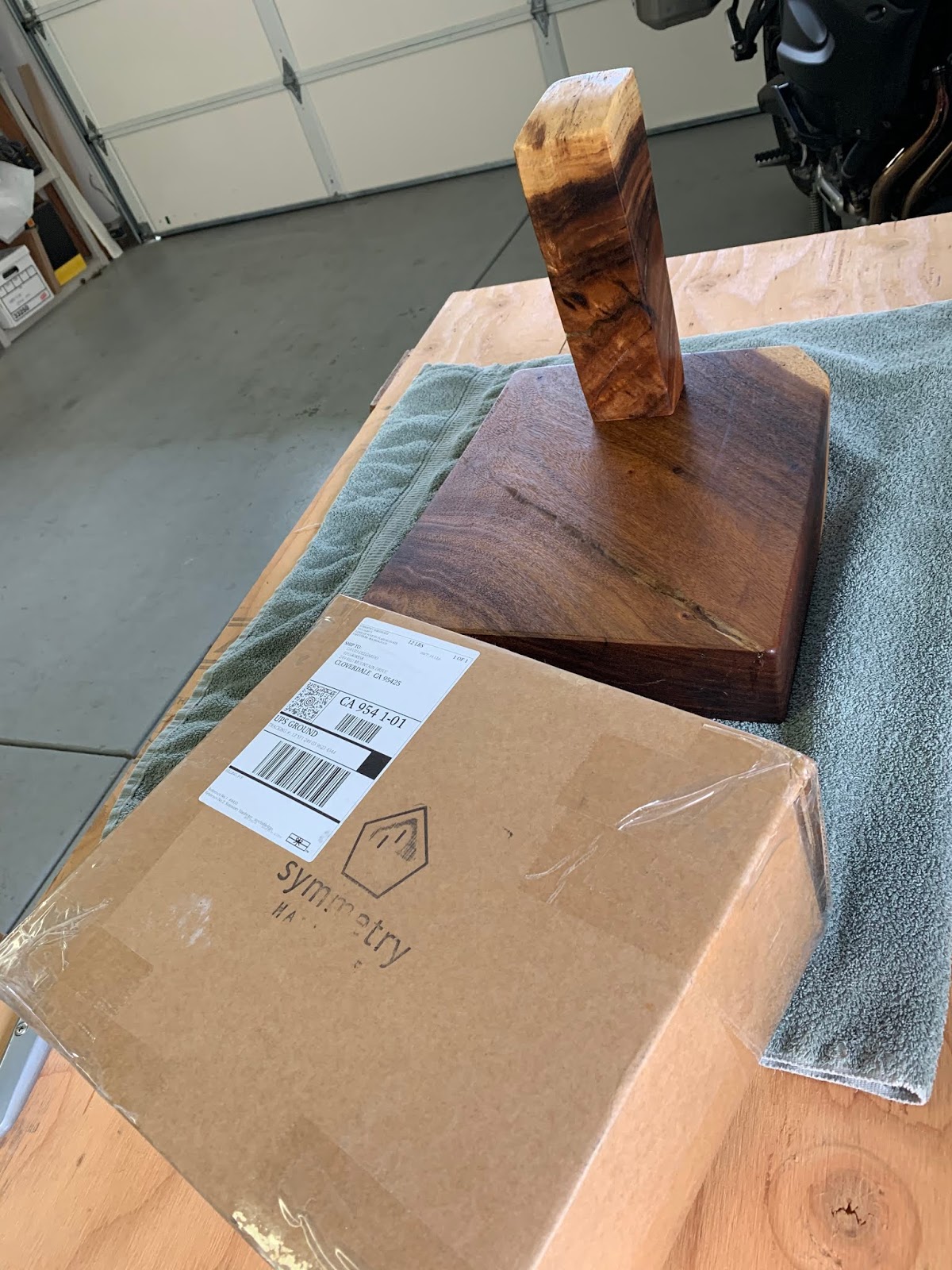
Getting three legs to be just so for this project was going to be a challenge, so I looked up the outfit in Portland that fabricated some picnic table legs for me a while back.  Their website offered exactly what I needed.  


Four weeks and a hundred and twenty-four bucks out of pocket, the UPS man delivered ‘em yesterday.


In the meantime, I’d added a second soaking of teak oil.


I didn’t want to use the galvanized hardware provided, so I high tailed it down to Ace and bought five bucks worth of black machine screws and washers.  After all, this was to be fine furnishing. Right?


Assembly would be easy.  (I used my magic Phillips screwdriver.  Note how it stands up on its own. Magic!)


The finished product turned out rather nicely standing on its own two (or three, depending on how you count them) feet.


It weighs about thirty-five pounds, however – much more than that old maple cricket stool of yore.  It’ll take a brutish two-year-old to push this thing around the house.

I took one final shot of the project – in use – but only for illustrative purposes so the reader could get an accurate perspective on size.


Again, strictly for illustrative purposes.

o0o

Notes:  Petaluma, CA boasts a great business called Heritage Salvage.  One could spend a good long time just perusing their collection of hand-hewn oak timbers from 140-year-old Amish barns, or derelict redwood staves from the old water tank that served Tahoe City.  And slabs not only from redwood trees but from a root-rotted stump of a tree planted by Mariano Vallejo nearly two centuries ago.  They custom mill, cut and finish the piece you can’t live without and don’t seem to mind folks like me wandering through…. https://heritagesalvage.com

Symmetry Hardware in Portland, Oregon fabricates and finishes steel legs.  I’ve used their services for a couple of my projects.  A small business that will consult with you and does excellent work, it feels really good to use this source rather than a big-box store.  Plus, I got exactly what I needed for this little project.  Check ‘em out: https://steeltablelegs.com

© 2020
Church of the Open Road Press

Friday, February 28, 2020

COUNTING THE UNSHELTERED AMONG US

…there is no singular, simple solution;  
but the solutions that exist involve all of us…

Forgetting, somehow, that the figure “5:30” could be followed by the letters “AM,” the Church of the Open Road participated this day – well, this dawn – in the Northern Sonoma County “Point in Time” count of unsheltered homeless folks.  This bi-annual census, mandated by HUD, gathers raw data that will be used when allocating funds to municipalities, counties and area non-profits.  Guided by Chuck, a homeless individual who lost his apartment when rent was ratcheted up after our local fires, we visited both camps (where folks are residing) and sites (where folks have been but are now vacated.) 

Four teams scoured our little town; each responsible for one of the town’s four voting precincts.  While, in our precinct, we were able to account for only four individuals, Chuck tells me that there are probably 40 to 50 living in our zip code.  That doesn’t include those couch surfing or staying in shelters.  Nor does it include minors living with non-parental relatives or family friends.


“Reach for Home,” an advocacy group out of Healdsburg facilitated today’s count matching volunteers, such as myself, with unhoused guides like Chuck.  The folks I met proved to be generous, funny, knowledgeable (Chuck identified both rock samples and plants as we hiked along the Russian River for a mile or so) resourceful and tough.  They share concern for one-another, and they embrace those new to being out of the fold.  They graciously accept the help offered from those of us who, many times, are not in their circumstance only by the so-called Grace of God.

The causes of homelessness are many and varied.  Folks on the street are not all on drugs, are not all criminal, are not all mentally challenged, and are not simply ne’er-do-wells.  Although the homeless population contains elements of each, mainly these are people who benefit from a hand up and are not asking for a handout.  There is no singular or simple solution; rather, the solution, the answer(s), the "fix," will involve all of us.


This side note:  A former mainstream Protestant minister coordinated our activities this day.  He left the ministry when he found it easy for his upscale Southern California church to raise funds for their building and congregation but balked at the prospect of needing to feed the 5000.  Since departing the ministry, he says, his work with the non-profit arena is much more fulfilling.

I would suggest that he still is in the ministry.

© 2020
Church of the Open Road Press