Showing posts with label Commentary. Show all posts

Sunday, February 23, 2025

WITHER THE PENNY?

 …my two cents worth…


Stop the presses! The practice of minting the penny is going to be halted. Discontinued. Stopped. One of the two current Presidents of the United States has demanded it!

     Why? Because, while the little copper colored disk has a face value of one cent, the cost to manufacture one costs 3.7 cents.  It’s a money loser! It’s among the reasons the treasury of this Grand Republic is going bankrupt. It’s nothing personal; it’s strictly business. “I know, Godfather,” ~ think Abe Vigoda here ~ “Strictly business.”


But consider this (understanding that the pricing references in this commentary may be a bit out of date ~ like by about fifty years): On his way home from second grade, Billy drops by Harvey’s Market and, pulling a penny from his pocket, buys a hunk of Fleer Bubble Gum. Or maybe Bazooka ‘cuz their comics are better. Billy has gotten his one cent worth out of the penny and the coin goes into Harvey’s till until Mrs. Jones offers seventy-five cents in the form of three quarters for two bundles of carrots priced at twenty-nine cents a bundle. Billy’s penny leaves Harvey’s till as Harvey makes seventeen cents change. In dispensing the penny back into circulation, the one cent coin has seen two cents worth of action. Before Mrs. Jones goes home, she must go downtown to purchase some new boxers for Mr. Jones at JC ~ wait for it ~ Penney’s. But because of those damned parking meters, she must drop two pennies in the meter in return for twenty-four minutes parking. One of those pennies had belonged to Billy about an hour-and-a-half earlier. Around 6:00 PM, Rita ~ you guessed it ~ the meter maid, empties the parking meter which includes the traveling copper of this opinion piece. It has now returned three times its face value. Rolled and returned to the bank, the city receives value. Harvey, needing change for another day’s marketing shows up at the bank and buys ~ among other coinage ~ two rolls of 50 pennies each for a buck. David, the candy and tobacco wholesaler swings into Harvey’s Market to drop off several boxes of 24/fives (two dozen five-cent candy bars costing Harvey 90 cents a box) and two 10 pack cartons of White Owl cigars wholesaling for $3.18 each. The penny becomes David’s. David uses the penny when he stops by Big Al’s for a burger and fries and a low-cal Fresca at lunch and Big Al turns the penny over to a customer in change a few minutes later. In less than twenty-four hours, the Billy’s penny has changed hands eight or nine times returning eight or nine times its face value – far more than its cost of manufacture.


Coins are simply tokens ~ tokens that represent monetary value. But they are not the value itself. As the penny is exchanged its worth as a tool increases. The longer it circulates, the more worth is accrued. (The same might be said for us old people.) 

     Now, following this little diatribe ~ which I shall loftily refer to as ‘logic’ ~ it is evident that the minuscule penny holds far more worth than its face value; far more worth than its cost of manufacture.

     Truth be told, I don’t really care if the US mint quits minting pennies, but given the above scenario and related elucidation, the death of the penny might well be viewed as a little ‘non-cents-icle.’© 2025

Church of the Open Road Press

Saturday, April 20, 2024

"Are You Okay?"

a Saturday morning chat


“Are you okay?”  Those were the first words I uttered as I approached the ragtag tent erected next to the creek in our old folks’ community green space.

         “Yes.”  The voice was that of a woman.

         All I could see of the person was the Vibram sole of a boot and a portion of her pantleg.  There were some dishes or something clustered next to where she sat.  “Do you need anything?”

         “No.”

         “You sure?”

         “I’m sure."

         I had been alerted to the presence of this camper while engaged in my daily forty-minute exercise route on my bicycle.  Seems I need to strengthen a game knee and riding the stationary bike in the community gym lacks both fresh air and scenery.  Pedaling, a woman I know had just been walking her pup on the paved trail that traces the creek.  “You know the little park down the way?”

         I nodded.

         “Well, just across the path, next to the creek,” she began whispering, “there’s a homeless person in a tent.  What should we do?”

         “I’ll check it out.”

         It was a lovely spring Saturday morning.  First time in weeks warm enough to wear shorts while riding the bicycle.  I pushed it down the path ~ No Bicycles on the Walking Path! ~ and, sure enough, came across the tent, draped with a brown plastic tarp, tucked behind some bushes next to the whispering waterway.  A perfect place to camp, I thought, except it was on privately held property, and some in the ‘hood can be pretty grumpy about homeless people setting up camp in our greenspace.  This, I felt, I needed to share.

         “I’m not a grumpy person, but you may find there are some pretty grumpy old folks living in the neighborhood here and I really don’t want you to get busted.”

         “I’m getting ready to leave.”

         “Okay.  You sure you don’t need anything?”

         Muted: “I’m sure.”

         I finished my exercise ride and upon returning home, emailed the neighbor who’d expressed the concern, relating my interaction.  Adding, “…there but for the grace of God…” perhaps unnecessarily.  But it was my thought.


About three years ago, I volunteered to help with my little town’s homeless census. That’s an annual event where someone like me is teamed up with an unhoused individual – an individual who knows where the best camping places are.  We volunteers were given explicit instructions about how to do the count and asked not to interact with those living in tents, cars or busted down motorhomes.  

         My guide had been homeless for quite a period of time.  As we visited, he explained: “I had a pickup truck and two lawn mowers and an edger.  I did yard work, trimming and mowing and stuff for about 20 clients a week.  I even paid a guy to help me out in the summer.”  We drove up a winding road toward the lake past a large house on acreage.  “That was one of my places,” he said, his voice emoting a degree of pride.  “When the drought hit, I lost some customers and I had to let my helper go.  Then, my landlord raised the rent.  I don’t blame him though.  It’s his place and I could make ends meet pretty good.”  There was a pause.  Then, as if it were a lyric from a country-western song, he continued: “Then my truck broke down and I couldn’t pay to get it fixed and cover the rent.  The wife figured she could take my boy and move down to Monterey and crash with her folks for a while, save me some money on groceries.  But with my truck broke, I couldn’t get out to my clients, and well…”

         I recalled that a long-time city council person said in the midst of a heated debate about the unhoused: “You know, we’re all just four flat tires from bein’ homeless ourselves.”


I let an hour-and-a-half elapse and then drove over to the trail to check on the campers.  The tent was down, folded and tied onto a bicycle trailer hooked to a decrepit mountain bike.  The woman was seated, backed into the bushes.  A man was standing next to the bike.

         “Hi ho,” I said.  “I came by earlier and I thought I’d check back to see if you needed anything.”

         She looked at me and kind of tipped her head. “No,” she said.  “Thank you.”  Then she commented on the t-shirt I was wearing.  Printed on it were Adam Schiff’s final words during the House of Representatives first impeachment hearings of a former President:  Right Matters.  Truth Matters.  Decency Matters.  “I like your shirt.”

         “Yeah, well,” I said, “Some days it seems like we don’t have enough of that, doesn’t it?”

         This spawned a conversation about kindness, values, fairness, economics ~ economics! ~ and what a lovely place this was to camp.

         The man chimed in: “Sonoma County is just absolutely beautiful.  I don’t think there are any bad places in Sonoma County.”

         “ ‘The chosen place on all the earth’,” she said.  “Wasn’t that Luther Burbank?”

         “Yep,” I said, “but I think folks’ll get pretty grumpy about you all camping here.”  I pointed to a neat pile of wrappers and cans in the footprint of where the tent had been.  “You need help with that?” 

         “I don’t have a paper bag…”

         The man pulled a dirty t-shirt from his pack and fixed to wrapping the detritus in it.

         The lady and I continued to visit, agreeing that the world was a wonderful place but that it was full of problems and issues.  “Growing up in Berkeley, my Dad often griped about how the world was going to pieces, and it wasn’t like it is now.”

         I nodded. “You know, my Dad said the same thing.  I’ll bet my kids will tell their kids about me having the same thoughts as my old man.”

         We laughed together, ultimately wishing each a fine spring day.

         Heading back to the car, I realized that I’d seen this woman before, at the town plaza, hanging out with a few others.  I vowed that the next time I saw her, I’d sit down for a bit and extend our visit ~ our understanding of one another.


A dusk approached that evening, I packed some gloves and a paper bag and traipsed back over to the campsite.  The tiny pile of litter was gone.


Related Resource:  Poverty, By America, Matthew Desmond, Crown Publishing 2023. $20. [Wow!  The problem's us!]

© 2024

Church of the Open Road Press

Friday, February 28, 2020

COUNTING THE UNSHELTERED AMONG US

…there is no singular, simple solution;  
but the solutions that exist involve all of us…

Forgetting, somehow, that the figure “5:30” could be followed by the letters “AM,” the Church of the Open Road participated this day – well, this dawn – in the Northern Sonoma County “Point in Time” count of unsheltered homeless folks.  This bi-annual census, mandated by HUD, gathers raw data that will be used when allocating funds to municipalities, counties and area non-profits.  Guided by Chuck, a homeless individual who lost his apartment when rent was ratcheted up after our local fires, we visited both camps (where folks are residing) and sites (where folks have been but are now vacated.) 

Four teams scoured our little town; each responsible for one of the town’s four voting precincts.  While, in our precinct, we were able to account for only four individuals, Chuck tells me that there are probably 40 to 50 living in our zip code.  That doesn’t include those couch surfing or staying in shelters.  Nor does it include minors living with non-parental relatives or family friends.


“Reach for Home,” an advocacy group out of Healdsburg facilitated today’s count matching volunteers, such as myself, with unhoused guides like Chuck.  The folks I met proved to be generous, funny, knowledgeable (Chuck identified both rock samples and plants as we hiked along the Russian River for a mile or so) resourceful and tough.  They share concern for one-another, and they embrace those new to being out of the fold.  They graciously accept the help offered from those of us who, many times, are not in their circumstance only by the so-called Grace of God.

The causes of homelessness are many and varied.  Folks on the street are not all on drugs, are not all criminal, are not all mentally challenged, and are not simply ne’er-do-wells.  Although the homeless population contains elements of each, mainly these are people who benefit from a hand up and are not asking for a handout.  There is no singular or simple solution; rather, the solution, the answer(s), the "fix," will involve all of us.


This side note:  A former mainstream Protestant minister coordinated our activities this day.  He left the ministry when he found it easy for his upscale Southern California church to raise funds for their building and congregation but balked at the prospect of needing to feed the 5000.  Since departing the ministry, he says, his work with the non-profit arena is much more fulfilling.

I would suggest that he still is in the ministry.

© 2020
Church of the Open Road Press

Thursday, August 31, 2017

TEACHING IN VIOLENT TIMES


I heard you in my head yesterday.
I taught a lesson yesterday during a lockdown.
I taught in a whisper.
I heard your voice say,
"If we don't teach today, they win."

This morning, Terri, a woman who once taught at a school where I served as the site principal posted the above on my page on a popular social media site.  I was touched deeply by her remembrance. 

(For the record: I’m retired, and a different district employs Terri now.  And “Terri” is her real name.)


September 11, 2001 wasn’t all that long ago.  I recall driving to school, listening to NPR’s Morning Edition and wondering what the hell was going on.  Once at school, I tuned a TV in to discover that hell was indeed going on that day.

At a hastily called staff meeting as we discussed how to address this great unknown with our students, one teacher asked, “Shouldn’t we just send the kids home today?  What could we possibly teach them?” to which I replied: “If we don’t teach today, they win.”

That was a damned fine statement I made, but honestly, it must be the case that I heard it somewhere else that morning.  I don’t think on my feet all that well.


I didn’t glance at my Facebook page this morning until after I’d read the local (Santa Rosa) paper.  A page five story reported that in the midst of an investigation a Sacramento County stolen vehicle task force was fired upon.  An assailant armed with a high-powered weapon injured to CHP officers and fatally wounded a deputy.   A witness reported, “It sounded like a machine gun.  It just kept going and going.”

When I read Terri’s post on my page, I connected some dots concluding that her school was locked down as this incident played out in the neighborhood. 

All the while, she taught.


Walloped by a few moments of introspection, I got to thinking: Maybe I’d lied on that morning of September 11th.  Maybe they are winning anyway. 

A hit and run on a local highway left a bicyclist dead.  A driver in a white pickup shoots into the passenger compartment of a car he’s passing on 101 then disappears.  A homeless Santa Rosan, know for his writing and story telling bleeds to death on a sidewalk after being knifed by someone unknown. Daily we read about or witness violent demonstrations or mass shootings or assaults on the police or assaults by police somewhere in the country. 

Yep, maybe they are winning.


The moment passes.  I find myself remembering visits to classrooms.  In pretty much all of the classrooms, students are engaged in learning – rich, deep and challenging.  But in a lot of classrooms, more is going on.  Kids’ unique needs are embraced, their differences celebrated, their fears quelled, they feel safe; their smiles glowing, their hearts in tune with the teacher who’s heart is in tune with her students.  Education steeped in nurture.  Good things are happening. 

Such things happen in classrooms across America every day.

Yesterday, I know, they were happening in Terri’s room.

And because of that, I know the bad guys aren’t going to win.

© 2017
Church of the Open Road Press

Wednesday, August 17, 2016

CROSS COUNTRY ON ELLIE: A 40-YEAR-OLD MOTO GUZZI


Vicarious Life through Others’ Travels

In 1971, I purchased my first new car: a Clementine orange VW Super Beetle.  I loved that car. While it still resides in my heart, I wish it still had a place in my garage.  It was truly the one that got away.  If I still owned the Bug, it likely would travel no further from home than the coffee shop on Sunday morning, because, well, what if it and its forty-plus-year-old technology broke down?

I was reminded of this the other night when visitors from Tasmania, whom we were yet to meet, tooled into our neighborhood on a 1975 Moto Guzzi El Dorado.  Paul and Kerry Dickson (again, from waaayyyyy down under) purchased this classic a couple of months back from a seller in Nova Scotia, Canada, basically sight unseen.  Her name, they were told, was “Ellie.”

The story goes that the Dicksons flew into New York, caught a hop across the border, took Ellie for a short spin, laid down their money and headed west.

That takes some measure of guts, I’d opine.  I suppose if I found a seventies-era VeeDub, I could attempt a similar journey because those old Volkswagens were not all that uncommon.  We still see a few of them belching about and parts still pretty available.

But on a vintage Guzzi?  Trying to find parts for a forty-year old Moto Guzzi must be a bit like finding the third tablet upon which the rest of the Fifteen Commandments are chiseled.  But Mr. and Mrs. Dickson were undeterred.

They rode and camped and rode and moteled and rode through some of the most scenic territory in all of North America seeking small museums, enjoying mom ‘n’ pop café meals in tiny towns and sticking, whenever possible, to America’s less travelled by-ways.

The story of their introduction to Ellie, the El Dorado, has a love-at-first-sight poignancy to it.  Photos of the motoring to the top of New Hampshire’s Mount Washington and Wyoming’s Devil’s Tower added more bullets to my burgeoning bucket list, while shots of Montana-Wyoming’s Beartooth Pass reignited the excitement I felt on my trip a few years back on my then four-year-old BMW.  Except they did it on Ellie, a contemporary of my beloved, long-gone ’71 VW.

Along the way, these travelers stopped in at our house for some ribs, some rest and this reminder to self: As long as we continue to expand our view of the world and our appreciation for the diverse gifts it offers, we can keep our thus-engaged selves young.  Perhaps there is no better way to do this than through travel on a motorcycle.

Better still if her name is Ellie.


o0o

Notes: 

More exact details of the Dickson’s transaction and amazing trip can be found on their blog “Sure – Why Not?”  Plan on being captivated by the pictures and the narrative.  And keep checking back as Paul and Kerry are still composing thoughts and selecting pictures that represent the completion of their journey. Here’s the link: http://sure-why-not--2016.blogspot.com/.  

Special thanks to Patrick Hayes (left) for arranging the connections necessary to allow for visitors from the other side of the globe to come to our little place for a meal and a night’s rest.  Patrick is a moto-aficionado (and Church of the Open Road reader) who somehow hooked up with me through the blog during my Guzzi ownership days.

And kudos to the Guzzi community – as Kerry refers to them – both in the states and in Canada who helped ensure that Paul and Kerry’s adventure would be the utmost success.  I'm thinking I need to make an effort to "rejoin" that community...

And this...

“You meet the nicest people on a Honda.”
- Corporate slogan ca 1964

I spoke with my 94-year-old mother the other day and shared that visitors from Tanzania would be stopping over.  “Where’s Tanzania?” she asked.  I explained and she said, “My, you do lead an interesting life.”

No, I thought to myself, but I certainly have met some inspiring people who do.


© 2016
Church of the Open Road Press

Tuesday, July 19, 2016

ELEGY


The driver must have been going really fast.  The passing lane on US 101 north of Hopland was about to end – it was a mile-and-a-half to the next one – and it wouldn’t be well to have to sidle in behind someone traveling slower, now would it? 

So this fellow just couldn’t be second; his now somehow more important than anything.  Anything!  Or, perhaps, as he raced along in his tiny red Civic or Corolla – by the time I happened along it was hard to tell – and because he’d gotten away with it before, he simply felt he was invincible.  He would live forever.  This thought would be proven irreversibly misguided in just moments.  And instantaneously.

Traffic had backed up only about a half mile from the scene, stopped first in one direction, then the other, choked down to one lane at the scene.  Damn!  Would I miss my appointment in Ukiah?  Approaching from the south, the rescue crew moved about their business in an incredibly slow and apparently deliberate manner.  They knew this: Why rush?

The battered car rested upright, doors shut tight but windshield violently punched out, beads of glass scattered into the open travel lane.  Almost blocked from view by a fire truck, the unfortunate lay, and except for his still-shoe-clad feet, fully covered by a yellow plastic tarp.  No ambulance was yet present, nor would there be any need for a Code 3.  Somberly, Highway Patrol, county sheriff, and first responder folks milled about above the covered carnage, writing notes and chatting.  Hushed voices, I assume.

Ninety minutes later, heading back down the highway, I find that the scene is clear except for a pair of wild, curving tire ruts and an arcing course of bowled over, dried weeds up and then down the embankment, and four spray-painted rectangles indicating where the sedan came to rest on its feet.

Antiseptic.

Passing by at speed, no one would know of the death of the invincible motorist.  It was all over in less than a heartbeat, and that last heartbeat was nearly two hours ago.

All over except for this: One of those peace officers would soon be knocking on a door or dialing up a telephone number, delivering a message no wife or husband, mother or father ever wants to receive.  For family that remains, time will stop.  A different definition of normal will descend on them waiting, sinisterly, to be embraced.


And after the paperwork, the officer will return to the beat and then home – likely not to sleep well this night.  Again.  Tomorrow?  He’ll be on patrol protecting us hoping that his yesterday does not repeat itself.

And by spring, the green grasses of winter will have covered up those ruts.

© 2016
Church of the Open Road Press

Friday, June 3, 2016

DINNER OUT IN A SMALL TOWN


A Church of the Open Road Report
about family, food and bigger things…

The restaurant is called Scopa (http://www.scopahealdsburg.com/).  Tucked into a narrow space across from Healdsburg’s town square, the venue seats about thirty inside and, through the window that opens onto the street, another eight at a common table on the sidewalk patio.  Intimate. Italian. Perfect for the evening.  Our dinner was in celebration of the 24th anniversary of Candi’s 39th birthday.  Attending would be our wine-making daughter, Jessica, a young professional who knows her way around this wine-centric town and its wine-centric wine lists.

After some small talk with the waitperson whom she’d known through various encounters in the industry, she settled upon a Piedmont Gio Dominico Negro Arneis for the salad course to be followed by a “big” 2012 Aglianico from friends Ryan and Megan’s Ryme Cellars (https://rymecellars.com/).  Both bottles would arrive at the same time with the red decanted in order to breathe, volatilize and do other stuff a country boy like me lacks sufficient sophistication to fully understand.  The red would accompany a rib eye which was ordered not rare or medium, but “perfect.”  And it would be enough for three.

About halfway into salad, a group of thirty-something gents hailing from Dallas, we were to discover, sidled into that outdoor table just though our open window.  As Californians, we’re supposedly not ‘spozed to think much o’ Texans, now are we?  Cultural differences?  Conservatives versus liberals?  They’d brung a couple of magnums of something red purchased on the square.  Overheard were questions about which white wine from the list that might precede their repast.

“Try this,” Jessica said as she handed the half-full remains of the Gio Dominico through the opening.  “Really.”

After a bit of Dallas Cowboys / San Francisco 49er ribbing, the Texans learned, thanks to the waitperson, our daughter’s roots in viticulture and our celebration with three became, for a time, a celebration with ten.  They were visiting the area intent upon checking out some of the area’s 400 wineries and, as a result of our cordial chitchat, at noon the next day, they’d be visiting Jessica’s Passalacqua by-appointment-only winery. (https://passalacquawinery.com)

Dinner came.  Salted, peppered, seared, barely transitioning from red to pink on the inside, and accompanied by crisply roasted Yukon Golds, the rib eye was, indeed, perfect.  (“Bet they can’t find steak this good where they come from,” I said just loud enough to elicit chuckles from the guys out the window.)  Ryan and Megan’s Aglianico paired perfectly, and to top it off, a mysterious man-about-town, sitting deep in the recesses of the restaurant’s narrow footprint divined that this was somebody’s birthday and provided a molten chocolate soufflé which proved to be dessert.  Again, perfect.

Dinner out in small town America – where everybody knows everybody else, or soon will.


Concurrently, a couple of hours south, in San Jose, protesters engaged in a violent confrontation at a rally for a rather polarizing political figure.  Made the front page. A yuge unflattering image, to say the least. 

Sad.  Counterproductive.  Unnecessary.  Behavior that makes ‘Murica look doltish.

Better, might I opine, had those factions sat down and shared a delicate Arneis or a big Aglianico with something chocolate and, I don’t know, chitchatted…

© 2016
Church of the Open Road Press

Sunday, May 22, 2016

THE SONG MY SAMSUNGS SING

 
A Church of the Open Road Mini-Memoir
(and this one’s a classic)

About a year ago, when we moved into our new-to-us house, and having left the old pair at our previous residence, we found ourselves in the market for a washer and dryer.  Consulting a leading consumer magazine, we fell into the purchase of the first laundry units we’d ever owned not sourced through a US corporation: Korea’s Samsung.  The new set does a marvelous job cleaning our laundry with more lights, buttons and sounds than we’d ever understand.

For example, whether it’s the washer or the dryer, when the immediate cycle is complete, a sweet little tune is chimed in a brisk 4/4.  I hadn’t heard this rif before and figured, since the company is headquartered in Seoul, perhaps it was the Korean national anthem.  I began to salute, out of respect, and long for some spicy Korean barbecue, a taste sensation unavailable in our new town.


With our transition from the Sacramento area, I’ve had to adjust the presets on my Nissan’s radio to new stations. I’ve always liked classical music and, many times tuned into Cap Radio’s KXJZ after a particularly taxing day.  In our new environs, there’s a fine classical outlet that is based in San Francisco.  The selection of music and their informative commentary has made KDFC (88.9) my go-to when travelling anywhere within their signal range.

About a week ago, while heading south on the 101, a familiar tune aired, played by a piano in front of a string quartet.  Suddenly I was consumed by an overwhelming urge to pull to the side of the freeway, fold t-shirts and remove the permanent press from the dryer before it wrinkled. 

My knowledge of Franz Shubert’s catalog has always been limited, but it grew a little that day.  I’d been listening to his Piano Quintet in A major, D. 667, commonly known as  “Trout.”  Here’s a link to a lovely performance of movement 4, the tune our Samsungs sing: http://video.mywapblog.co/watch?v=z24M13BnYjM


Still, a week after this revelation, I’m thinking how odd that the Republic of Korea would choose this melody for their national anthem.

© 2016
Church of the Open Road Press

Friday, May 13, 2016

490 BUCKS LATER


…a tale of impatience and its resultant stupidity…

The US 101 freeway through Santa Rosa was an afterthought.  The city was built up and a nice, old downtown was bisected by the urge to build a north south four-lane thirty or forty years ago.  The result of this poor, but necessary, plan is streets that dead end and are reborn again, traffic patterns that aren’t really patterns, on and off ramps that send drivers careening into neighborhoods and business districts and a bottleneck of traffic through town during many times of day.

Belatedly, a few years back, a third lane was constructed to be a high occupancy vehicle (HOV) diamond lane.  Diamond lanes are a great idea.  While, years ago, a writer to the Sacramento Bee lamented that Sacramento’s HOV lanes limited one’s “freedom of choice,” in reality, they enhance one’s choice.  You can either choose to commute with a partner and use the lane or you can choose to commute by yourself and be stuck doing about 19 miles per hour in a 65 zone. 

I like diamond lanes and never abuse them.


Well, almost never.  Leaving Santa Rosa in the Subaru Forester after a frustrating forty-five minutes of trying to find an establishment that’d moved from one location to another on the other side of the freeway, at about 4:00 PM, I crept up the on-ramp to a clogged 101.  Once on the slab, I noted a big-rig negotiating a lane change so he could edge off the freeway at the next opportunity.  I flashed the Sube’s lights to give the trucker the traffic break needed.

Someone driving a car that could go much faster than 42 in the number 2 lane filled the semi’s gap and with traffic pulling ahead in front of him, putted along at about 23 miles per hour under the limit.  And he didn’t seem to have the desire to wick things up a notch.  I followed as the truck exited a mile or so on taking note that Johnny Slow didn’t pull to the right to occupy the now open space in the slow lane.  Still, I rested a safe distance behind and puttered along as the next off ramp / on ramp came and went.

Could I have passed this guy on the right?  As a credentialed Drivers Education and Training instructor, I make it a habit never to pass on the right unless the driver in front of me is signaling for and making a left turn.

At a slight rise with a gentle right turn in the freeway, a nice long gap had opened up in the HOV lane to my left.  I’ll just slip in there, goose it, and pull back into the lane, I thought to myself.  And I did.


CHP Officer Terry is a very nice individual.  He conducts his business with a high degree of professionalism and courtesy.  With a radar gun, he’d been standing on the shoulder next to a black and white Ford Explorer when I crested the rise.  In less than a minute, the big Explorer was in my rear-view mirror with its roof lit up like a Fourth of July parade.

“Do you know why I pulled you over?”
“Yep.  Using the diamond lane to pass that guy going about 40.”
“You do know you’re not supposed to do that, right?”

I handed him my license and fumbled for the registration.  Although I should have a very checkered driving career, this would be my first California citation in over 47 years of driving.

“The good news is that there are no points and no traffic school associated with this.”
“I used to teach traffic school,” I said.
“I’ll only be about five minutes and you’ll be on your way.”


I’ve met a number of CHP officers both as a school principal when introducing law enforcement to elementary students with the “Stop On a Dime” program where I got to drive an old Crown Victoria they used to use; and as a customer of the service department at BMW motorcycle dealerships when they were having their bikes serviced.  Nice folks.  Good talkers.  Always interested in whatever civilian they were engaging in the waiting area.  I like ‘em all.


And I like Officer Terry.  He returned my license and registration with a newly minted citation and explained the process.  “They take diamond lanes pretty seriously in Sonoma County.  I think this’ll be about 351 bucks.”
Then he asked if I had any questions.
“Why, yes,” I said.  “I do.”
“What is it?”
“Well, I noticed you’re in an Explorer.  How do you like it compared to the Crown Vics?”
Terry laughed.  “Honestly? I feel like a soccer mom.”
I laughed as he added a few words of lamentation about “not even having Eco-Boost in this unit.  The young guys get the hot rods.” 
Then he said, “Thank you for being so courteous.”
I replied, “You weren’t the one being stupid. I was.”
We shook hands.
“I’ll wait here until you’re safely back in the lane.  Use the shoulder to get up to speed, okay?  Be safe.”
“You too.”

o0o

The “bail” including “fees” came to $490.00.  The check was made payable to “Superior Court.”

© 2016
Church of the Open Road Press

Tuesday, October 8, 2013

BAD BIKER BEHAVIOR HARMS US ALL


In the final week of September, 2013, the nation was shocked to see helmet cam video of a group of sport-bike riders horsing around on New York City streets, jamming traffic, running through lights and generally acting like morons.  When a rider purposely stopped short in front of a Range Rover SUV and was bumped, co-riders swarmed the driver, with wife and child on board.  His only avenue for escape appeared to be gunning his vehicle forward and running over a rider.  The ensuing chase lasted only a few minutes; ending with the father dragged from the vehicle, beaten and slashed, again, all taped on helmet cam.

Opinion alert:  These guys give chain-wielding motorcycle gangs a bad name.


California’s State Route 128 is a gem of a motorcycle road.  It winds west from Winters, California, traversing the Coast Range, dipping into and out of vineyard-laced valleys and ending up tunneling through redwoods before it ends at the Pacific Ocean.  I enjoy it as often as possible either on the BMW or the Guzzi.  Yee haaa!

But sometimes, I find myself driving my Nissan Frontier.  Knowing how exhilarating the sweeping turns are, when a motorcycle approaches from the rear, I find the nearest safe spot to give way.  (A lot of car drivers do this for me when they see me a safe distance behind.)  Such was the case three days ago when, a lime green Kawasaki Ninja ZX suddenly was on my rear bumper.  Behind him was another rider straddling some iron.  Bicyclists on this section of road prompted me to be hesitant about slipping toward the shoulder, but as the impatient Kawi-man began to pass, I found a nook and pulled aside.

A quarter mile ahead, a small Honda SUV was coursing through the curves.  In a flash, the Kawi rider was on his bumper.  The road had become more challenging with tighter turns and less accessible shoulder.  At a left-sweeping curve, minute or so on, the SUV driver found a tiny section of gravel, and, a rate of speed to fast for the maneuver, pulled onto the shoulder allowing the biker to pass.  Dust and gravel spit from all four of the Honda’s wheels as he stopped the thing just short of a forested slope.  A glance in passing told me he was clearly upset – maybe scared.

And why not?


Borrowing a phrase from H. Rap Brown:  Bullying is as American as cherry pie.

Some of our colleagues who ride two-wheelers are our own worst enemies.  Aggressive behavior may be fueled by a love of dipping into that next twisty turn or may simply be a knot-head with too much testosterone in his blood supply.  In either event, to the automobile driver it feels like intimidation – bullying – and it might make the driver less sensitive to – or less concerned about – the motorcyclists with whom he shares the road.  Then we, those who ride bikes, lose.


Up the road that day, I stopped in Calistoga to let the dogs stretch their legs.  As my wife and I were engaged in a little window shopping, I saw the green Ninja ZX parked next to the big iron, engines ticking as they cooled.  Neither pilot was around or I’d have struck up a conversation as folks do when they see a cool bike.  Taking a Church of the Open Road business card from my wallet, I penned the following on the back:  Nice scoot, but please try to display more patience and better road manners when you ride.  Thanks!  And be safe.

My wife asked what I was doing.  “If we don’t call people on their bad behavior, they’ll keep doing it,” I said.  “Seems to me that if I can get this guy to think twice about how others see him, he’ll be safer and we all won’t pay the price for his stupidity.”  She advised: “The guy could get on your website and, I don’t know, mess things up.”  Big deal, I thought, my website’s pretty messed up to begin with, but as discretion is the better part of valor, I instead gently slipped a blank calling card under the passenger strap on his seat. 

Maybe he’ll access the site and read this.

© 2013
Church of the Open Road Press

Monday, September 30, 2013

HOME REPAIR WITH DAD


What Messages of encouragement and confidence do we send our children as they grow, and what messages inadvertently do the opposite? I sat on the back deck with my semi-monthly Rocky Patel, a dram of rye over ice, the dogs, and as darkness descended, I wondered this.


Twenty-five years ago, I lived in Sonora.  Dad was visiting from Chico.  We’d entered the garage early one evening after completing some outside chore.  I reached to flip the interior light switch off and troublingly noted, again, that the switch plate felt hot.  With a flat-bladed screwdriver I’d been carrying, I removed the plastic plate.  Two bare, five inch pigtails of wire were twisted together and crammed into the box around the switch by the previous owner/builder.  Current coursing though those wires had blackened the inside of the switch cover. 
             
Damn house could burn down, I thought, turning off the breaker.  I fumbled around until I could snip the wire ends.
             
Dad stood back, looking over my shoulder and said: “You can’t do that.  You don’t know what you’re doing.”
             
I clearly recall that, without thinking, I responded, “You’re my dad.  You’re supposed to tell me what I can do; not what I can’t.”
             
Having built and wired a tiny workshop at a former residence, I’d been here before.  I clipped the wires and inserted them into respective holes in the side of the switch, tugged on them to make sure they were secure, reassembled the thing, flipped on the breaker, then the switch.  The interior light worked and no heat was generated.
             
But Dad had left the building.


Down some stairs from the deck, a big silver maple tree grew in the middle of our neglected back yard.  Dad had found a Henry’s in the refrigerator, made his way to that tree and sat in the weedy grass, back against the tree’s narrow trunk, fingering his beer and smoking a pipe that now-and-again glowed against the darkness.
           
I found a Henry’s of my own, and, in the gathering dusk, made my way out to the tree and sat down, back against the opposite side of the maple.
            
Nothing more was said.

© 2013
Church of the Open Road Press
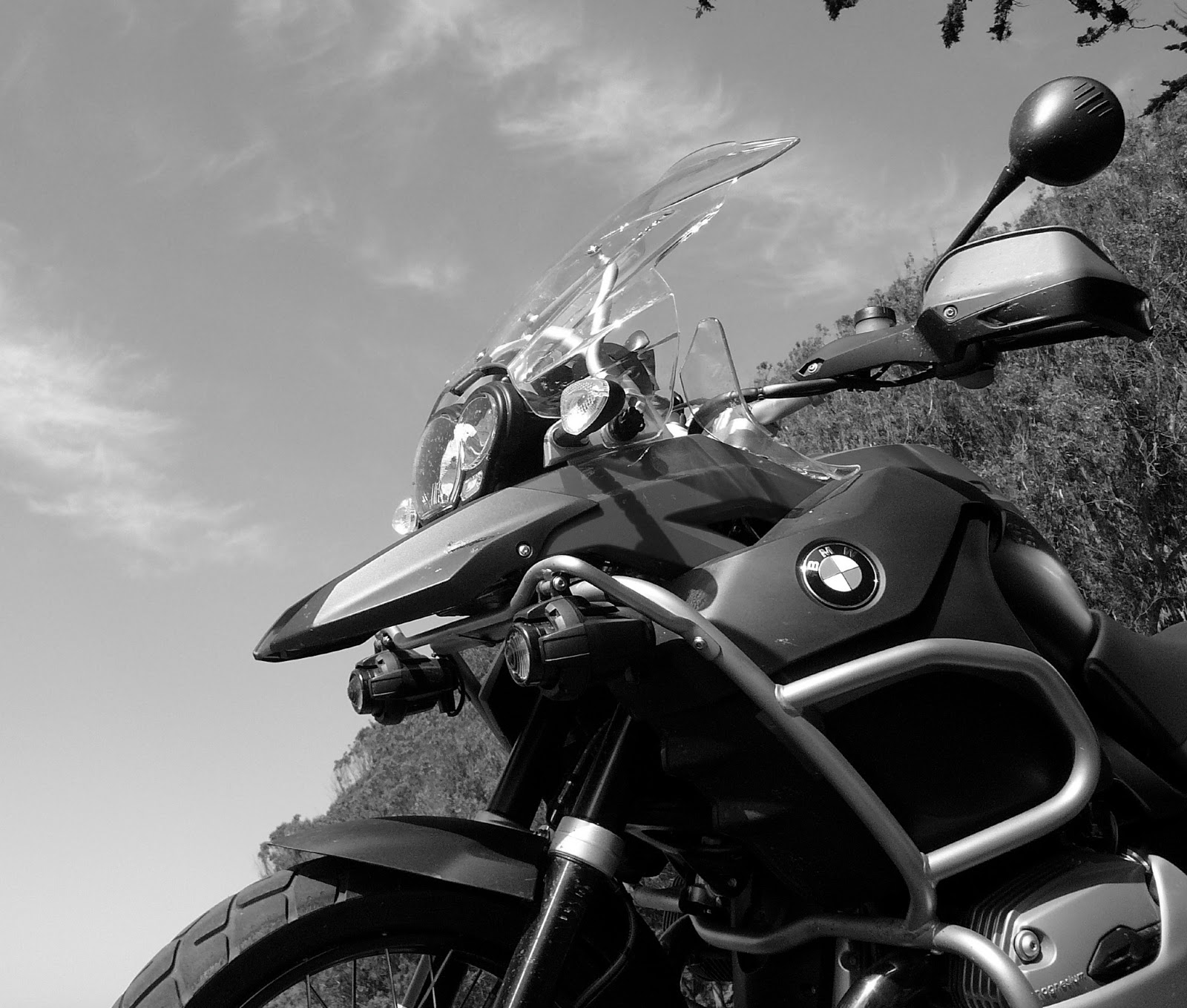
Friday, February 8, 2013

“YOU DON’T SEE THAT EVERYDAY”


Every day, if you’re paying attention,
you’ll see something you don’t see every day.
Me
 – demonstrating the depth of my wisdom –
to Mom.

Years ago, I hiked with a group of friends along the north rim of Chico’s (CA) Upper Bidwell Park.  Among that group was a biology professor, Rayburn we called him, from the local state college.  About 10:00 AM this middle-of-March morning, someone spied a small dot, high in the sky, a mile or two away, traveling west to east, over the creek that had formed the canyon.  As the thing got closer, it revealed itself as a large raptor.
            “Well lookee there, boys,” Rayburn said, pointing.  “That’s a golden eagle.” 
            He quickly explained about how the wing shape and the tail differed from a hawk.  As we watched, the bird abruptly dived straight toward the canyon bottom spreading its wings like a parachute as it neared the grassy veldt.  Touching down with a tiny hop, the thing churned its great, feathered limbs and rose.  A wriggling little something was snared in its clutches.
            “Wow by golly!” Rayburn exclaimed.  “You just don’t see that every day.”
            This, I figured, is why we hike, bicycle, paddle, sail or simply hang out outdoors.

The other day, out on some numbered county road in rural Yolo County, I followed a farmer’s white Chevy pickup at a reasonable distance and at a reasonable speed.  The greening hills of the Coast Range captured a series of my westward glances.  The old barns and derelict farm equipment also interested me and there were plenty out this way.
           At a particular moment, at the end of one of those glances, a movement caught my eye.  A low-flying doglike creature was racing toward the roadway ahead of the truck.  He shot onto the pavement not seconds before the Chevy would cross its path.  Clearing the highway at breakneck speed, he continued about 100 yards into a freshly plowed field.  There, he stopped, as if coming to some mark visible only to him.  Craning his head he eyed both the truck and me on the BMW as we headed north on the paved route.
            I’ve never seen a road-kill coyote and I wouldn’t today.  But, then again, in my neck of the ‘burbs, I don’t see coyote that often.

The very next time out on a bike, while waiting at a stoplight on the fringe of suburban El Dorado County, a Norton Commando 850(?), black, restored to near showroom, pulled past in the adjacent lane.  The rider wore all the Norton logo apparel: jacket and helmet emblazoned with the classic script.  A neighbor kid, serving in the navy during Vietnam had purchased one of these babies, only yellow.  I remember distinctly his inability to kick the damned thing over using every ounce of his 148-pound frame.
            The light changed and I was expecting the Brit to roar away, but instead, I heard a mellow purr from the vintage conical pipes.  I followed on the Breva, hoping to catch up and engage in a little bike talk.  But up the road a short distance, our routes diverged.  He waited in a turn pocket to explore Salmon Falls Road and I was seeking Rescue (the town) up Green Valley.  I slipped by offering a wave to the rider and his rare and beautiful bird.
            I wish I had the skills to restore and maintain such a thing.

Living on the shoals of Sacramento’s urban sprawl, I don’t often see bald eagles, so spotting three of them on consecutive fence posts along a Sierra County route outside of Loyalton was a thrill.  The words I retrieved when I arrived home fell short of impressing folks.
            Likewise the deer in our valley stream courses tend to be scrawny little beasts teetering on spindly legs.  Thus, my breath halted when, upon rounding a corner outside of Pope Valley (Napa County), a massive buck with about two dozen points stood in the middle of the narrow lane checking his GPS.

The Austin Healy 3000 occupies a spot on the long list of things I covet but shall never possess.  Skills to maintain, again?  Growing up, a high school peer, the son of the county sheriff, raced about town in a souped up model with a Ford 289 that would have earned him no end of traffic citations had he not been the son of the county sheriff.
            On route 70, just south of Marysville, an early 60s example, pristine white, appeared in my mirrors, having just entered the highway at Olivehurst.  I slowed in order to take in the rarity.  (I used to engage in this clandestine spying upon spotting a pretty young maid.  But no more.)  The driver was older than I.  To fend off the 52-degree temps with its resultant wind-chill and yet still enjoy the top-down experience, he had a hoody tied tightly over a snap-brim cap and under his gray chin.  He sat on oxblood leather seats.  His right hand rested on the shifter.  A grin told me he was living a charmed life. 
            My jet black Guzzi, an ’07, is a bit of a rare machine and I keep it really clean.  I wondered if, in passing, the Austin pilot gave any thought to the rider of it. 
            Nah.  He was drivin’ his Healy.  What could be better?

My ninety-one year-old mother often expresses her displeasure with the fact that I drive motorcycles.  “Why do you do such a thing?” she asks using other, more direct and disdainful motherly terms and has since I was about aged 15.
            “Every day,” I say to her, “if you’re paying attention, you see something you don’t see every day.”
            This statement always only earns a dismissive sweep of her hand.

© 2013
Church of the Open Road Press