Showing posts with label Sonora. Show all posts

Wednesday, July 13, 2016

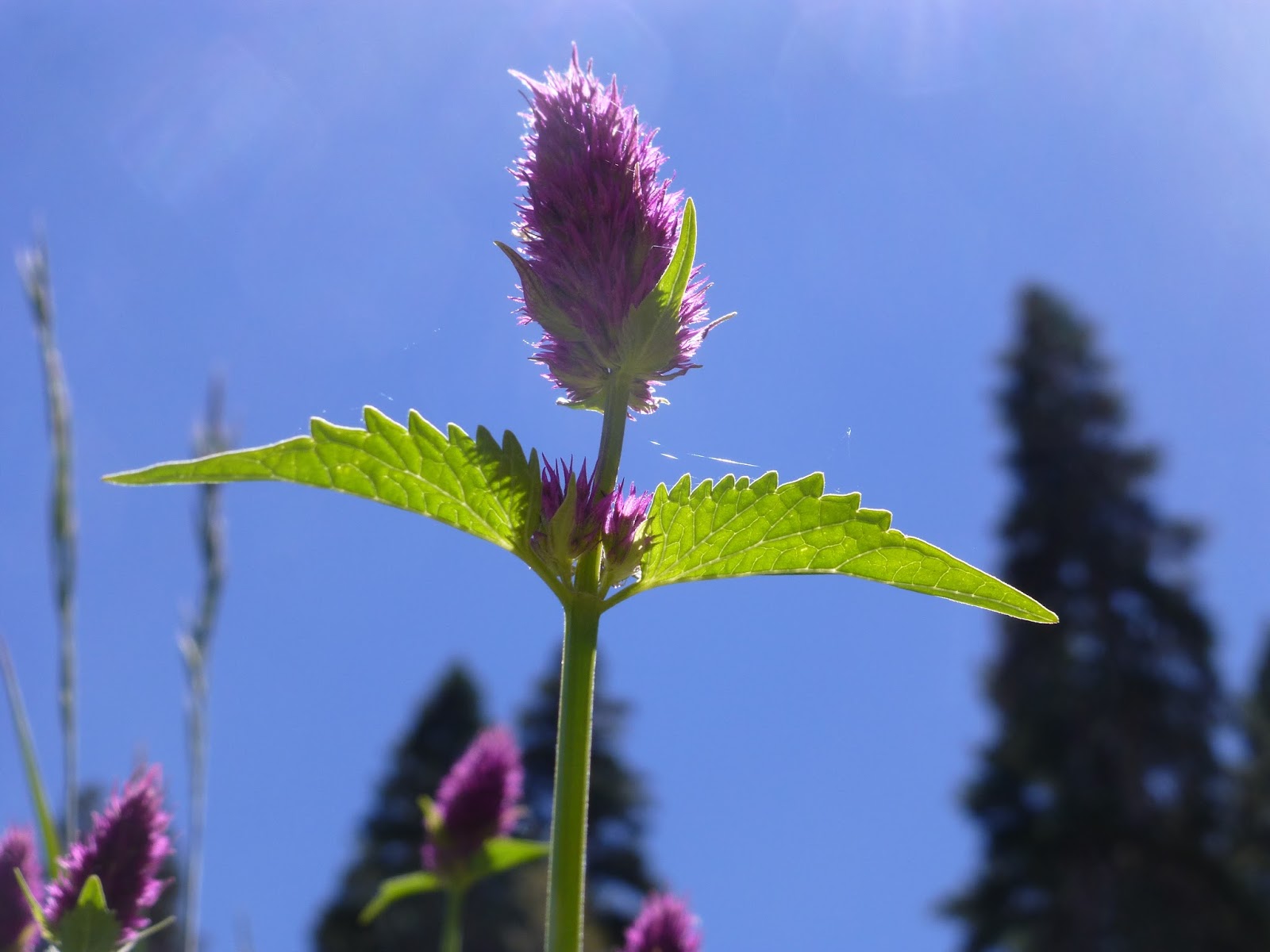
SUMMER’S SPRING BOUQUET


Glorious springtimes are too quickly a fading reflection in a rearview mirror.  About mid-April, in my home parts, the rains taper off, the grass browns and the blooms of spring dry and crisp and are soon blown away on a summer’s breeze.  We look backward and wish it could’ve lasted a bit longer.

So, a visit to the high country is in order.  Just a few thousand feet in elevation above our summer-choked valleys rest meadows and glades resplendent with spring flowers, for in that high country, spring lasts from early July until just a couple of weeks before the snow flies.

 On a recent July Monday, we found ourselves wading knee deep through flowers in the Emigrant Wilderness’ Eagle Meadow.   


A long time cow camp, the Eagle Meadows gateway to the wilderness is but one of many portals into a high country that invites one to forget the present – for the present – and relish that which may have gone unnoticed only weeks before.

In composing this piece, I pulled my flower book off the shelf and began the process of identifying those specimens I’d caught with electrons. 


Then I asked myself, “Why?” 


After all, Emerson told us: “Beauty is its own excuse for being…” 


…and who am I to argue with Emerson?


Ultimately, we enjoyed our visit to the high country, spending an hour or two wading through springtime in a place where springtime seemingly never fades.


o0o

Today’s Route:  From Sonora CA, travel east on state route 108 through Twain Harte, Mi Wuk Village and Strawberry.  About thirty miles on, look for signage for the Niagara Creek ORV.  Bear right onto paved forest road 5N01.  Cross Niagara Creek continuing to watch for 5N01 signage.  Expect a dusty dirt section followed by more pavement and finally a two mile dirt run to the trailhead near the old cow camp.


The trail skirts Eagle Peak, climbs over Eagle Pass and drops into Cooper’s Pocket: our goal for a better-planned trip next time.

This post is dedicated to the memory of Jamestown teacher-buddy Trudie Loomis.
We wish it could’ve lasted longer.

© 2016
Church of the Open Road Press

Saturday, July 4, 2015

THE SUBARU FORESTER “TOURING” (VINTAGE 2015)


A product review

As my spouse-and-life-partner joined me in retirement, our financial advisor counseled us: “Now is the time for you two to really enjoy the life you’ve earned.  If you want to travel, travel.  If you need to upgrade a vehicle to maximize those travels, do it.”

We began thinking about the functions required of a retirement vehicle and whether our current fleet would meet those needs.  The Nissan pickup is a powerful workhorse that will go anywhere if you don’t mind hauling your gear in the open bed.  The Honda Civic is a great commute car but nobody’s commuting any more.  Historically, the best memories had been made in a primitive Isuzu Trooper II (lotsa room, lousy power) and a Jeep Wrangler (lotsa power, lousy room.) 

Mentally, we drew up a list of important factors for whatever might ferry us into and through the next step.  Among them:

·      Reliability,
·      Fuel economy,
·      Versatility,
·      Comfort,
·      Bells and whistles, and
·      If we decided to get down to just one car, what car might meet our future needs?

At the nexus of these six considerations, we found the 2015 Subaru Forester.


Six weeks and about 3,000 miles into ownership, and with its first adventure under its belt, here are some pictures and impressions.

The Sube is quieter on the highway than the Honda (not a fair comparison because the vehicles are designed for different purposes) and it returns 28.9 miles per gallon which is on a par with the Honda.

We never feel the Continuously Variable Transmission (CVT) shift.

The “tall wagon” architecture of the vehicle where occupants sit up higher provides a welcome commanding view of the road.

The ride is taut and the leather seats are firm.  The seating position accommodates my 34-inch inseam and cranky knees, so a four-hour stretch is not at all taxing.

The six year old Honda has a more user-friendly "infotainment" system but the Forester came equipped with “Eye-Sight” technology.  It lets us know when we’ve drifted out of a lane – or if we change lanes without using the signals.  When cruise control is activated, eye sight adjusts the car’s speed to maintain a safe distance behind the vehicle in front.  (Other brands probably have this, but this feature is a first for us and it seems very cool.)


We packed a week’s worth of stuff into the Sube and headed for Pinecrest Lake and Sonora Pass.  Heading across a 102-degree Sacramento Valley, the interior remained cool although the black dashboard seemed to absorb and reflect some heat.

Freeway joints were slightly noticeable.

Once in the foothills, the car eagerly handled curves and competently tackled rises and falls although the 2.5 liter boxer engine does make it known that it is pulling a hill.

On a side trip, a steep, deeply rutted road led us to a promontory.  The X-mode feature (a button you push to lock the CVT transmission in a low band) allowed the car to creep into and over and out of dips, roots and rocks – reminiscent of Dad’s ’69 Toyota FJ 40.   

With an 8.7-inch ground clearance, we never scraped bottom.


Subaru at this point in time, doesn’t make a slew of different cars.  They essentially have one basic engine design with three variations, a couple of transmissions across all model lines and offer nice option packages within each of the models they sell.  Like Moto Guzzi on the motorcycle side of my life (one basic engine design, three models with variants) Subaru appears to have found a niche, striving to refine and perfect their offerings within that smaller realm. 

So far?  Great car.  Most important: my spouse-and-life-partner loves it.  While I enjoy and will continue my adventures on the motorcycle(s), I’m looking forward to adventuring in the ’15 Forester with her.  My fervent wish is that she’ll let me drive it - at least occasionally.

© 2015
Church of the Open Road Press

Monday, December 12, 2011

ROADKILL: THE DEMISE OF THE YEARLING

THE YOUNG DEER – one who’d maybe just lost his spots – and his doe stepped right into traffic. I saw the whole thing as if it were in slow motion. Actually, it was slow motion, because I was in town, not on the highway, and I was neither on the BMW nor the Guzzi. Wouldn’t have mattered if I had been on a bike because, as I said, the whole thing happened in slow motion.


sciencedaily.com
NORTH AMERICA’S deer population resides in two emotional spaces at once. For many of us, they are graceful, placid creatures occupying a certain place in the meadow, the forest and the food chain. From a distance, we watch one ear twitch, then another. They raise their noses and, once they’ve caught our scent, they bounce out of harm’s way and then prance off into the brush. But for many of us they are vile vermin who graze in our gardens, wreaking havoc on our cucumbers, tomatoes, and strawberries. They crane upward and fetch our low hanging apples and pears. They drive the dog nuts.

And they step out into traffic as if they were here first. Exhibit A: Up highway 70 about fifteen years ago, one bounded in front of a pick-up fifth wheel combination and its entrails spattered across the front of the Mazda MPV my wife was using to pass the combo. Until we sold that vehicle, the van bore scars in its finish from the deer’s gastric acids. Exhibit B: On State Route 9 in Washington, a riding buddy, travelling at about 60 miles per hour, glanced momentarily at some Cascade arĂȘte. When he returned his focus to the road, it was too late – both for the deer and his expensive riding suit.

Still, the sight of a yearling grazing the mule’s ear in some pristine glade prompts pause and wonder and feelings of peace.


SONORA, CALIFORNIA is a foothill town whose roots are firmly planted in the Gold Rush. The old town site spans several small streams where pockets of gold were uncovered by miners from Mexico in the early days. The current water system still relies upon small dams and a network of ditches that course along the sides of area hills: a system set in place over 150 years ago. In this Central Sierra region, deer summer in the high country at places like Kennedy Meadows and Clark Fork. Come fall, they migrate down to the foothills; some sharing pasture land with horses and cattle, some living off the bounty of residents’ vegetable gardens and orchards. Sadly, the urban/forest interface is invisible. The path from food to water crosses pavement.

elementsvillage.com
Washington Street is Sonora’s main thoroughfare leading from the antique district up to the town’s signature Red Church. It is Sunday and there is not much traffic. Services ended early enough that the men folk could arrive home in time to gather beer and chips and settle in for the kick-off of the 49er game. Three or four streets join at this intersection: Washington, Elkins, Shaws Flat. Down the way a bit is the creek that runs next to the high school. I wait at the stop sign on Elkins at Washington Street because there is a little rise over which traffic flows on its way in from historic Columbia, perhaps at a clip a bit too great for the old downtown.

Looking across the intersection, my wife and I see the mama and her yearling, clippity-clopping across the pavement. The scene unfolds. They are in the crosswalk, but they are not watching. A car comes over the rise, but it is a vehicle from the other direction – a direction from which the deer are evident – that moves unabated. In the seconds before the inevitable, I wish I’d have yelled or sounded my pick-up’s horn, but as I said, things were happening in slow motion and that slow motion included me.

The doe is bumped broad side by the car and bounces away; the yearling is not so lucky. We see him tumble under the front wheel, his foreleg run over. The automobile didn’t stop. Perhaps the driver didn’t even feel the impact. Perhaps the driver understood deer as vermin. The little fella struggles to its feet and falls. Struggles some more and falls again. And again. Mother waits in the churchyard. Finally, the yearling finds its balance and hobbles – three little hooves operational, one dangling, helpless – next to the doe. They make it to the edge of Washington Street. By this time, I am out of my car, waving at traffic that creeps up to the scene. The animals cross the main street and head past my vehicle. I call 9-1-1 and animal control, but what I really want to do was intercept the little deer and hold on to him – hugging – hugging until the authority can arrive and dispatch the little guy. A second yearling comes to the scene; bounds recklessly across the street and the three of them make it up Elkins taking shelter somewhere in the woods just beyond the Aronas Women’s Club.

The police arrive. I point the direction and the young officer thanks me. (Privately, I wonder whether he simply returns to patrol because there is likely nothing he can do – it being a Wild Kingdom and all.)

Returning to the truck, I rejoin my wife who is reliving visions of Highway 70 and shaking with angst.


VERMIN OR PEACEFUL CREATURES, deer are living beings. Pity’s fingers wrap around my throat and hold on. For a long part of the drive home, I cannot speak.

© 2011
Church of the Open Road Press

Thursday, September 8, 2011

FOLLOW-UPS, UPDATES AND CORRECTIONS IV

Our crack fact-check team here at the Church of the Open Road offers these follow-ups, updates and corrections from previous posts.


REGARDING DAY 12 – ALONG US ROUTE 1 NEAR ORLAND, MAINE: [July 4, 2011] Recall the post shared the frightening circumstance of coming across the scene of a motorcycle accident. The bike, a classic BMW R75 was resting “on its exhaust pipes and front wheel.” Comments from readers debated the good / evil quotient of mandatory helmet laws.

On September 7, the Church received another comment on that post. In its entirety, “Anonymous” said...
I am the unfortunate rider from the Orlando, Maine accident. I most definitely WAS wearing a helmet, and would not be writing this had I been not. I am all for individual rights...PLEASE wear your helmet!
Don’t know how the rider came across the Church of the Open Road website, but certainly glad he’s okay.


REGARDING CAPTAIN JACK, GENERAL CANBY AND THE CONCLUSION OF THE MODOC WAR: [July 24, 2011] Captain Jack’s given name as provided by Thompson (Argus Books, 1971) and used in the post was Keintpoos. The most recent exhibit at the California History Museum (1020 O Street, Sacramento) spells the name “Kintepaush.” Neither of these choices appear in my spell check, so flip a coin to vote for your favorite.


SPEAKING OF VOTING, REGARDING FOR THE GREATER GOOD, LET’S RETIRE THESE TERMS: [August 5, 2011] A reader suggested views on the Tea Party were misinformed and asked: “Have you been to T.E.A. Party meetings, Brilliant?”

Quite a conversation ensued regarding what representation means and whether folks feel they are adequately or appropriately represented. The Church recommends folks reread the post with the new comments. The former (and short-lived) Civics teacher in me says: “Yes, folks are appropriately represented.” My correspondent says: “No, we aren’t.”

In either case, the Church of the Open Road believes that the best way to get the representation one feels one deserves is to:
  1. campaign vigorously for the candidate who most closely represents one’s point of view; 
  2. after the election, pull back together by accepting the results; and 
  3. remember that, as Keith Richards and Mick Jagger opined: You can’t always get what you want, but if you try sometimes…
o0o

NOTES FROM THE SEPTEMBER 7, 2011, CHURCH OF THE OPEN ROAD (TENTLESS) REVIVAL held at Courthouse Square in Sonora, CA:

The gathering did not start on time as one parishioner was waylaid by a police officer in an unmarked who, in the Safeway parking lot, was curious about the BMW R1200GSA, and “how might it compare to my older K1200RS?” After sitting on the big GS for a few moments, the deputy said, “Yes. I think I might like this better.”

Call to order: 

The gathering was called to order at 1:05. Truthfully, the group being made up of Democrats, Greens and other assorted liberals, the gathering was never really “called to order.”

Attendance: 
 
Those present (no last names, please): Jeanne, John, Elaine, Sage, Ted, Paula, Toni and Dave. Sharon made a cameo appearance.

Minutes:
  • Dave opened the meeting by dropping his sandwich and soda at the curb of Washington Street. When opening his Coca Cola, the drink exhaled its secret toxic formula on the sidewalk. Not very “green” of him.
  • John reported that the pot-smoking young folks who frequent this locale “at 1:00 everyday” were pushed out by the group’s presence. John: How do you know this “everyday” detail?
  • Jeanne and Paula, who’d never met except on Facebook, greeted one another. Same for Jeanne and Dave, and Dave and Paula. Ted, who accompanied Paula, knew none of the others through Facebook. This may indicate that Ted spends a bit less time in virtual life than those of us who Facebook with frequency. 
  • Sage, Elaine’s 3-year-old grandson commented, “My name is Sage.”
  • Toni provided Dave with some world-class peppers she’d recently “put up.” Wow, Toni!
  • Discussion ensued regarding the evening’s presidential debate. There appeared to be some visible wincing during this exchange - but this may have simply been from the Coca Cola fumes.
  • Discussion ensued regarding the shift in county voter registrations in the mid-1970s.
  • Dave was “brought up to speed” about changes in the county since his departure some 18 years ago.
  • A moment of pensiveness followed kind comments about the late William Bernard, our buddy, good-guy and former superintendent of the Jamestown School District where several of us had, at one time or another, been employed.
  • The chairman of the county’s Democratic Central Committee wandered by and was greeted.
  • All participants received a bumper sticker (pictured below) to commemorate the gathering.

Adjournment:

Folks sorta drifted away at about 2:15 or so.


THANKS FOR ACCEPTING this tongue-in-cheek review. Folks wishing additional copies of the bumper sticker need only PM “the Church” with an address and it'll send some out to you.

It was certainly terrific to finally meet folks!

© 2011
Church of the Open Road Press

Friday, July 29, 2011

GREAT POTTY STOPS OF THE OPEN ROAD III – UTICA PARK, ANGEL’S CAMP, CA

“Mark Twain wrote here.”

WHETHER WE TRAVEL ALONE or with children – especially with children – finding a pleasant place to ‘hit the head’ can be a challenge. The best pauses to refresh must be conveniently located, easily accessed, clean – flush toilets preferred – and well-maintained, and provide the bonus of something else to do once the deed is done.

It is best if there isn’t a candy counter, a soda cooler or a t-shirt rack on the premises as their absence prevents those can I have? arguments that so spoil a good road trip. It’s nice if there is something to do, something to watch or something to learn so that we can stay out of the car or out of the saddle for a few minutes longer. This cuts fatigue once on the road and leads to safer driving.


WHY THE MARK TWAIN QUOTE? Back east, that statement would read: “George Washington slept here.” Out west, particularly in California and Nevada, Sam Clemens did more than his share of newspaper reporting. This fact is lost upon those whose interactions with his work never travel further west than the Mississippi. His “Celebrated Jumping Frog of Calaveras County” (published November 18, 1865) was set only a couple of miles south of this point.

A statue of Mark Twain greets us as we enter Utica Park in Angels Camp, California in search of another great potty stop. Angels Camp is located on State Route 49 about a half hour north of Sonora and about a half hour south of Jackson – both places where you may have overloaded on coffee or, perhaps, indulged in a Big Gulp.

The park is on the west side of the road. Access from the north is via a narrow one-lane street just north of the old Frontier Auto Supply – a larger white stucco building. The turn is easy to miss. From the south, after passing through historic Main Street, hang a left on Bush and you’ll find it.

Click to access text.
Stainless steel facilities are housed in a clean cinderblock building. Maintenance is regular and thorough. Outside, a granite marker tells the history of the Utica Mine. It is a brief and very informative read.

Not far away, a large jungle gym invites activity for the youngsters.  A stroll across the manicured lawn brings one to the shade of a huge Sequoia under which one might wish to cap nat. Picnickers are afforded a large covered area with tables and charcoal grills.

For those of us with more time, forty minutes will allow enough to walk both sides of the picturesque Main Street. If someone has to have a snack, this’d be the arena. If you don’t want to fight the battle, stick with the cool jungle gym back at the park.

The upside of making a purchase in town is that a fraction of the commerce will likely go to support such small-town features as city parks – especially important in this era of declining support for public good.

Rider buddy Jeff's 2001 MG Jackal with 104k on it.  Wow!

UPON LEAVING “ANGELS,” be ready to delight in historic footnotes and great vistas. Take your time. North on 49 takes you to the northern mines; south toward Yosemite. East on State Route 4 presents a rugged and challenging crossing of the Sierra, west through the foothills to the valley. You cannot take a wrong turn from this spot.

© 2011
Church of the Open Road Press

Sunday, April 10, 2011

GOLD COUNTRY – MONTEREY COAST LOOP – DAY 1: SONOMA TO SONORA

Part 1 of a 3-part series.

AS A YOUNG BOY, flabbergasting my mother, I walked down to Chico Book and Stationery and ordered a copy of Remi Nadeau’s Ghost Towns and Mining Camps of California. I was, perhaps, eight. For days – well evenings – I poured over the book’s photographs and stories of life in the gold country of California – the corridor along state route 49 – and dreamed of one day buying a practical car (at the time, either a Jeep Wagoneer or a VW Combi Bus) and spending the rest of my life camping out like a 49er. In the fifty intervening years, I have traveled most of 49, achieving its northern terminus at Vinton (Plumas County), but never to its southern end at Oakhurst. Little did I know I’d make it this trip.

Our plan had been to meet in Santa Rosa and travel up US 101 to Eureka, using the Eureka Inn as a home base from which to explore 299 east to Redding and return on the most glorious state route 36 west from Red Bluff. But the weather gods frowned on this, sliding a hillside across 101 north of Garberville and prompting us to scrub those plans for no plans in particular.


(c) iktome.com
CHURCH OF THE OPEN ROAD original parishioner, Randy Boek, hailing from Washington State reserved a 2010 BMW R1200 GS from Adventure Touring in Santa Rosa, California. Proprietor Mike Bongiovanni meticulously maintains his rental fleet of GSes and when Randy and I met up at the plaza in Sonoma, it was immediately evident that we were in for a good time.

I’d ridden from home in the Sacramento area, stopping in Winters at the Putah Creek CafĂ© for breakfast – if you can find a better breakfast sausage anywhere on the planet, please contact “the church” and let us know; we doubt if you can – and pausing at the Monticello Dam to see if the waters of Lake Berryessa had eclipsed the Glory Hole. They hadn’t.


© 2011 Suisun Valley
WE TRACED MY ROUTE from Sonoma to Napa on 121. Nine miles east we slipped into the bucolic Wooden and Suisun Valleys, rustic land of wineries, local farmers’ markets, bergs and hiking trails. Often overlooked by those traveling I-80 to or from “the City,” this little part in the Coast Range offers a view back to slower times where drivers pull over to allow passing, quite possibly, locals know one another by first name. In the highest reaches, every flat half-acre homes a vineyard; and as we approach Fairfield, row upon row of varietals are just in bud for the new growing season.

Crossing I-80, we rode along state route 12 toward the Delta. A pause at Rio Linda. The public restrooms are barricaded by steel gates slipped into concrete dikes. Silt rests upon the river-side of these arrangements, reminding us that flood stage means things really, well, flood, in these parts – as recently as last week.

We devised a simple plan to cross the valley floor on state route 12, catch state route 49 at San Andreas and spend the night in Sonora. Phone reservations are made at the Gunn House there.

Not far east of Lodi, route 12 begins a graceful waltz through the foothills. The spring grass is tall. Blue gilia and lupine decorate the berm and I recall that an edible bulb lives at the base of the former.

(c) westernmininghistory.com
San Andreas is the first of many towns along the Golden Chain Highway that we will pass through. Each will have brick buildings with aged and cracking plaster exteriors revealing, well, brick buildings. Highway 49 bypasses the oldest part of San Andreas, but the “business route” steers one through a town with one foot secured by history.

I know this section of 49 well, having once worked a mining claim near “Mark Twain’s (rebuilt) Cabin,” and later having served in education in both Jamestown and Sonora. At the time I drove an ’83 R65 “airhead” BMW, a bike for which these roads were specifically engineered. 49 sweeps into and out of the canyons of the Mokelumne, Stanislaus Rivers and several smaller creeks. The sun dips below the ridgeline south of Angels Camp. The ride past Columbia into Sonora turns cool.

(c) Gunn House Hotel
Our room at the Gunn House is comfortable, affordable and historic. An evening there with my wife would have been far preferable to an evening there with my riding brother, but oh well. We hiked down to the Diamondback Grill for some oriental ribs and local wine, ran across some friends from long ago, then returned to the hostelry and turn in. All in all, a most excellent first day.

***

Downtown Sonora: circa a while ago.  Source: Google Images
NOTES: Owing to the fact that we dropped the ball on stopping for pictures, many images included in these posts are swiped from Google. They are noted as Google Images, but may be the copyrighted work of other photographers, artists, sojourners, or others in league with ne’er-do-wells. When possible, I will credit the photographer or their URL and regret my inability to do so in every case. That said, the pictures are used for illustrative purposes only. The Church of the Open Road profits in no monetary sense from their use.

I recently lost track of my old copy of Remi Nadeau's Ghost Towns and Mining Camps.  I must locate it.


RESOURCES:

Adventure Touring Santa Rosa: www.advtouring.com/ Mike’s main business involves offering guided tours of some of the best roads found anywhere. Repeat: Anywhere! But Mike rents maintained, state of the art BMW GSes when they are not being used on a tour. Randy’s bike was flawless.

The Putah Creek CafĂ© http://putahcreekcafe.com was recently featured in the Food Network’s Diners, Dives and Drive-ins. Fine small-town atmosphere, offering killer burgers for lunch and, oh, yes, that house-made breakfast sausage.

The Diamondback Grill www.thediamondbackgrill.com/ had just opened up when I relocated from Sonora, but I remembered the ribs. They have moved across Washington Street from their original location and have added greatly to their menu and wine list. This is a must-stop-at eatery.

The Gunn House www.gunnhousehotel.com/ is conveniently located on Washington Street near restaurants, watering holes and shopping. Its ambience takes one back a century and a half. Nice rooms, nice staff, nice price.


© 2011
Church of the Open Road Press