Showing posts with label Glenn County. Show all posts

Monday, May 25, 2020

A STOP ALONG CALIFORNIA’S “TRAIL OF TEARS”

... remembering (and sharing) forgotten histories ...

California’s own “Trail of Tears” crosses Mendocino Pass where Glenn, Tehema and Mendocino Counties come together.  Stretching from embarkation points (like Camp Far West – now inundated – in Yuba County), native peoples from the valley and Sierran foothills – Maidu, Yana, Konkow, Wintu, Nomlaki, among others – were forcibly marched along this route to a reservation in what is now known as Round Valley.  Their story is devastatingly tragic.

Fifty years ago, with an old sheepherder from our neighborhood, Mom and Dad took the family to camp annually at the base of a high-county glade perhaps three miles distant from the pass. Sleeping under billions of stars, for several Memorial Day weekends, we heard the tales from the old sheep man who, as a kid, summered livestock up that way: tales of hustling sheep up the Grindstone Trail using old Model Ts, of mountain lions taking one or two head a week, of Saturday night “hooplas over ta Smith Camp...”

I only found out about the “Trail of Tears” while working on the Maidu Interpretive Center, a first-peoples museum built next to an elementary school where I once served in Roseville.  That discovery prompted me to try to find our old camp spot, which after several attempts, I did.  It turns out: the road to our old stompin’ ground IS the old “California Trail of Tears.”

I have long wanted to take a couple of next generations to that pristine and sacred spot and share some of the old man’s stories (and, now, a few more) with my children and grandchildren.  


Mom died in October of ’17.  On Memorial Day weekend, those newer generations met at the sheep camp to set Mom free and to hear a story or two.  

Returning home, a mark was checked next to an entry on this old man’s bucket list.  A dream had come true.  I hope they’ll visit again...

(c) 2020
Church of the Open Road Press

Sunday, May 13, 2018

DAD’S GREEK CHORUS


“The chosen spot of all the earth as far as nature is concerned…”
- Luther Burbank

Famed botanist Luther Burbank reportedly said this about his adopted home, his beloved Sonoma County.  And I suppose he was right.  For him.

My “chosen spot of all the earth” is close by, geographically, but different.  In a thick catalog of fond childhood memories, it is a place may well hold the fondest.

I reflect on this at the confluence of two events:

1.     Six months ago, Mom passed.  With Dad already on the other side – he had waited 22 years for this – I now represent the oldest generation and I know what’s inevitably gonna happen.  (Not soon, I hope.)
2.     In the current process of rewriting our living trust, the question is raised, “Where do you want to spend eternity?”

Click on this picture to expand it, because it's a really cool shot.
Yesterday, we revisited the chosen spot.  After all, somebody’s gotta know how to get there.


From a ridgetop deep in the remote California Coastal Range one can see Mt Lassen some 110 miles to the northeast.  Turning west, the bank of coastal fog that blankets the Pacific is no more than thirty-five miles off.  In between both Lassen and the coast lie row upon row, ridge upon ridge of seeming unsullied forests and meadows, forgotten place names and forgotten history.

A quarter-mile down the slope stands a cluster of ancient firs, headquarters for a century-and-a-half ago summer sheep camp.

As a family, we’d visit annually with the last of those who’d actually run sheep up that way.  Woods would be explored.  Rusted relics found.  Meadows would be traipsed.  More relics.  Springwater consumed.  Hide-n-seek played.  Sticks gathered for the evening fire.  Outdoor cooking.  Outdoor everything.

After chow, we would walk to the top of the ridge and watch the sun descend, turning the Pacific sky all ranges of oranges and purples and, finally, midnight blue.  In the dark, we’d stumble down the hill to a campfire that would last well past dusk and to stories told by the old sheepherder that would animate ensuing dreams under a starlit sky and last through until today: Stories of mountain lions and Ford Model As, Friday shindigs at neighboring camps and Sunday stillness shepherding lambs across the glade. 

Campfire tales.  Yesterday, they returned.


Atop that ridge stands a copse of gnarled oaks – “looks to me like a Greek Chorus,” Dad said five decades ago – oaks that had and still have a forever view of Mount Lassen, the Pacific fog, and that favored camp just down the hill.  (I never figured out what Dad meant by a Greek Chorus – always swore I’d look the term up, but never have.  Probably never will – don’t want to spoil the image I have.)

The chorus is at rest.  Silent.  The only sounds are the soughing forest, the murmur of a brook and the occasional report from a red tail or a grouse.

In the merry-go-round of a mind entering, perhaps, the final third or quarter – not exactly the home stretch, yet – this is where the finish line will be: intermingled with Dad’s so-called “Greek Chorus,” overlooking the chosen spot of all the earth as far as eternity is concerned.

© 2018
Church of the Open Road Press

Sunday, May 7, 2017

SEEDS OF LITERACY IN THE MIDDLE OF NOWHERE


Stumbling across the Carnegie Library in Bayliss, CA

Circumstance has dictated that once every two or three weeks, I drive from northern Sonoma County to Chico, California.  An aging mother enjoys her son’s visits.  The route from Cloverdale to Williams is pretty static, involving a good chunk of CA 20 over the top of Clear Lake and through the Coast Range.  Wonderful ride even after the first dozen or so times.


Once in the Sacramento Valley, a grid of state highways, secondary roads and gravel byways offers almost unending choices to get from point A to point B. 

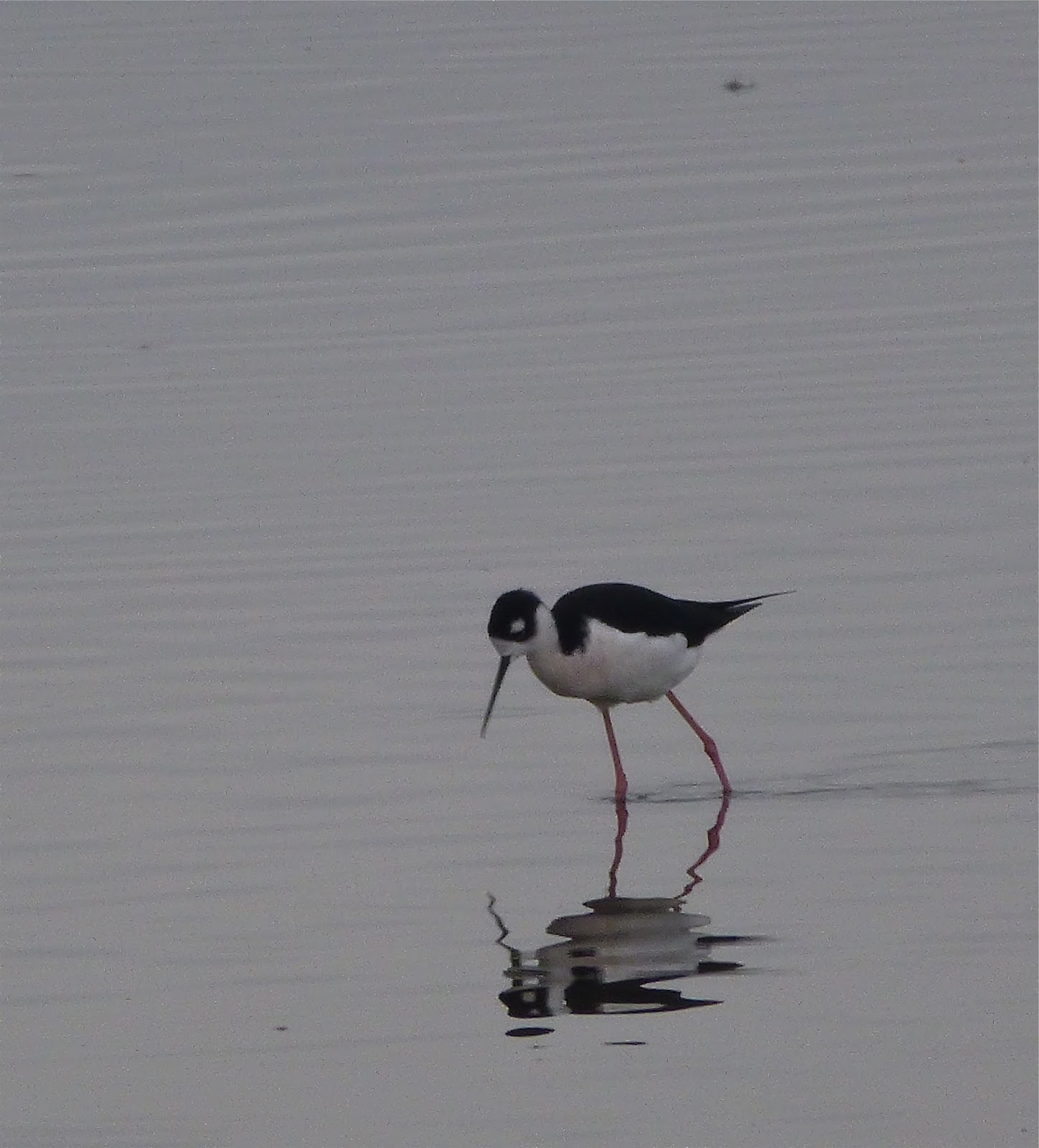
Some routes cross vast rice fields that in the winter months are thick with migrating geese and cranes and throughout the rest of the year visited by herons and egrets. And other waders. 

Their reflection in the glassy, flooded fields against an azure sky (or a gray one) is always a delight.


Other routes split walnut orchards that in summer invite the passer-by to seek the cool shade and pause for a roadside picnic. 

There’s a great collection of long dead Chevy and GMC trucks near the intersection of River and Ord Ferry Roads. 

And lots of old barns both nearby and distant.


The old US 99 W parallels a frenzied I-5 passing through one-time bergs established as whistle stops along the old California Northern Railway: Maxwell, Delevan, Logandale, Artois, Grapit…

Boarded storefronts and tiny crumbling streets remind us of what once was. 


In some places, nothing reminds us.

Ten miles east of the freeway, CA 45 traces the west bank of the Sacramento River. 

The portions atop levees offer sweeping views of a riparian forest with peeks at sloughs now filling what used to be the river’s channel. 

There’s a nice little store in Princeton to stop for a beverage and a snack, a high school and an elementary school and a little other commerce. No working gas pumps, however...

Just north of town, the skeleton of the Princeton Ferry rests, pulled up to the landing where cars – including our ’54 Ford – once boarded to cross the river.


Glenn has a post office and little else.  Same with Ord Bend although a manufacturing plant churns out something at the crossroads. 

Butte City, Afton, Jacinto, all have pretty much come and gone.


Recently, I traversed the valley on Bayliss-Bluegum Road; Bluegum being the out-of-town spot where many young high school boys may have – or may not have –  “become men” after the prom or some other such celebration.  The motel there is now no longer a motel. 

Heading south on CA 45, I turn west.  Signs indicate the Jacinto Grange would hold a pancake breakfast on an upcoming Saturday morning, and if I miss that one, there’d be another next month.

The walnut orchards near the river give way to rice fields on the fertile flood plain of the Sacramento.  Lettered roads – “County Road S, County Road T,” etc – that are little more than driveways, lead to houses and barns a mile or so north or south.  Wading birds stand like statues in the still canal waters next to the road. 

Weed encrusted implements dot the field edges, coated in rust and field dust.


Then, just ahead on the right: a copse of elms or cottonwoods at a crossroad.  Perhaps something major?  I hadn’t seen a store, a post office or a filling station.  Not even a bar.  But I was coming to a something.


Andrew Carnegie was a Scottish immigrant businessman and philanthropist.   Pivotal in expanding the American steel industry, he founded the company that would become US Steel.  By the late 1900s, because of his investments in railroads, railroad sleeping cars, bridges and oil derricks, he became one of the richest people ever in America.  Palling around with the likes of English poet Mathew Arnold, English philosopher Herbert Spencer and American humorist Mark Twain, Carnegie’s affinity for the written word and the import of literacy manifested itself, first with the construction of a public library in Dunfermline, Scotland.  His efforts led to there being more than 3000 libraries built throughout the world with nearly 1700 built in the United States.  There’s probably one near you.  (Chico people, check out the Chico Museum on Salem between 1st and 2nd; folks in Roseville, check out the building adjacent to the arched bridge crossing the UP tracks heading north out of town.)


A placid white building, circa 1910, stands near the shade of those elms in what once was Bayliss. 


I stop for a look.  The paint is fresh.  The lawn is trim.  The hours are posted.  Serving the southern section of Glenn County, California, they’re still loaning books.  


Just not the day I happened by.  Besides, my library card expired decades ago.

I stand on the lawn thinking about the visionary accomplishments of this immigrant industrialist, glad to see that the fruits of his love of literacy still flourished.

What else is to be found by the casual visitor to Bayliss?  Not much.  There’s the store.

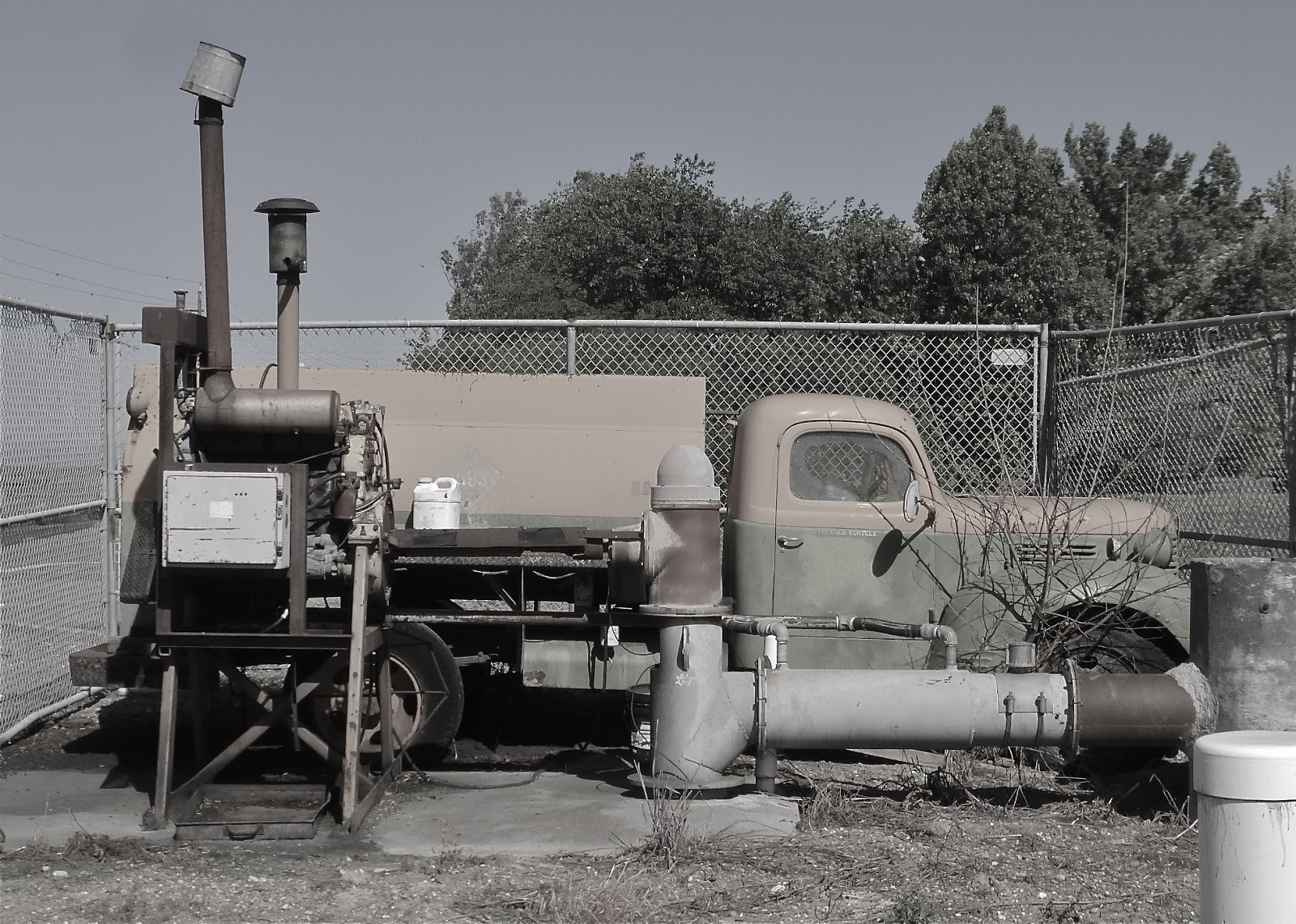
And an excuse for me to take a picture of an old truck repurposed as a source of power to pump water into an irrigation canal.  Or maybe it’s just stuck inside a cyclone fence.


A few miles further on, I come to I-5 with all of its frenzy and fury and high-speed, gotta-be-there-yesterday travel.  In moments, the Carnegie Library of Bayliss, California is a century behind me.

© 2017
Church of the Open Road Press

Monday, November 30, 2015

THE LIFE CYCLE OF A PLACE NAME


Dusk may be the time
when history speaks
in greatest clarity

I drove through Artois, California the other day.  I recall stopping there about five decades back, my parents looking to buy me a Nehi Orange at the local market.  

Long ago, the old store was boarded up.  The main highway through town, upon which this day I was the only traveler, used to accommodate all the major north south traffic on the west side of the valley.  I turned down a back street and explored its crumbling pavement.  A couple of dozen homes, many dilapidated, stand among vacant weedy lots. 

Artois, once a shipment point for wheat, later rice, on the old SP line; once a pit stop for travelers on the old 99W; once a minor crossroad for those heading to the Sacramento River; Artois, now houses the production facilities for California Olive Ranch Oils and the occasional well-preserved Victorian, but little else.

Fort Bidwell is located at the north end of the Surprise Valley.  With a good tail wind, you could spit and hit Oregon.  Driving up that way is a lot like travelling back through time. Peter Lassen led immigrants through this country in the 1848.  Modoc leader Kintpuash (Captain Jack) was hung here in 1873 having killed US General Canby in the Modoc War.   

The vast expanse of the valley floor now supports cattle operations and small time hay farms each whose ownership goes back generations.  The main street through Fort Bidwell is utilized by equal parts pickup trucks, horses and those little four-wheelers made by Honda or John Deere or Kubota. 

It is easy to imagine when there might only have been horses.  Now, however, the school is closed, the general mercantile is closed and the Chevron closed about two years back, or so I’m told.  If a dime were burning a hole in your pocket up this way, well, you’d just have to let it burn.

Sites, California is nine miles west of Interstate 5.  It is just past the easternmost ridge of the Coast Range.  The road is rifle shot straight from Maxwell to a spot called Mills Orchard, where it twists and turns to follow the course of a seasonal creek up into the hills.  There was a town here, once.  We know, because there’s a sign that says we’re looking at the town square (circa 1887).  Sites, the town site, is at a crossroad.  West, one would travel to Lodoga; south, one would find the remnants of Leesville; east, one retraces the route down to Maxwell and a rail connection north and south. 

Whatever they once did at Sites – range cattle? – they’re not doing much of it anymore.  Recent talk has centered on damming that seasonal creek and using the resultant basin as surface storage for pumped in Sacramento River water in case the state should ever find itself in daunting drought conditions.


There is mystery in old places that are on their way to no longer existing: mysteries involving their birth, their heyday and what brought about their demise.   

My mind often wanders to the hearty families that busted ground and settled the area. 

I’m curious as to whether the old time residents thought it as beautiful or as romantic as I do from the seat of my motorcycle, or if it was just a place that, like a tool, they used until they found no value in any longer and moved on.  Then I wonder if any descendents ever come back to check on things.

Generally, the road to a near-forgotten place name is an interesting one. 

It may or may not be paved.  It likely never was engineered. 

It probably goes over and around the streams, scenery and hillsides rather than through.

On the off chance you encounter someone coming from the opposite direction, two things are practically assured: somebody’s going to pull over and both you and s/he will offer a neighborly wave.  I wonder about those who walked the road to market or to school or to the rail line and what they may have thought about those who later drove it with our smoke-belching mechanicals.  It’s easy to get lost in that or some similar reverie. 


Place names are born because something was about to happen here.  They die because that something quit happening.  The whys are innumerable: the gold played out, the wind blew the topsoil away, there was a flood, there was a drought, someone built a dam, someone built a freeway, someone built a Wal-Mart in the next town over.  Or, the off-spring saw that proverbial “Par-ee” and decided not to return “down on the farm.”

I enjoy a little first-hand visit with history perhaps staying to watch the sun dip behind a hill and darkness creep across the landscape.   

Dusk, I’ve found, may be the time when history speaks with the greatest clarity.  At these times I counsel myself: It is wise to have this little visit before all the history is erased by the winds of time and our relentless march toward efficiency. 

It is good, I conclude, that there are so very many little roads: each going somewhere.  Each going to a place name.

© 2015
Church of the Open Road Pres

Thursday, November 5, 2015

A VISIT TO THE LIVESTOCK AUCTION


I drove past the Orland Auction Yards the other day.  The place looked the same as it did fifty-five years ago when, as a goofy, freckled eight-year-old, I, with the family, dropped in to watch the proceedings.  We’d recently moved from the suburbs of a smoggy LA basin to a five-acre plot fronted by a creek near Chico.  We were gonna be country.


Dad wheeled our ’54 Ford Ranchwagon (that’s what FoMoCo called station wagons in those days) onto an acres-large gravel parking area, disappearing it amongst cattle trucks and stock trailers.  A maze of pens and chutes ran next to the parking area. The place smelled of manure and hay and dust.  Breaking away from Mom and Dad, I climbed on a fence rail. I was looking for a donkey and wondered if one might be in a pen readied for sale.  The neighbor’s pony had died a month or so before and his carcass hauled off to the rendering plant south of town.  Maybe we could get a donkey to use on backpacking trips and keep him where the neighbor’s pony had been.  Peering over the top of the weather beaten rail fence, I could see the humps of cattle backs squeezed tightly together.  The animals didn’t look at all comfortable.  They jostled one another, shifting and groaning, the fence boards rending and creaking in concert with their movement.

A firm grip fell upon my shoulder and I was pulled down from the fence summarily receiving a smart slap across the chops.  “Don’t you run off around this place!  You could fall in and get trampled and then what?”  It was Mom.  “And when we get inside, sit on your hands.”

We entered the building with my ear firmly in my mother’s grasp.  The foyer was dark, compared to the parking area outdoors.  There were a couple of plywood partitions each masking the entrance to a non-doored restroom.  I think there was also a small office, but what caught my attention was the concession area.  There were bottles of soda, packages of Wrigley’s gum and a selection of candy bars and it was staffed by a blue gingham-clad gal who looked a lot like Dorothy Gale, if Aunt Em and Uncle Henry’s niece had somehow aged to be a little older than Mom.  I couldn’t find the words to ask Dad for fifteen cents so I could buy a Coca Cola – no, a Nehi orange. Nehis came in a bigger bottle – and a Payday, before I was pulled into the darker confines of the auction arena.

Along with the shadowy darkness there was a thunderous mix of sounds.  Some fast talking fellow with a big, chrome microphone roared numbers or words my ears were too slow to make out.  Added to this was a clunking syncopation of boot heels on wooden bleachers, the murmur of attendees evaluating the stock and the occasional bawl of a bummer calf.  The route into the arena led through a dim channel between two sets of those bleachers occupied by denim-clad cowboys with those hi-heeled boots, which because of the clunky sound they made, I immediately coveted.

“Remember to sit on your hands,” my mother repeated above the din.

We had to approach a big enclosure with a dusty dirt floor encircled with metal pipes in order find seats anywhere.  This middle part of the room was brightly lit.  Inside the corral, some cowboys herded about a few head of cattle.  We walked around the dusty ring past where the man with the microphone, dressed in a clean plaid shirt and nice straw cowboy hat, was rattling on too rapidly. 

“That’s the auctioneer,” Dad explained, pointing.  I think the auctioneer might have winked at me as I passed so I winked back using both eyes.

Dad pointed to an open space of seating far up the bleachers.  “Over there,” he said.

We climbed through spectators clad in weary snap pocketed plaids and faded jeans – and those boots.  The further we climbed from the auction ring, the darker things became and the harder it was to see where to put my feet.  I hoped I wouldn’t step on a cowboy and end up getting drilled by slug from his six-shooter.  Soon we reached the spot to settle.

“Remember to sit on your hands!”

I did as commanded.

In time my eyes adjusted and I began to see the entertainment that was unfolding before me.  The livestock – cattle, mostly – was shuttled onto the auction floor through an entry opposite where we’d come in.  Wranglers hooted and whistled and rapped the flanks of the beasts with coiled ropes until the gate behind them was closed. 

The man with the microphone, the auctioneer, momentarily spoke in a manner I could understand: “Now raise your sights, folks.  This here represents a herd of Herefords from the Vina Plain’s Somethingerother Ranch out there toward Gerber…” I could make out the words but not their meaning.  He ambled on with a singsongy drawl, making me think that crossing the Sacramento River to get to Orland, California we somehow ended up deep in the heart of Texas. His narrative ended with: “Now what am I bid?” followed by: “Hey gimme fi’dollah, fi’dollah, fi’dollah, ten.  Hey, fi’dollah, fi’dollah, fi’dollah. HUP! Now gimme ten dollah, ten dollah, ten dollah, twenty. HUP! Gimme twenty, twenty, twenty…”

It took a while for my ears to catch up with what was going on and a while longer to figure out what “HUP!” meant.  But pretty soon, his rapid banter stopped, a sprinkling of applause ran through the crowd and the animals were herded back out through the chute to be replaced by another group.  I finally got the drift of the auctioneer’s chatter and began to link the “HUP!” with some movement in the crowd caught by one of three or four cowboys in better blue jeans, with plaid shirts and crisp straw hats matching those of the auctioneer.

Mom wasn’t sitting on her hands, nor was Dad, but both of my hands were planted underneath my butt as a third, a fourth and a fifth group of animals came in and departed.  It didn’t seem fair.  Then the inevitable occurred: A piece of lint or dust or maybe a horsefly settled inside my nose.  I reached up to excavate it. 

“Sit on your hands!” Mom said, her voice trembling in panic while the auctioneer rattled, “Fitty, fitty, fitty, fitty.”

I quickly slipped my hand under the seat of my pants but it was too late. “HUP!”  The auctioneer was pointing right at me.  Somehow, he must have known we’d arrived in a Ranchwagon.  “Sold!” he bellowed into the big, chrome microphone.  My stomach felt like a rock had dropped into it.  I’d just bought a herd of Holsteins.  I looked at Mom, mortified. The smattering of applause rippled through the arena and I was about to cry when the skinny, older gentleman seated behind us stood up and took a bow.

Dad laughed and put his arm around me.  I felt Mom’s glare bore through both of us.


So this was how it worked.  Sellers brought livestock: cattle, horses, pigs, sheep – sheep entering the ring were met with a collective groan – the auctioneer gave a little description and then burst into his call.  Spotters pointed out buyers and over the course of a few minutes, a deal was done.  Meanwhile, my hands numbed as I sat on them for about three hours watching all this trade take place, taking in the sights, the sounds and the smells of the Orland Livestock Auction.  There were no donkeys offered this day. 

On the way out, Dad asked if I wanted a Coca Cola or a Nehi.  I picked the Nehi because it was bigger.  Dad gave the Dorothy Gale look-alike a dime and placed the wet, slippery bottle in my still-tingly, numbed, asleep hand, from which it fell to the floor rolling under the counter leaving an orange trail in its path.  For the second time, I almost cried but Dorothy offered up another saying, “On the house, buckaroo.”

Before long, we were in the old Ford heading home.


For the next couple of weeks, Dad gently – until she’d had enough – chided Mom for thinking a seasoned auctioneer would be dumb enough to sell a herd of dairy cattle to an eight-year-old kid who happened to be picking his nose up near the back row of the auction house.  Meanwhile, I scoured poultry and livestock section of our local paper’s want ads looking for a donkey to pen up in the neighbor’s back forty and carry my stuff on hikes.  One never came up. 

Pretty soon, I got interested in go-carts.

© 2015
Church of the Open Road Press

Monday, July 27, 2015

RETURN TO SIMPSON CAMP


…the Subaru’s third big adventure…

Long-time readers will know that a place called Simpson Camp holds a special place in my childhood heart.  On my to-do list has been to share this distant locale with my wife of nearly thirty years.  Recently, taking the long way home, I did just that.


State Route 162 heads west out of Willows to the defunct lumber berg of Elk Creek.  The store there burned a year ago, but the gent who owns the place has been visiting daily cleaning up with the dream of reopening the place, or so reports the matron running the town’s café/gas station/inn.  The old guy was a much younger guy 40 years ago when he frequented the wholesale house of my employ to pick up salables for his remote grocery.  I was disappointed that I couldn’t drop in for a Coke and some Corn Nuts.

Grindstone Canyon is a long and deep valley carved by its namesake creek.  Fires regularly race through this barren, rocky and dry landscape, usually with little impact other than to refresh the scant soils.

Back in ’53, however, efforts to quell one had devastating results for one nearly forgotten crew.

Up the road we pause to let Edward out of his Subaru to stretch his legs…

…little knowing that coiled and lurking in the grass would be…


It’s a long forty miles from Willows up a windy CA162.  The pavement ends at Alder Springs where the route enters the Mendocino National Forest and is known as Forest Road 7.  Much more nicely graded than I recall, the Subaru Forester seems to relish the gravel and the curves.

Most folks who fly through Glenn County on I-5 must think the parish is little more than a string of impoverished towns in the bottomlands along the west side Sacramento River.  But on its path to Mendocino Pass, SR162/FR7 climbs to over 6500 feet passing through forests and meadows rivaling those in the Sierra. 


After some connoitering and reconnoitering, we found the spur road that leads to Simpson Camp.  Fifty years ago, Dad’s hiking buddy, Zibe Simpson, marked the turn-off with a red bandana tied to a roadside shrub.

The last time I’d visited the area in 2010, the road into the site was eroded and impassable.  Knowing this, we parked the Sube at the top of the ridge and walked down the glade. 

Down the hill quite a distance, a copse of firs juts into the meadow.  The sight of this stand brought a familiar stir to my innards.  

 We hiked through knee-high mule’s ear... 

...successors of the very one’s Zibe’s boxer, Jovanna lazed in back in the 60s…

…until we came upon a handcrafted sign nailed high in a fir.  (I know the story behind that sign.)

This was where we’d camped some 50 years earlier, although the official Forest Service sign had been removed, according to the ranger in Covelo, “to not attract folks who might damage the archaeological remnants.”   

I remember that Zibe showed us where to find arrowheads.  I remember that there used to be an old Wedgewood stove standing beneath these trees.

Looking from under the shade of the firs, I found where our old Coleman canvas tent had been erected…

…and the ring of stone that once confined a campfire that held off the gathering dusk… 


…a fire around which Zibe Simpson told stories of running sheep up this way in the summer months, herding them with Model A Fords and picking off coyotes intent on thinning the flock.

I remember falling asleep, fifty years ago, with a cool evening breeze washing over my face, dreaming of tending sheep on this pleasant hillside thinking no place on earth could be better.


Not much is left of Simpson Camp: just the fire ring, Zibe’s hand-made replacement sign and the memories. 

After an hour or so of exploration, my wife and I (with Edward the lab-mix), hiked back up the hill.  I’m not sure she came away knowing what all of my excitement was about, but a part of me was reminded that few places on earth could be better.

© 2015
Church of the Open Road Press