Showing posts with label History. Show all posts

Thursday, October 31, 2024

CHICAGO: MORE CULTURE THAN I’M USED TO…

 …Knowledgeable tour guide was a must!

Long time readers (both of you) will know that I prefer the Sutter Buttes to the TransAmerica Pyramid; the Carrizo Plain to Golden Gate Park. Fewer people. Less traffic. Yes, and a little cheaper. A trip to San Francisco, my nearest big metro area, is palatable because the bucolic Sac/San Juaquin Delta is nearby, as are the cathedral-like coast redwoods. I know I can escape to the Marin Headlands if I need to.


With that in my DNA, I approached a week’s visit to Chicago with some trepidation. As luck would have it, we hooked in with an outstanding tour guide ~ DePaul student and granddaughter Grace Powers ~ for an outstanding taste of this midwestern mega-city. Where do I start?


Open Space? Our digs at Villa d’Citta https://www.villadcitta.com on North Halsted in Lincoln Park (a lovely boutique mansion) were only blocks away from the Chicago City Zoo…


…the Lake Michigan waterfront….


…and this grand fountain in Grant Park.
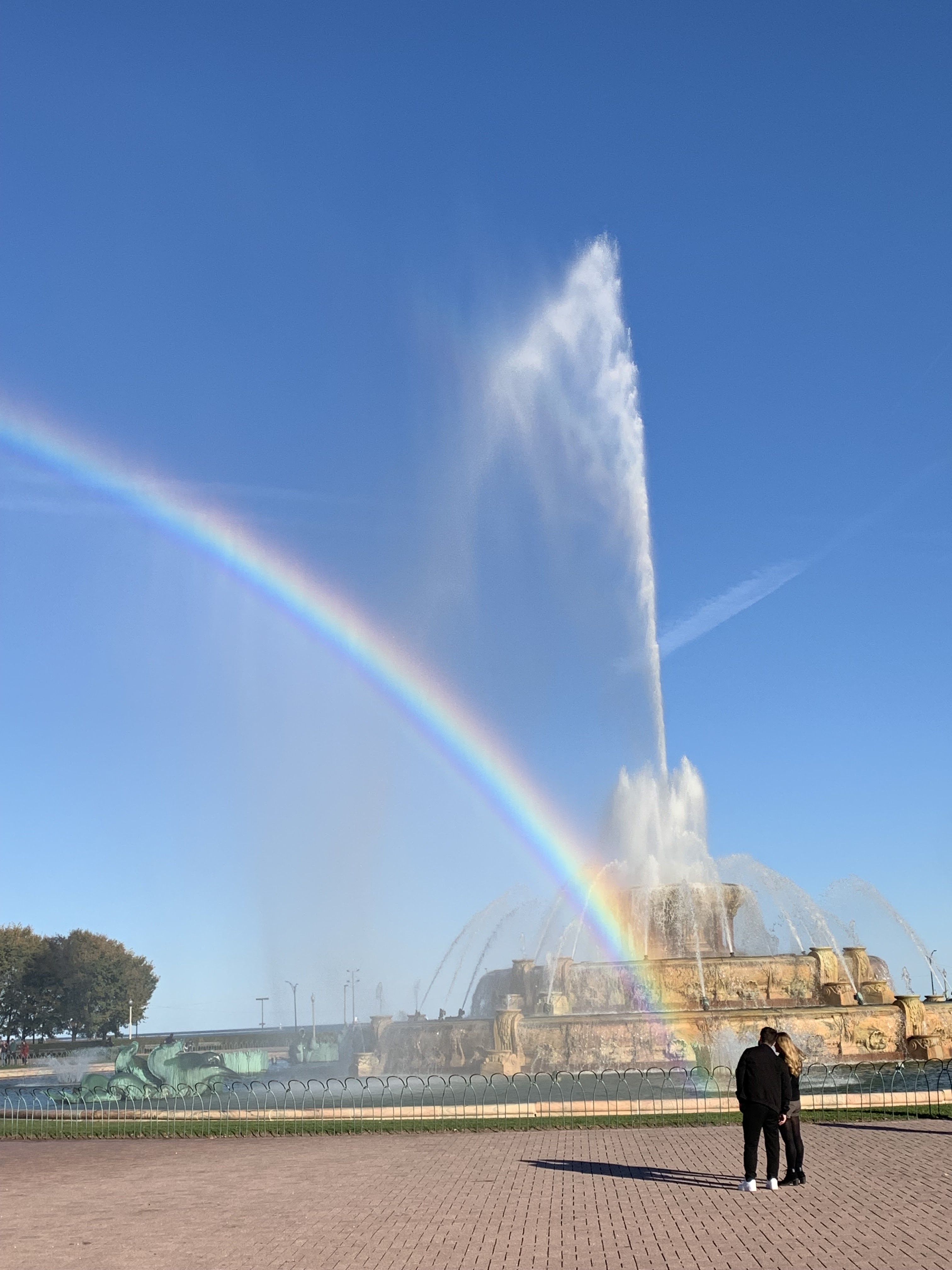


Mid-October weather was perfect for strolling, site-seeing, and stopping for the occasional bite to eat…


…like this Chicago Dog at Harry Caray’s joint on the Navy Pier.  (Enjoyed, also, the major league memorabilia. Could have spent hours!)


Evening strolls in the Lincoln Park area near DePaul reminded me of my old digs on Eighth Street in Chico.  Vintage homes.  Shaded by mature broadleaf trees, such as feeling of warmth and neighborhood.


Architecture?  Growing up in Chico, when the University planned and built seven-story Butte Hall, it was considered a skyscraper. So much so that the Fire Department found themselves searching for a ladder truck with a longer ladder.  Turns out, ‘they ain’t seen nothin’.’


Our riverboat tour near the Lake Michigan shoreline highlighted the design eras and the extent of architectural evolution…


 …from the art deco opera house…


…to this mid-century modern example…


…to a post-modern curved glass structure that reflects all the styles along the waterfront.


I didn’t take notes, but the masterpiece below was the first major building designed by a female architect. Visionary! How I wish I'd written down her name. 
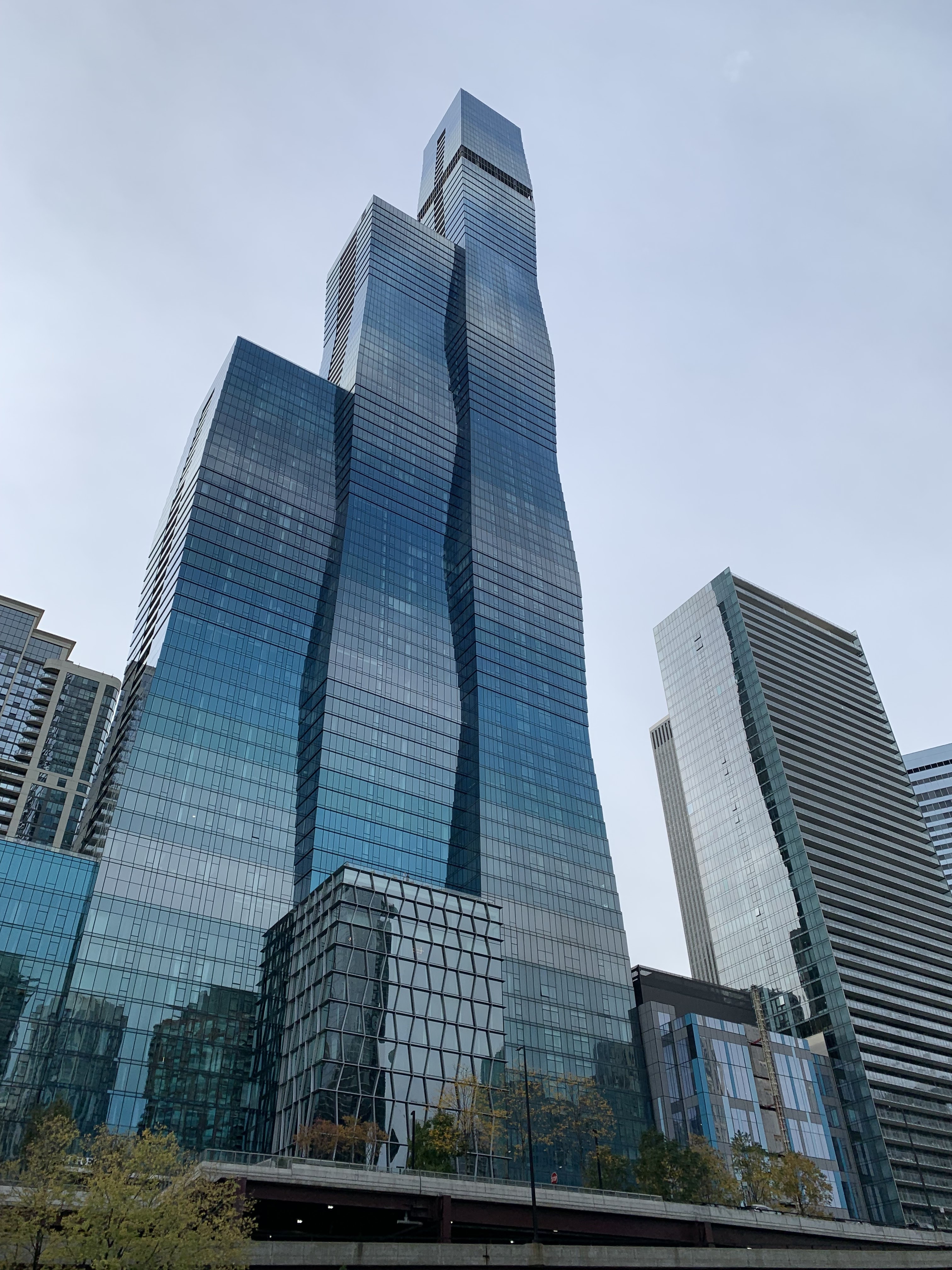


This project’s success opened the doors for other women to break into a male-dominated field and enhance the city’s skyline with a new kind of grace and strength.


Art?  Fifty-plus years ago, I took an art appreciation class at Chico State to fulfill a humanities requirement. Although my grandfather dabbled in oils ~ I have one of his hanging right beside me as I write ~ I wasn’t much interested in what the prof shared with students on slide after innumerable slide. Little did I know that at the Chicago Institute of Arts, I’d see a two dozen or more of those classic works up close, very real and very touching.  Here’s Rembrandt…


Grant Wood…


Frank Lloyd Wright. (Brother Tim has a desk he created from similar design that I’ve helped him move twice, Tim tells me.)


And this: Van Gogh’s self-portrait which I have renamed two old guys with beards.


We marveled at the collection at the Chicago Institute of Art, wondering how so many masterpieces could end up under the same roof with that roof not being atop the Louvre in Paris.


Theatre? An unexpected treat was the opportunity to attend the world premiere of “Leroy and Lucy” at the famed Steppenwolf Theatre on Halsted Ave.  Steppenwolf started decades ago by a group of then recent high school graduates intent on continuing their theatre work.  Over the interceding years, the list of Steppenwolf alums reads like a who’s who of Broadway, screen and television.


Curated for over three years, this show depicts the dreams and demons visited upon perhaps the father of all the Blues.


 Rather than to give anything away, know that as we rose to over a much deserved standing O to the players, I said to Gracie: “I’ve got to see that again!” I'm certain we'll see this work in venues across the nation. Recommend seeing it when it comes your way.


Sammy Cahn and Jimmy Van Heusen intoned that Chicago is “my kind of town,” ~ recall Sinatra’s classic version ~ and we can see why.  The song writing duo certainly captured my kind of razzmatazz and it has all that jazz.  Not sure if Chicago will be calling me home quite soon enough, but we were more than delighted with the art, the culture, the people too, people who, smile at you.


Once of the smilin’-est ones?  Granddaughter Grace.  Thanks for introducing your Bumpa to some culture Gracie! As you might imagine, I can always use more culture.


© 2024

Church of the Open Road Press


Sunday, October 27, 2024

ABOARD THE CALIFORNIA ZEPHYR (FINALLY!)

 A life-long dream come true ~ maybe

The California Zephyr has always been mythic to me. Winding like a silver ribbon up the Feather River Canyon, occasionally, we’d be lucky enough to see it as we drove California’s Route 70 in our ’54 Ford toward Quincy and Bucks Lake. Crisscrossing the canyon, if we were really lucky, we’d be crossing the river on a bridge as the train crossed above us, switching sides of the canyon. The silver beauty was always on the other side ~ always just a bit out of reach.  


The Zephyr ran from San Francisco to Chicago under the combined efforts of the Western Pacific, the Denver, Rio Grande Western and the Burlington Route. It had always been my dream thunder across our vast western expanse on this train. Alas, come the early 70s, service ended. As did my dream.  Or so I thought.


But along came Amtrak, the Federal government’s attempt to keep rail traffic alive. More successful along the eastern corridor of the United States, cross-country routes would enjoy less ridership. Yet, the Zephyr was revived. Now, however, using the historic Donner Pass Route initially carved by the Central Pacific, silver streamliners no longer grace the Feather.


 We board the Zephyr in Sacramento.


From the Sacramento Valley Station, the route winds and twists up the western slope of the Sierra with pauses in Roseville, Colfax, and, following the river courses of the American and the Yuba, cresting the Sierra on the highest trackage anywhere in the States. We enjoy a view of Donner Lake…


…before descending into Truckee for a twenty minute fresh air and, ironically, smoke break.


The route traces the Truckee River through the rain shadowed environs of the east slope of the Sierra. Conifer forests begin to give way to brittle sage and autumn’s golden grasses.  


East of Reno, we begin to get a feel for the vast and vacant high desert. Miles of that sage and mineral wealth (I suppose.)


Our rail journey will take 50 hours, several of those spent lightly sleeping in our rocking accommodation. But, as night falls, I snap this haunting image of a western sunset and wonder about the Shoshone and Paiute peoples who, for centuries, came to an understanding of that whole living in harmony with nature thing that we successors to this space don’t quite get.


Sunrise finds us coursing along the Gunnison River.


Rolling into Grand Junction, CO on the historic Denver and Rio Grande Route, we see one of many grand old stations left to decay.


A few miles of browning hills relentlessly shaped by river and wind…


…and we rumble into our first glimpse of the Great Plains.  I write ‘rumble’ because, to my untrained train butt, the Burlington Northern / Santa Fe right-of-way east of Denver seems a bit less well maintained than the UP to the west.


Lots of flat. Lots of grain ~ amber waves of it ~ mainly, it seems, corn. And lots of endless vistas. One can fly over this country, which we did on our return to California, and not grasp the distances, the vastness and the towns that look like nameless grids or checkerboards from 36,000 feet. We slept through all of Nebraska. 


Here’s Burlington, Iowa …


… and an aging Burlington Northern Pullman, Railway Express car and vintage loco. Glad these rolling stock examples are being preserved.


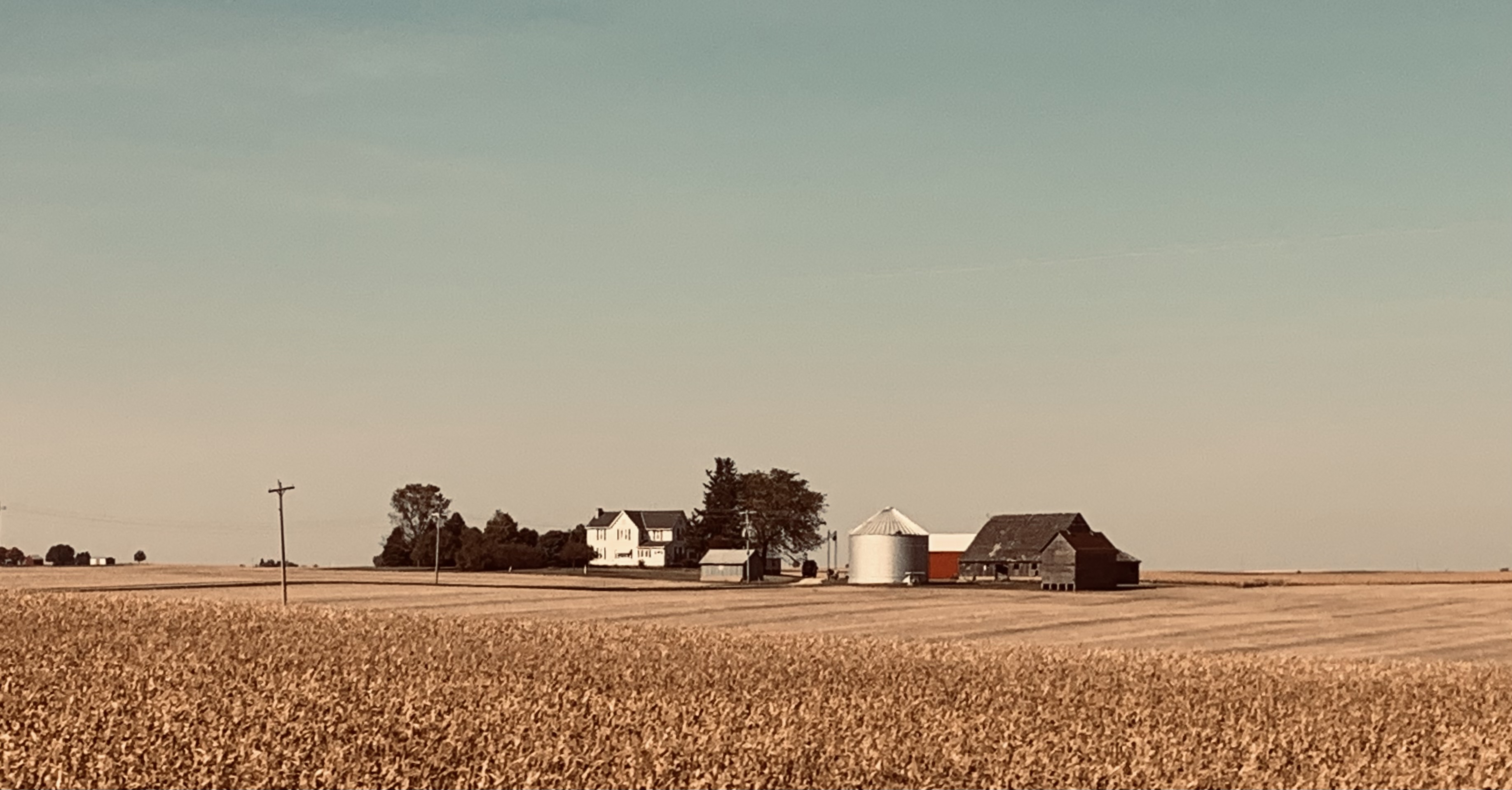
An hour or so further and an hour or so short of Chicago, this solitary farmstead captures a contemporary way of life we don’t experience on our western seaboard. And, while not wishing to wax political in this post, I believe I can understand why folks in these parts may see things differently than I do.


Chicago would be our literal end of the line. It’s where the Zephyr has always terminated. Chicago: with the ‘El’; the commuter lines to the suburbs; lines to the stock yards, steel and other industries; and the historic Union Pacific; Burlington Route; Chicago and Northwestern; and several other routes. We are informed that within the Windy City’s confines exist more miles of rail line than in the rest of the continental US combined. Rolling the final twenty minutes into Union Station, it’s a claim that’s hard to dispute.


After fifty hours on the train, I ask myself, “Did my long held dream of riding on the California Zephyr come true?”  


I recall myself in Dad’s ’54 Ford waving at passengers on the Zephyr as it wound through the Feather River Canyon. I question whether some little kid traveling up Highway 70 in the back seat of his dad’s current day SUV might be missing the opportunity to form his own romantic dreams about boarding this silver wonder and seeing where it takes him.


ResourceThe Story of the California Zephyr, by Karl Zimmerman. Quadrant Press. © 1972.  Nice historic photo and narrative about the early days of the original Zephyr. (Good luck finding a copy. You might want to check out your neighborhood model railroad shop as they often have these kinds of books.  Plus, model trains are kinda cool.  They bring back the little kid in many of us.)

© 2024

Church of the Open Road Press

Monday, September 23, 2024

FLY-OVER COUNTRY

 Notes from a visit to Eastern Oregon

Oregon east-of-the-Cascades is a mystic, even ethereal place.  Not much there, but so much hidden and so much to explore.  I think this as I drive the Subaru out of Bend and Redmond toward who knows what or where.  My brother from another mother – a chum I met back in college – rides shotgun. 


Our usual mode of exploration transit involves two wheels attached to a righteous amount of horsepower. But this trip, in mid-September, found us nursing ailments – knees, backs, joint-related maladies – ailments we never really considered over the fifty years of our shared adventures.  


The west’s Basin and Range, in the rain shadow of the Sierra and Cascades, is a mosaic of lodgepole, sage and pinion, basalt and dry washes and baking desert sun. It stretches all the way to the base of the Rockies. Seemingly desolate and unforgiving, most of us simply fly over from San Francisco or Seattle en route to Chicago, New York, London or any of a thousand historic destinations. Yet, in that jet-plane rush, we’re flying over history that began before time. 


And during that ‘before time,’ the sea floor lifted and buckled to be shaved and carved by ice and wind. Lava oozed from fissures, flowed until cool, and solidified only to be broken into some semblance of dirt by freezing and thawing and the incessant labors of acidic lichens. Winds and rains pushed and scrubbed topsoil off prehistory’s basaltic base. Grasses, shrubs and, eventually, those pinions grabbed hold in protected crevasses. Luck probably played a hand. Luck plays a hand in a lot of life, doesn’t it?


Early man migrating across the Bering Strait during an ice age or two – or seven – left his subtle mark. Ten of thousands of years later, European settlers crossed, lured by the siren song of California’s fields of gold, groves of redwood and fir and soils rich for tillage. Cities were sure to follow.

Some folks trickled back.  Those with a different dream or, perhaps, a recurring one. Looking for the next Mother Lode? Looking for the next verdant valley? Or simply looking. Remnants include rough-hewn cabins protected from rot by decades of arid drought. Fencelines run straight up hillsides begging the question, What was being fenced in or fenced out?


Rutted dirt two-track roads followed emigrant routes. Highways followed those. But off those highways, wading through the sage and yellow pine, traces of the steel tires of Conestoga wagons and primitive ox-drawn carts can still be found scratched into the land. One wonders how many head can graze on one’s 160 acre grant. Did they have the land grant program here? They sure as hell couldn’t depend on row crops or grain. There surely was no sod to bust.


We drive past a basalt bluff, one that looks like an 11th century Scottish Castle. (Note: I had visited a Scottish Castle only three weeks before.) The formation long preceded man and will live long after we’ve departed. 


Etched into the base are the pointillist stories of the Utes or their predecessors. The message is probably simple, but we’re left only with conjecture. These humans were independent relying only upon their skill and wit and the stuff they learned from the prior generations. Let’s call that ‘history’ in its most basic of applications.


The contemporary folks who live out here, likewise, are independent souls.  As my companion and I see signs in support of a presidential candidate he and I both disdain, a realization – or maybe just another conjecture – rises. These people depend first upon themselves and then their neighbors. In this lonesome territory, I suspect the sheriff is an hour or more away, as is the tractor repair guy. A trip to a big box store might consume a whole day.  And you might not make it to the hospital in time. So the signs I may disdain might really be saying, Leave me the hell alone. I’ve got this. I’m good out here on the high lonesome. Followed, perhaps, by: You likely wouldn’t be. (In my case, they’d be right.) Hard working, rugged folks with well-honed views of things different from those of two guys cruising around these parts in some damned Subaru.


We pass through a small town, no bigger than a wink. Jean Baptiste Charbonneau may have come this way when relocating from Murderer’s Bar on California’s American River (near my one-time Placer County home) to the Idaho mines.  


Up the road a bit we pause where the Bhagwan Shree Rajneesh escaped from India and set up a colony four decades back bringing with him seven Rolls Royces and much consternation.  


Further on we visit a site where their-workday-is-done trucks rest scattered about a field like a graveyard, their once robust bodies dissolving into the sage, destined to be lost to history long before the aforementioned bluff.


Throughout the journey
 we are moved by the melding of horizon and sky, the vastness of geologic time, the incessant workings of the elements, and realization that there is so much more to explore, so many more stories to conject about and – as we both stare into our mid-70s – so little time left to do it.  


Perhaps that is the one great lesson of Oregon’s high desert: never will we see it all or grasp the enormity of its time and space, but never should we stop trying. 


o0o


This day’s route: US 97 north from Bend; OR 126 east to Prineville; US 26 to Mitchell (Charbonneau?); OR 207 north to Fossil (check out the John Day Fossil beds scattered through here); OR 218 west to Antelope (pop. 39 ~ former locale of the Shree Rajneesh); continue north to Shaniko (field of rusting vehicles, but, sadly, no trace of a Bhagwan’s Rolls); US 97 south to Bend.


Nearby? Oregon’s High Desert Museum about ten miles south of bend on US 97. All kinds of history! Plan on a half a day.  Bring the youngin’s. https://highdesertmuseum.org


A bit further east? National Historic Oregon Trail Interpretive Center near Baker City, Oregon. Come see the privations immigrants endured and check out the wagon ruts still visible in solid stone. Allow another half day. https://www.blm.gov/learn/interpretive-centers/national-historic-oregon-trail-interpretive-center


© 2024

Church of the Open Road Press


Sunday, September 22, 2024

FIELD NOTES FROM SCOTLAND’S HIGHLANDS

 A rare Church of the Open Road international sojourn

Imagine a place where the landscape is green year round.  Where cities are dotted with 500-year-old churches and the rural hillside and dale constructs might be four times that old. 


Where smarter-than-I border collies expertly herd clusters of sheep commanded only by the sharp whistle or yip of the shepherd. 


Where rivers and lakes are crossed on 100-year-old ferries with vehicle platforms turn-tabled by hand enabling drivers to enter and exit from the same end of the vessel. 


Where rural roads are single lane and drivers patiently wait in pull out spaces for on-comers to pass. And where folks greet one another with a genuine smile and a kind hello.


This is what Candi and I experienced on our two-week relatively unguided tour of the Scottish Highlands.


Facilitated by the British travel company McKinlay-Kidd, our transportation ~ generally rail…


…and lodging was conveniently arranged. Booked into small B&Bs and boutique hotels, we were able to fill our days with walks through pastures and hillsides… 


...visits to 2500-year-old ruins…


…and explorations of the non-touristy aspects of the vaunted Isle of Skye.


A successful vacation is at once relaxing and enlightening. On our visit we discovered that the island was sculpted by a combination of volcanic uplifts and glacial scouring.  We learned that the British Isles, like the USA, is a land of immigrants dating back to the times before any Roman conquest reached its shores. 


The centuries-old sturdy rock bridges, we were told, were engineered by a military man ironically named (and this is true) General Wade. 


We were told that the tartans worn by various clans may have been more of a marketing ploy than actual garb fashioned by or for actual families ~ a bit of a jolt to Candi whose maiden name is Stewart. 


And the Scotch whisky. That’s right: whiskey spelled with no ‘e’. The nose and the flavors vary by region ~ I’ll have the highly peated, thank you very much ~ and the worst thing one can do with a wee dram of good single malt is sip it while puffing on a cigar. Kills the flavor profile and nuance. “Save the cigar for ‘yer’ Kentucky bourbon,” I was told by the fella in this photo.


While Cloverdalians were enduring 100+ August degree heat, we were rather enjoying 60 degree intermittent rain and wind.  


Complaint?  Heck no! The warmth of the people, their courteousness and their smiles prompted me to ask, “Did we really want to return to a sweltering Clover Springs?” 


With welcome sunshine evident on only two days of our Highlands sojourn, return home we did, but with profound appreciation for the geography, history and lovely people of this enchanting, far-off land. (And the whisky.)


o0o


Details?  More info on McKinlay-Kidd? (https://www.mckinlaykidd.com) They offer a wealth of different packages for folks wishing to independently explore the whole or the parts of United Kingdom. Check ‘em out!


© 2024

Church of the Open Road Press